 King County
 Why Queen Anne Homes Are a Good Fit for Metal Roofing
Queen Anne sits on one of Seattle's steepest, most exposed hills, with sweeping views of Puget Sound and Elliott Bay that come at a price: wind off the water, salt-laden air, and rain that rarely falls straight down. Add in mature tree canopy on the quieter side streets and you get a roofing environment that punishes cheap materials and rewards correct installation. Metal roofing, done right, handles this combination better than most other options — but "done right" is doing a lot of work in that sentence, and it's where most roofing problems in this neighborhood actually start.
We work on Queen Anne roofs regularly, alongside jobs across King County, so this page isn't a generic metal roofing pitch. It's what we've learned matters specifically for homes on this hill.
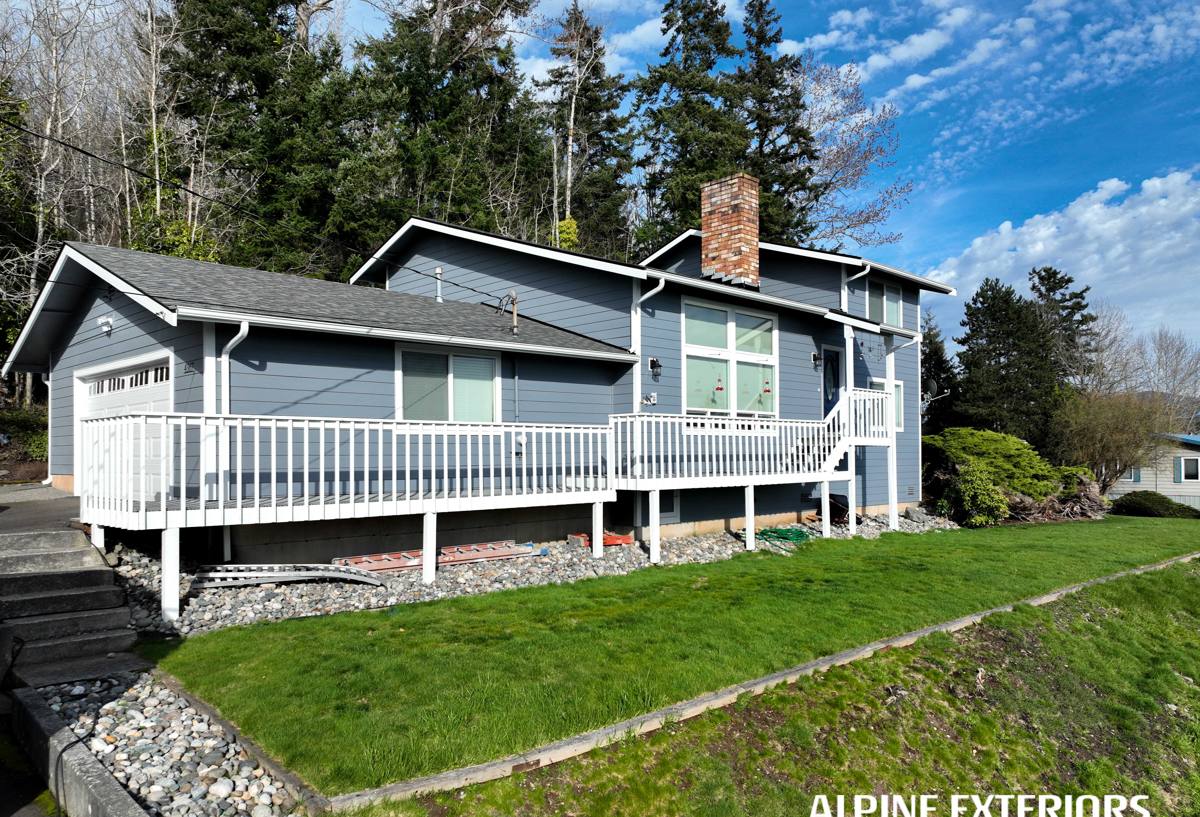
What Puget Sound Weather Actually Does to a Roof
Salt Air and Corrosion
Homes on the west- and north-facing slopes of Queen Anne, closer to the water, take on measurable salt exposure. Salt air accelerates corrosion on any exposed metal — fasteners, flashing, gutters — faster than it would ten or twenty miles inland. This doesn't mean metal roofing is a bad choice near the water; it means the metal type, coating, and fastener spec have to be chosen for a marine-influenced environment, not a generic suburban one. A roof spec'd for eastern King County and installed unchanged on upper Queen Anne is a roof that will show rust streaks and fastener corrosion years before it should.
Wind-Driven Rain
Because Queen Anne catches wind off the Sound, rain here doesn't just fall — it drives sideways under eaves, into ridge vents, and up under panel laps that would stay dry on a calmer site. That changes how a roof needs to be detailed: underlayment selection, panel overlap, and flashing at every penetration all need to assume wind-driven moisture, not just gravity-fed runoff. This is a detailing problem, not a material problem — you can put a premium metal panel on a roof and still get leaks if the laps and flashing weren't built for wind.
Moss, Shade, and a Long Wet Season
King County's moss season runs long — realistically nine or ten months in a typical year — and the tree cover on many Queen Anne lots keeps roof surfaces shaded and damp well after storms pass. Moss doesn't just look bad; on the wrong roofing material it holds moisture against the surface, works into seams, and shortens the life of the assembly underneath. Metal roofing is inherently more moss-resistant than composition shingles because the surface doesn't hold moisture the same way, but it isn't moss-proof — panel orientation, slope, and gutter design still matter for keeping debris from collecting at valleys and low points.
Choosing the Right Metal Roofing System
"Metal roofing" covers a range of products, and the right one for a Queen Anne home depends on the roof's slope, the house's architecture, and how close it sits to the water. The two systems we install most often here are standing seam and exposed-fastener panel systems, and they're not interchangeable.
| Factor | Standing Seam | Exposed Fastener |
|---|---|---|
| Fasteners | Concealed, no exposed penetrations | Visible screws through the panel face |
| Salt air performance | Better — fewer exposed metal points to corrode | Fair — depends heavily on fastener quality and re-tightening over time |
| Wind-driven rain resistance | Higher — mechanically seamed laps | Lower — relies on gasketed screws staying sealed |
| Upfront cost | Higher | Lower |
| Typical maintenance | Minimal | Periodic fastener inspection/replacement |
| Best fit | Main roofs, water-facing exposures, steep-slope homes | Accessory structures, garages, budget-driven projects |
For most primary roofs on Queen Anne — especially anything facing west or north toward the water — we lean toward standing seam because the concealed fastener design removes the weakest point in a marine climate: exposed screw heads. Exposed-fastener systems still have a place, particularly on secondary structures or where budget is the deciding factor, but we tell homeowners upfront that it comes with a maintenance commitment that standing seam doesn't.
Panel Gauge and Coating
Beyond the system type, gauge (thickness) and coating matter as much as the metal itself. A heavier gauge resists denting from hail and debris and holds its shape better on long, steep runs. The coating — the finish applied over the base metal — is what actually fights salt-air corrosion and UV fading over decades. We'll walk through the specific coating options for your roof during the estimate rather than quote a generic spec sheet, because the right choice depends on your exact exposure and the look you're after.
What a Correct Metal Roof Installation Actually Involves
Metal roofing fails early almost exclusively because of installation shortcuts, not because the material itself wore out. On a Queen Anne roof, here's what we treat as non-negotiable:
- Full tear-off and deck inspection — metal should never go over a deck with hidden rot or old damaged sheathing
- High-temperature, self-adhering underlayment at eaves, valleys, and any low-slope transitions, sized for wind-driven rain, not just standard runoff
- Correct panel overlap and seam direction relative to prevailing wind off the Sound
- Stainless or coated fasteners rated for coastal/marine exposure, not generic hardware-store screws
- Properly flashed penetrations at every vent, chimney, and skylight — these are the most common leak points on any roof, metal or not
- Ice-and-water protection at eaves where cold snaps and rain overlap, even though Seattle winters are mild by national standards
- Ventilation sized correctly for the attic, since trapped moisture under a metal roof causes its own problems regardless of the panel quality
Skipping any one of these doesn't show up as a problem on day one. It shows up three, five, or ten years later as a leak, a corroded fastener, or premature panel failure — usually well outside any labor warranty from whoever cut the corner.
Matching Metal Roofing to Queen Anne's Housing Stock
Queen Anne has a lot of older housing stock — Craftsman bungalows, Tudor Revival details, early-1900s foundations with additions layered on over the decades. Metal roofing on these homes needs to do two things at once: perform in the climate and look like it belongs on the house. Standing seam in a matte or low-gloss finish reads well on Craftsman and Tudor rooflines without looking out-of-place or overly modern. Panel color matters more here than on a plain suburban tract home, since Queen Anne's rooflines are visible from the street and from neighboring properties on the hill.
If your home falls within a designated historic district or has specific covenant requirements, that can affect approved materials, colors, or profiles — we'll flag that during the estimate walk-through rather than assume it doesn't apply to you.
Our Process, Start to Finish
- On-site assessment — we look at slope, exposure direction, existing deck condition, and any moss or moisture staining before recommending a system
- Honest scope and estimate — a written estimate that spells out material, underlayment, flashing, and fastener specs, not just a total price
- Scheduling around weather — we plan tear-off and dry-in around King County's rain patterns so your home isn't sitting exposed longer than necessary
- Tear-off and deck repair — any rotten or damaged sheathing gets replaced before a single panel goes down
- Installation — underlayment, panels, flashing, and ventilation installed to the spec agreed on upfront
- Walkthrough and cleanup — a final inspection with you, magnetic sweep for stray fasteners, and full site cleanup
What Actually Drives Cost
We won't quote a number on a page — every roof is different — but these are the real cost drivers homeowners on this hill should understand before comparing bids:
| Factor | Why It Matters |
|---|---|
| Roof pitch and access | Steep slopes and hillside lots often need extra fall protection and staging, which affects labor time |
| Panel system | Standing seam costs more upfront than exposed-fastener but needs less long-term upkeep |
| Deck condition | Rot or damage found at tear-off adds material and labor that can't be known before opening the roof up |
| Number of penetrations | Every chimney, vent, and skylight is a flashing detail that adds time and material |
| Coating and gauge | Heavier gauge and premium coatings cost more but matter more in salt-air exposure |
| Tear-off vs. overlay | We generally don't recommend installing new roofing over old material — it hides problems and shortens the life of the new roof |
Beware of any bid that's dramatically lower than the others without an explanation — it usually means a lighter gauge panel, exposed fasteners where standing seam was implied, or underlayment that won't hold up to wind-driven rain.
Living With a Metal Roof in This Climate
One of the real advantages of metal roofing in King County is how little ongoing maintenance it needs compared to composition shingles, but "little" isn't "none." A short annual routine keeps a metal roof performing for decades:
- Clear gutters and valleys of needles and debris before the fall rains ramp up
- Check for moss buildup at shaded, low-slope sections and remove it gently — never pressure wash a metal roof
- Look at exposed fasteners (if you have an exposed-fastener system) for early rust or loosening
- Confirm attic ventilation isn't blocked, especially after any insulation work
- After any major windstorm off the Sound, a quick visual check for lifted flashing is worth the five minutes
Why a Crew That Already Works Queen Anne Matters
A lot of roofing problems on this hill trace back to a contractor who does great work on flat, inland roofs and applies the same spec here without adjusting for wind exposure, salt air, or the access challenges of a steep hillside lot. We work across King County, including Queen Anne specifically, so the underlayment, fastener, and flashing choices we bring to your estimate already account for what this site does to a roof over twenty or thirty years — not just what it looks like on installation day.
If you're weighing metal roofing for a home in Queen Anne, we're happy to walk the roof with you, look at your specific exposure and slope, and give you a straight, no-pressure estimate — just fill out the form below.