 King County
 Why Decks in Rainier Valley Wear Differently Than Decks Elsewhere
Rainier Valley is one of the more tree-covered, topographically varied neighborhoods in the city, and that combination changes how a deck ages. Mature trees throw shade across large parts of many yards for most of the day, hillside lots create pockets where air doesn't move, and the neighborhood's mix of older and newer homes means decks get added onto structures that weren't always built with today's drainage details in mind. Add in King County's marine climate — the driving rain, the salt-tinged air moving in off Puget Sound, and a moss season that can run from fall well into spring — and you have conditions that punish decking that wasn't chosen or installed with this specific environment in mind.
A deck that would hold up fine in a drier, sunnier climate can start showing problems here within a few seasons: soft spots, dark streaking, boards that cup or crown, and moss creeping in at the seams. None of that is inevitable. It's almost always a product selection or installation detail issue, not something you have to accept as the cost of living in the Pacific Northwest.
Shade, Moss, and Standing Moisture
Moss doesn't need much to get established — shade, a little organic debris, and moisture that doesn't fully evaporate between rains. Under a tree canopy, all three are in steady supply for much of the year. Once moss gets a foothold on decking, it holds water against the board surface and turns any flat or low-traffic area into a slip hazard. The fix isn't a different color of composite; it's designing the deck and its surroundings so water actually leaves the surface and the space underneath instead of pooling.
Rain That Comes in Sideways
King County rain is rarely just vertical. Wind-driven rain gets pushed against ledger boards, fascia, and any point where the deck meets the house, which is exactly where rot and hidden water damage start. Flashing details at the house connection matter more here than in drier regions, and they're one of the first things we check on every project, whether we're building new or replacing an old deck.
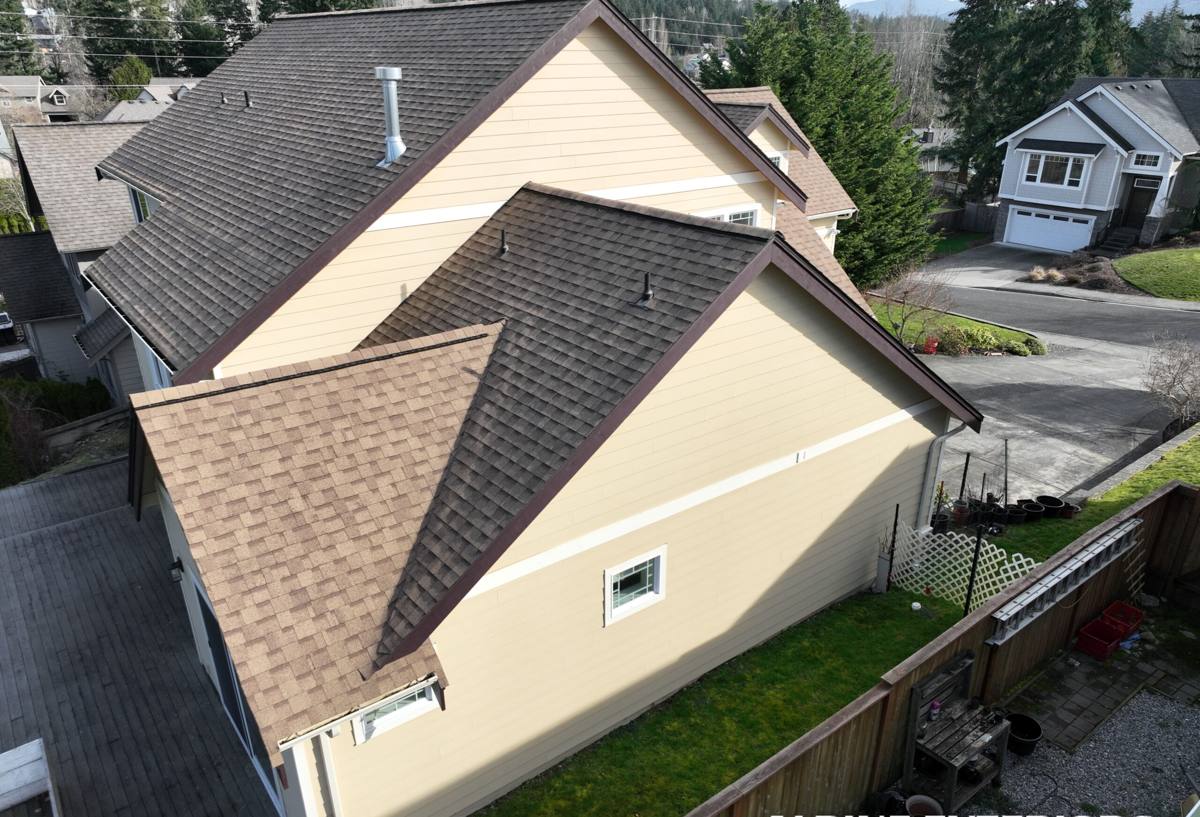
What a Correct Composite Deck Installation Actually Involves
Composite decking is a good match for this climate when it's installed correctly, but the board itself is only part of the equation. Most of the failures we get called out to look at trace back to what's underneath the boards, not the boards themselves.
Framing and Substructure Built for Wet Ground
Composite boards are heavier than wood, so joist spacing and beam sizing have to match the manufacturer's engineering specs, not just habit. On sloped or shaded Rainier Valley lots, we also pay close attention to post footing depth and drainage around the base of the structure so the substructure isn't sitting in standing water through the wet months.
Airflow Underneath Matters as Much as What's on Top
Composite doesn't rot the way wood does, but the framing underneath it usually is wood, and that framing still needs to dry out between rain events. Low decks built tight to the ground with poor ventilation trap moisture underneath, which shortens the life of the substructure even if the surface looks fine. We build in clearance and airflow paths as a standard part of the design, not an upgrade.
Fasteners, Flashing, and Ledger Attachment
Stainless or coated fasteners rated for treated lumber and composite contact are non-negotiable here — the wrong fastener corrodes and stains the board around it. Where the deck attaches to the house, proper flashing keeps wind-driven rain from working its way behind the ledger, which is the single most common source of hidden rot we find on older decks in this area.
Composite, Wood, or PVC: What Actually Fits This Climate
Homeowners usually come to us already leaning toward composite, but it's worth being honest about the trade-offs so the choice is an informed one.
| Material | How it handles PNW rain and moss | Maintenance burden | Typical lifespan |
|---|---|---|---|
| Pressure-treated wood | Absorbs moisture, prone to splintering and mildew staining in shaded, damp spots | Annual cleaning, periodic staining/sealing | 10–15 years with upkeep |
| Composite (capped) | Resists moisture absorption; surface sheds water, doesn't splinter or rot | Periodic surface cleaning, no staining/sealing | 25–30+ years, manufacturer warranty backed |
| PVC | Fully moisture-resistant, but can look and feel less natural; more sensitive to installation temperature | Low; occasional cleaning | 25–30+ years |
Composite tends to be the sweet spot for this neighborhood: it doesn't feed moss the way untreated wood fibers can, it won't rot from underneath if the substructure is built right, and it holds up to repeated wet-dry cycling without cupping or splitting. Wood is still a reasonable choice for homeowners who want that specific look and are willing to keep up with annual maintenance — we'll install it well if that's your preference, but we'll also tell you honestly what the upkeep looks like in a climate like this one.
Picking the Right Composite Board for a Rainier Valley Yard
Capped vs. Uncapped Composite
Capped composite has a protective polymer shell around a wood-plastic core, which is what actually gives it its moisture and stain resistance. Uncapped composite (mostly older or budget product) can still absorb some moisture at the surface over time, which matters a lot in a climate where boards rarely get a long dry stretch. For anything installed here, we default to capped product for that reason.
Color and Surface Choice for Shade or Sun
Yards vary a lot within this neighborhood — some are shaded most of the day under mature trees, others get more open sun depending on the lot and hillside orientation. Darker boards run hotter in full sun and show pollen or debris less; lighter boards stay cooler but can show dirt and organic buildup more visibly in shaded, damp spots. We talk through your specific yard's light exposure before recommending a color, rather than defaulting to whatever's popular.
How We Handle a Composite Decking Project in This Area
- Site visit and assessment — we look at drainage, shade patterns, existing structure condition, and how the deck ties into the house before quoting anything.
- Design and material selection — board type, framing plan, and layout matched to your yard's actual sun/shade and drainage conditions.
- Permitting — we handle the permit process for work that requires it, based on your jurisdiction's current requirements.
- Demo and substructure build — old decking removed, framing and footings brought up to spec, flashing installed at the house connection.
- Composite installation — boards fastened per manufacturer spec, with attention to expansion gaps and hidden fastener alignment.
- Final walkthrough — we go over the finished deck with you, including what maintenance actually looks like going forward.
Keeping a Composite Deck Ahead of Moss and Algae
Composite doesn't need staining or sealing, but it isn't maintenance-free in a moss-prone climate. A little seasonal attention goes a long way toward keeping the surface looking good and staying safe underfoot.
- Sweep debris (leaves, needles, seed pods) off the deck regularly through fall — it holds moisture against the board and feeds moss growth
- Rinse or wash the surface a few times a year, more often in heavily shaded areas, using a soft brush and a composite-safe cleaner
- Keep gaps between boards clear of trapped debris so water keeps draining as designed
- Trim back overhanging branches where practical to cut down on shade and leaf litter over the deck
- Check the ledger and house connection point once a year for any signs of water intrusion
- Avoid pressure washing at close range or high PSI — it can damage the board's cap layer over time
Permits and Local Requirements
Deck projects in King County jurisdictions typically require a permit once you're past a certain size or height, and guardrail, stair, and footing requirements are governed by current building code. Requirements vary by exact jurisdiction and can change, so we confirm what applies to your specific property and handle that process as part of the job rather than leaving it on the homeowner to sort out.
Why It Matters to Hire a Crew That Already Works Rainier Valley
A lot of deck problems we get called to fix started with a crew that did fine, generic work — just not work suited to this specific neighborhood's conditions. Hillside lots need footing and drainage decisions that flat suburban lots don't. Heavily shaded yards need a moss-and-moisture strategy baked into the design, not bolted on after the fact. And older homes in this area often have ledger connections or siding details that need extra care during flashing work to avoid opening up a bigger repair than the deck itself. A crew that's worked this neighborhood before has already seen these conditions and builds for them from the start, instead of learning on your project.
If you're weighing a new composite deck or a replacement for one that's struggling with moss, soft spots, or drainage issues, we're happy to take a look and give you a straight answer on what it needs. Reach out for a free, no-pressure estimate — we'll walk your yard, talk through your options honestly, and give you a plan that's built for the conditions you actually have.