 King County
 Custom Decks Built for How Rainier Valley Actually Weathers
A deck in Rainier Valley doesn't fail because of one bad storm. It fails slowly, from months of standing moisture, shaded ground that never fully dries, and moss that creeps into joints and fasteners a little more every winter. King County's marine climate means most of the calendar is spent somewhere between damp and soaked, with only a handful of truly dry weeks in summer. A deck built without that reality in mind will look fine on install day and start showing problems within a couple of wet seasons.
We build and repair custom decks across the Rainier Valley area with that climate as the starting assumption, not an afterthought. That means material choices, framing details, and drainage decisions are all made around one question: how does this hold up through another King County winter, and the one after that.
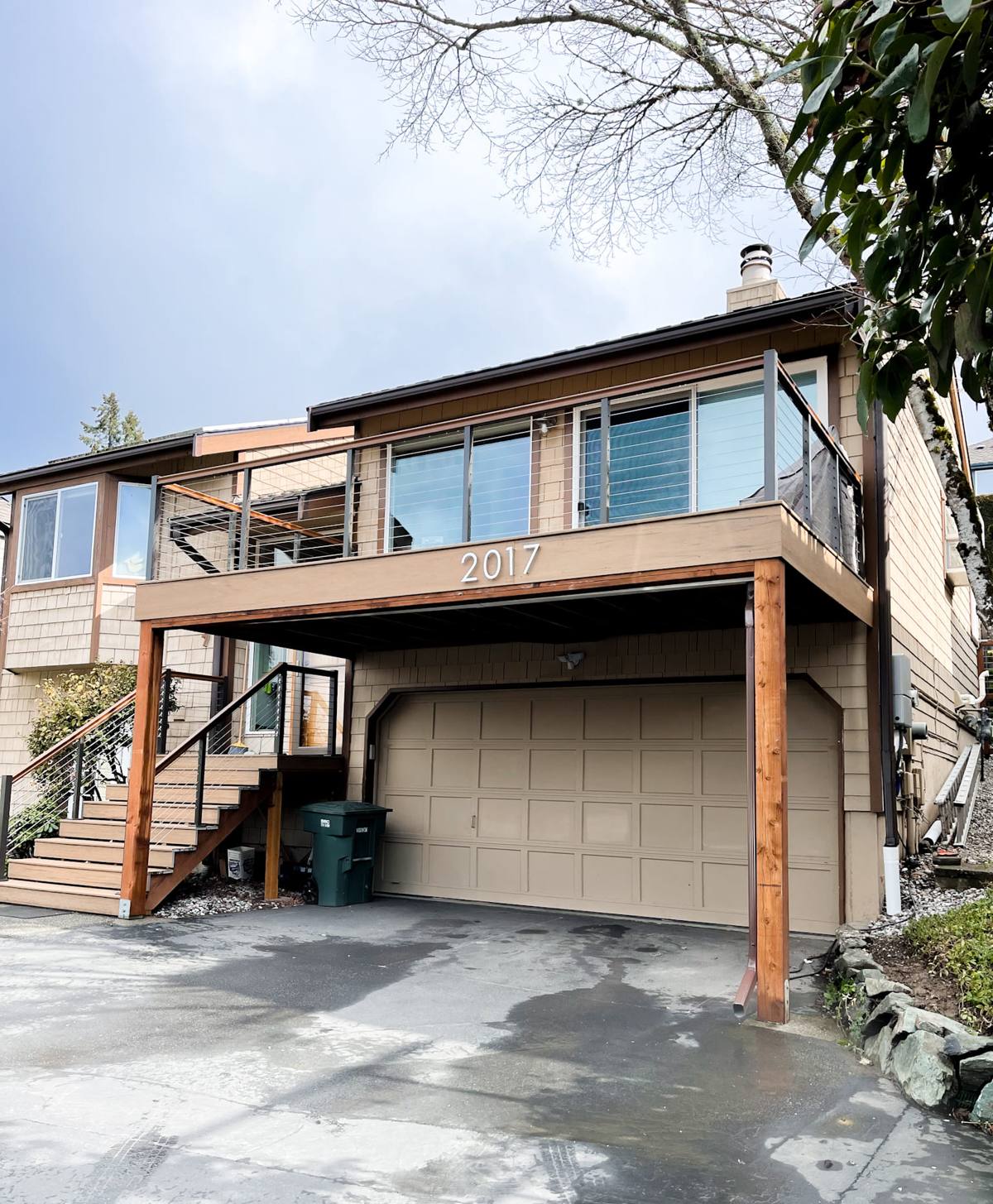
What Rainier Valley's Climate Actually Does to a Deck
Three things drive almost every deck problem we see in this part of King County:
- Driving rain that gets pushed sideways by wind, soaking vertical surfaces like fascia boards, stair stringers, and ledger connections that a lot of builders assume stay dry.
- A long moss season — shaded yards, tree cover, and mild temperatures give moss and algae months to establish on boards, especially the north-facing or tree-shaded sections of a deck that never get direct sun.
- Regional salt air in parts of King County near the water, which accelerates corrosion on unprotected metal fasteners, brackets, and hardware over time.
None of these are dramatic on their own. The damage is cumulative — trapped moisture under a board, a fastener that starts rusting from the head down, moss holding water against a surface coating longer than it was designed to handle. A correctly built deck manages all three from day one instead of trying to out-maintain them later.
Decking Material Options for This Climate
Pressure-treated wood
Still the most affordable option and a reasonable choice when it's installed and finished correctly. The tradeoff is maintenance: it needs to be cleaned, checked for moss buildup, and resealed on a regular schedule, or it will gray, cup, and split faster in a wet climate than in a dry one. We're upfront that this is an ongoing commitment, not a one-time purchase.
Cedar
A step up in appearance and natural rot resistance, which matters here — cedar's natural oils give it a real edge against the kind of prolonged dampness King County sees for much of the year. It still needs periodic sealing to look its best and resist moss staining, but it ages well when maintained.
Composite decking
Higher upfront cost, but it doesn't absorb water the way wood does, which takes moisture retention and rot largely off the table. It still needs to be kept clean — composite can grow moss and mildew on its surface just like wood can in a shaded, damp yard — but it won't rot or splinter from that buildup the way wood eventually does. Warranty structures vary significantly by manufacturer and product line, which is worth reviewing closely before deciding.
PVC decking
The most moisture-resistant option available, with no wood fiber content to feed rot at all. It costs more than composite in most cases and has its own installation sensitivities — it expands and contracts with temperature more than composite, so fastening and gapping have to be done to spec. We'll walk through whether that tradeoff makes sense for your project.
| Material | Upfront Cost | Moisture Resistance | Maintenance | Typical Lifespan |
|---|---|---|---|---|
| Pressure-treated wood | Lowest | Fair (needs sealing) | High — annual cleaning/sealing | 10-15 years |
| Cedar | Moderate | Good, naturally | Moderate — periodic sealing | 15-20 years |
| Composite | Higher | Very good | Low — occasional washing | 20-30 years |
| PVC | Highest | Best | Low — occasional washing | 25-30+ years |
Framing and Substructure: What's Underneath Matters More Than the Boards
Most deck failures we get called out to investigate aren't a decking board problem — they're a substructure problem that decking boards were hiding. In a climate that stays damp for months at a time, a few details separate a deck that lasts decades from one that needs major repair inside ten years:
Ledger board flashing
Where a deck attaches to the house is the single most common source of hidden rot we find. Without proper flashing, water gets driven behind the ledger board by wind-driven rain and sits there against the house framing, unseen, for years. This connection has to be flashed and sealed correctly every time, no exceptions.
Footings below frost depth and on solid bearing
King County soil conditions vary by lot, and footings need to be sized and set to local code requirements, not just "deep enough to look right." Undersized or shallow footings shift over time, especially in ground that's regularly saturated.
Joist protection and airflow
Joists that sit in standing water or don't get adequate airflow underneath rot from the inside out long before it's visible from the top. Proper joist tape or flashing, correct spacing, and grading that lets water actually drain away from the structure all matter more in a wet climate than a dry one.
Fastener and hardware selection
Given the salt air exposure common in parts of King County, hardware matters. Corrosion-resistant, code-rated structural connectors and fasteners cost more than generic hardware store options, but replacing a rusted-through joist hanger years later costs a lot more than the difference.
Moss, Drainage, and Long-Term Deck Care
Moss isn't just cosmetic. Where it establishes and holds moisture against a board or a coating, it accelerates whatever is happening underneath — wood softening faster, finishes breaking down sooner, surfaces getting more slippery. A few things reduce moss pressure significantly:
- Proper board spacing and gapping so water and debris actually pass through instead of collecting on the surface.
- Grading and drainage underneath the deck so water moves away rather than pooling and re-wetting the structure from below.
- Trimming back overhanging vegetation where possible, since shade and leaf litter are what let moss get established in the first place.
- A realistic cleaning schedule — most decks in this climate benefit from at least one thorough wash and inspection a year, more often on heavily shaded sections.
We design drainage and spacing into the build itself rather than leaving it entirely up to future maintenance, because a deck that sheds water well needs less upkeep to begin with.
Permits and Code Requirements
Deck permitting requirements vary by jurisdiction within King County, and Rainier Valley properties fall under specific local rules for setbacks, railing height, guardrail spacing, and structural requirements depending on deck height and attachment method. Skipping permitting on a deck that requires it isn't just a compliance issue — it can create real problems at resale, when an unpermitted structure has to be disclosed or brought up to code before closing. We handle the permitting process as part of the job so it isn't a surprise later.
Our Process, Start to Finish
- On-site consultation — we look at sun exposure, drainage patterns, existing structure (for replacements), and how you actually want to use the space.
- Design and material selection — honest talk about the tradeoffs above, sized to your budget and how much maintenance you actually want to take on.
- Permitting — we pull and manage the permits your project requires so it's built and documented to code.
- Demolition and site prep (for replacements) — including an honest look at whether ledger flashing, footings, or framing from the old deck need to be redone rather than reused.
- Framing and substructure — the part that determines whether this deck is still solid in fifteen years.
- Decking, railing, and finish work — installed to the spacing and fastening specs the material actually requires, not a generic approach applied to everything.
- Final walkthrough — so you know what maintenance schedule your specific material needs going forward.
What to Look for in a Deck Contractor
Deck building draws a wide range of skill levels, and a deck can look acceptable on day one regardless of whether the substructure was done right. A few questions are worth asking before you hire anyone:
- Will they pull the required permit, or suggest skipping it?
- Do they flash the ledger board connection as standard practice, and can they explain how?
- What fastener and hardware grade do they use, and is it rated for exterior/exposed use?
- Do they size footings to local code and actual soil conditions, or use a one-size approach?
- Are they familiar with how this specific climate — rain, moss, drainage — affects material choice and detailing?
- Can they explain the maintenance tradeoffs of each material honestly, including the ones that cost more upfront?
Why Local Experience in Rainier Valley Matters
A crew that regularly works King County neighborhoods like Rainier Valley has already seen how the local combination of rain, shade, and moss plays out on real decks over years, not just at install. That shows up in small decisions — how much slope to build into the drainage, which sections of a yard need extra attention to moss and shade, how footings behave in the soil conditions common to the area. It's the difference between a deck built to a generic spec sheet and one built for the conditions it actually has to survive.
If you're planning a new deck or need an honest assessment of one that's showing its age, we're happy to take a look. Reach out for a free, no-pressure estimate using the form below.