 King County
 What King County's Climate Does to a Deck
A deck in Rainier Valley doesn't fail the same way a deck in a dry climate does. Around here, the damage is almost always moisture-driven. Long stretches of driving rain soak into end grain, fastener holes, and any spot where two boards meet. Between storms, our mild, humid stretches never let wood fully dry out, which is exactly the environment moss and algae need to take hold. Add in the salt-tinged marine air that moves through the broader Puget Sound region, and you've got a slow, steady combination that works on hardware, coatings, and wood fiber year-round, not just in the wet months.
None of that means a deck is doomed. It means a deck built or repaired without that climate in mind will show problems years before it should — cupped boards, soft spots near the house, rusted fasteners bleeding rust streaks, and a surface that stays slick with moss well into what should be dry season. A repair done right accounts for all of it, not just the board that's visibly broken.
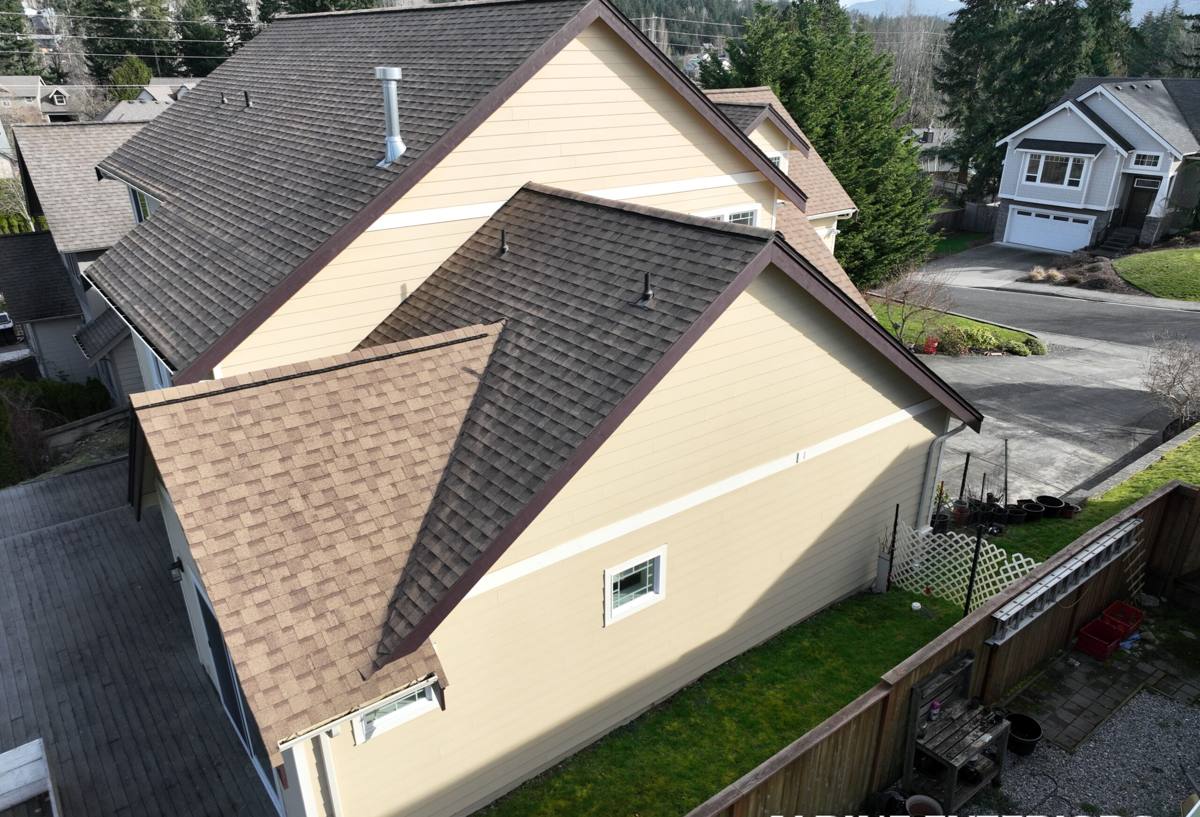
Signs Your Deck Needs Repair, Not Replacement
Most decks we're called out to in this area don't need to be torn out. They need targeted repair — but only if the underlying structure is still sound. Here's what we check before recommending anything:
- Soft, spongy, or bouncy spots when you walk the deck, especially near the house or stairs
- Boards that are cupping, splitting, or have visible rot at the ends
- Rust streaks or loose fasteners around joists and ledger boards
- A ledger board pulling away from the house, or gaps opening at the rim joist
- Railings or posts that flex more than they should when pushed
- Persistent moss or black staining that keeps returning after cleaning
- Visible daylight or gaps where flashing should be sealing a joint
If the framing and ledger connection are structurally sound, repair is almost always the more cost-effective path. If the frame itself has rotted through in multiple places, that's a different conversation — and we'll tell you plainly if that's what we're looking at.
Common Deck Problems We See in This Climate
Rot at Connection Points
Wood doesn't rot evenly. It rots where water sits and can't escape — under railing posts, around bolt holes, at the ledger-to-house connection, and at board ends that were never sealed. In a climate that stays damp for months at a time, these spots start failing from the inside before there's any visible sign on the surface.
Ledger Board Separation
The ledger board — where the deck attaches to the house — takes the most water exposure of any structural member and carries a huge share of the deck's load. Older decks, especially ones built or repaired without proper flashing, are prone to slow separation here. This is one of the most serious issues we find, because it's a structural and safety problem, not just a cosmetic one.
Moss, Algae, and Surface Staining
A long moss season means surfaces that don't get regular sun and airflow stay damp long enough for moss and algae to establish. Beyond looking bad, that growth holds moisture against the board and makes the deck genuinely slippery — a real fall hazard on stairs and ramps.
Fastener and Hardware Corrosion
Screws, nails, and structural hardware that aren't rated for wet, marine-influenced air corrode faster here than in drier parts of the country. Corroded fasteners lose grip strength quietly, which is part of why a deck can feel solid one season and noticeably looser the next.
What a Correct Deck Repair Involves
A repair that only replaces the board you can see and skips everything underneath is a repair that fails again in a year or two. A correct repair works from the structure outward:
1. Full Inspection First
We check the ledger connection, joists, posts, and footings before touching the decking surface. Surface damage is often a symptom of a structural issue one layer down, and we want to know that before we start, not after.
2. Structural Repair Where It's Needed
Rotted joists get sistered or replaced, not just braced. Ledger connections get re-secured with proper flashing and fasteners rated for exterior, ground-contact, or marine-grade exposure depending on the location on the deck.
3. Moisture Management
This is the step that's easy to skip and gets skipped constantly. Proper flashing at the ledger, gaps between boards for drainage and airflow, and attention to grading and drainage under the deck all matter more here than in a drier climate. Skip this step and you're just resetting the clock on the same failure.
4. Surface Repair and Refinishing
Damaged boards get replaced to match existing decking as closely as possible. Where the surface itself is sound but weathered, cleaning, brightening, and refinishing with an appropriate sealer or stain can add years of life without a full board replacement.
Repair vs. Replacement: What Actually Drives the Decision
| Factor | Leans Toward Repair | Leans Toward Replacement |
|---|---|---|
| Framing condition | Joists and posts are solid, damage is localized | Rot has spread through multiple structural members |
| Ledger connection | Sound or repairable with re-flashing | Separated, undersized, or not up to current code |
| Age of decking | Under 15-20 years, isolated board damage | Original decking near end of service life across the board |
| Fastener condition | Isolated corrosion, easy to replace | Widespread hardware failure |
| Design/code issues | None — structure meets current expectations | Undersized footings, missing hardware, or outdated railing spacing |
We walk you through where your deck actually falls on this before recommending either path — and we'll say so plainly if repair is the honest answer, even though replacement is the bigger job.
Materials We Use and Why
For structural repairs, we use pressure-treated lumber rated for the exposure it's getting and stainless or hot-dip galvanized fasteners appropriate for treated wood and marine-influenced air — standard coated fasteners corrode too fast in this environment to be worth the savings. For decking surface repairs, the right material depends on your existing deck and your priorities:
- Matching wood decking — most cost-effective for spot repairs, but requires ongoing maintenance (cleaning, sealing) to keep up with the climate
- Composite decking — higher upfront cost, less ongoing maintenance, but only makes sense as a full-surface swap, not a patch next to existing wood
- PVC/capped composite — best moisture and moss resistance of the common options, at the highest material cost
We won't push a full composite resurface on you when a targeted wood repair will genuinely hold up — that's a maintenance-cost and moisture-behavior conversation we'll have honestly, based on what your deck actually needs.
Why Hiring a Crew That Already Works Rainier Valley Matters
Deck repair advice that's correct in a dry climate can be the wrong advice here. A crew that works King County decks regularly already knows which connection points fail first in this rainfall pattern, which fastener grades actually hold up to the moisture and salt air moving through the region, and how much drainage and airflow a deck needs to survive a long moss season without rotting from underneath. That's not something you learn from a manual — it's something you learn from opening up decks in this specific climate, repeatedly, and seeing what actually failed and why.
It also means faster, more accurate diagnosis. We're not guessing at what a Pacific Northwest deck typically needs — we're confirming it against what we already see across the neighborhood.
Keeping Your Deck Solid After Repair
A repair holds up longer with a little seasonal attention, especially in a climate like this one:
- Sweep debris off the surface and out of gaps between boards regularly — trapped leaves and needles hold moisture
- Clean moss and algae off before it re-establishes, rather than after it's thick
- Check railings and stairs for looseness once a year, before the wet season sets in
- Reseal or restain wood decking on the schedule appropriate for the product — don't wait until it's visibly gray and dry
- Keep gutters and downspouts near the deck clear so runoff isn't draining directly onto or under it
If you're seeing soft spots, moss that won't quit, or a deck that just doesn't feel as solid as it used to, we're happy to take a look and give you a straight answer about what it needs. We offer free, no-pressure estimates for Rainier Valley homeowners — use the form below to get one scheduled.