 King County
 Why Redmond Decks Wear Out Faster Than Owners Expect
Redmond sits in one of the wetter, greener corners of King County, and that combination is hard on outdoor structures. Long stretches of drizzle from fall through spring keep wood decking damp for days at a time, tree canopy over many lots means shade and leaf litter linger on boards long after a storm passes, and the region's mild winters never bring a hard, dry freeze that would kill off moss and mildew growth. The result is a slow, steady cycle of moisture absorption, fungal growth, and fastener corrosion that most homeowners don't notice until a board flexes underfoot or a railing feels looser than it used to.
None of this means a deck is doomed. It means a deck built or repaired without the local climate in mind will fail early, while one that's been properly flashed, ventilated, and fastened with the right hardware can hold up for decades in the same yard. Deck repair in this area is as much about managing water and airflow as it is about swapping out damaged lumber.
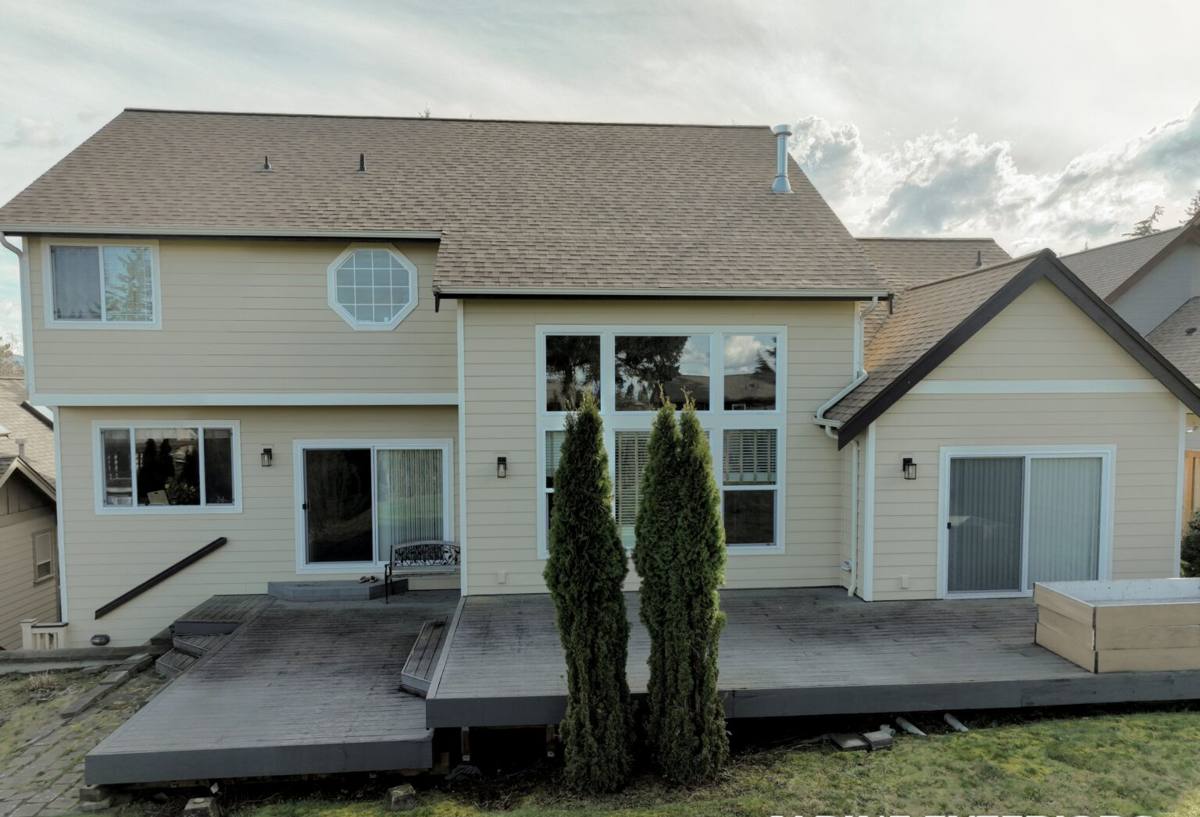
Signs a Redmond Deck Needs Repair
Most deck problems start small and stay hidden underneath the structure or below the decking boards, which is exactly why they get worse before anyone calls for help. Walk your deck and check for these warning signs before the next wet season sets in:
- Boards that feel spongy, springy, or noticeably softer than the boards around them
- Dark staining or a musty smell near the ledger board where the deck meets the house
- Railings or stair stringers that wiggle or feel less rigid than they used to
- Visible gaps opening up between boards, or fasteners backing out and sitting proud
- Green or black film building up on shaded boards, stairs, or the underside of the deck
- Rust streaks bleeding from screws, bolts, or metal connectors
- Standing water that doesn't drain off the surface within an hour or two after rain
Any one of these on its own might just mean routine maintenance. Several at once, especially near the ledger or support posts, usually means it's time for a proper inspection.
Repair vs. Replacement: How We Make the Call
Not every issue calls for tearing a deck apart. We look at where the damage is and what it's touching, because rot in decorative trim is a very different problem than rot in a structural member.
Usually a repair
Isolated soft boards, a handful of failed fasteners, a loose railing baluster, or surface graying and moss on an otherwise sound structure can typically be fixed by replacing the affected pieces without disturbing the rest of the deck.
Usually needs a closer look
Rot at the ledger board, soft or cracked support posts, undersized or corroded joist hangers, and framing that's been buried against soil or mulch are structural concerns. These get fixed properly rather than patched, because they affect the safety of the whole deck, not just its appearance.
We're upfront when a deck has aged past the point where repair makes financial sense. A deck with widespread rot in the framing, or one built without proper flashing at the house connection, often costs more to keep patching piecemeal than to rebuild correctly once.
What a Correct Deck Repair Actually Involves
A repair that only replaces what's visible on top often misses the reason the damage happened in the first place. Our approach starts underneath.
Structural inspection first
Before replacing a single board, we check the ledger flashing, joist hangers, post bases, and beam connections. This is where water damage actually starts in this climate — a failed ledger flashing lets rain track behind the siding and into the house framing, which is a far bigger problem than a gray deck board.
Matching materials, not guessing
Replacement lumber or composite boards need to match the species, grade, or product line already on the deck as closely as possible, both for appearance and so the new material expands, contracts, and weathers at a similar rate to what's around it.
Fastener and hardware upgrades
Older decks are frequently built with hardware that isn't rated for the moisture exposure or the chemicals used in modern pressure-treated lumber. Part of a proper repair is upgrading to hot-dip galvanized or stainless connectors and coated deck screws so the fix doesn't corrode and fail again in a few seasons.
Drainage and airflow
We look at how water moves off and out from under the deck. Blocked gaps between boards, vegetation growing up against the framing, and skirting with no ventilation all trap moisture against the wood and shorten its life, regardless of how good the repair itself is.
Decking Materials We See Around Redmond
The right repair material depends on what's already on the deck and what the homeowner wants going forward. Here's how the common options hold up in King County's climate:
| Material | How it handles our climate | Maintenance |
|---|---|---|
| Pressure-treated pine/fir | Affordable and strong, but absorbs moisture readily if the finish isn't kept up | Needs sealing or staining every 1-2 years |
| Cedar | Naturally moisture and insect resistant, ages to a silver-gray patina if left unfinished | Occasional cleaning; finish optional but extends life |
| Composite decking | Resists rot and doesn't need staining, but can stay damp longer and grow surface mildew in heavy shade | Periodic washing to prevent surface moss/mildew buildup |
| Structural framing lumber | Should always be pressure-treated regardless of what the decking surface is | Depends on flashing and ventilation more than the wood itself |
We don't push composite as a cure-all. It solves surface rot, but a composite deck built on framing with poor drainage or bad flashing will still develop the same underlying structural problems as a wood deck — the surface just hides it longer, which can actually delay a homeowner noticing a real issue underneath.
Our Deck Repair Process
- On-site inspection — we check decking, framing, ledger connection, posts, and railings, and walk you through what we find.
- Honest scope — a written explanation of what needs repair now, what to watch, and what can wait, with no pressure to over-scope the job.
- Structural repairs first — ledger flashing, hangers, posts, and beams get addressed before any cosmetic work.
- Board and hardware replacement — matched materials and upgraded, climate-appropriate fasteners.
- Final check — we confirm the deck is solid, level, and draining properly before calling the job done.
Moss, Mildew, and the Maintenance Side of Deck Life
Even a well-built, well-repaired deck in this part of King County needs some seasonal attention. A long moss season is simply part of living under tree cover with regular rain, and letting moss sit on decking traps moisture against the wood surface and accelerates exactly the kind of rot that leads to future repair calls. Cleaning boards and stairs before moss gets established, keeping gutters and downspouts clear so runoff isn't dumping onto the deck, and trimming back vegetation that shades and dampens the surface all extend the life of both wood and composite decking. We're happy to point out these maintenance habits as part of any repair visit, since a little upkeep goes a lot further here than it would in a drier climate.
What Deck Repair Typically Costs
Every deck is different, so we don't quote a number until we've actually looked at yours, but these are the general factors that move the price:
| Factor | Why it matters |
|---|---|
| Extent of structural damage | Ledger, post, or beam repairs cost more than surface board replacement |
| Access and deck height | Second-story or hard-to-reach decks take longer and need more setup |
| Material match | Matching an existing wood species or discontinued composite line can add cost |
| Hardware condition | Full fastener and connector replacement adds labor but prevents repeat failures |
| Size of the affected area | Spot repairs are far less costly than deck sections affected by widespread rot |
Broadly, small spot repairs (a few boards, a railing section) tend to run in the low hundreds to low thousands of dollars, while structural repairs involving framing, posts, or the ledger connection run higher. We'll always give you a clear, itemized estimate before any work starts.
What to Ask Before Hiring a Redmond Deck Repair Crew
- Do they inspect the framing and ledger, or only replace visible boards?
- Do they use fasteners and connectors rated for pressure-treated lumber and wet climates?
- Will they give you a written scope that separates structural work from cosmetic work?
- Are they licensed and insured to work in King County?
- Do they explain drainage and ventilation, or just patch what's failing today?
- Will they tell you honestly if repair isn't the right call anymore?
Why Local Experience in King County Matters
A crew that works decks across King County day in and day out knows how ledger flashing fails in this rainfall pattern, how fast moss establishes on shaded framing, and which hardware actually holds up through a full wet season rather than just looking fine when it's installed. That local pattern recognition is what separates a repair that lasts from one that's back on the schedule in two years. We work on decks throughout Redmond and the surrounding area and bring that same standard to every job, whether it's a single board swap or a full structural repair.
If your deck has soft spots, loose railings, moss buildup, or you just want a second opinion before it becomes a bigger problem, we're glad to take a look. Reach out for a free, no-pressure estimate using the form below.