 King County
 Why Renton Decks Wear Out Faster Than People Expect
Renton sits in that stretch of King County where marine air off Puget Sound meets the everyday grind of a Pacific Northwest wet season. Homeowners here usually don't lose a deck to one dramatic event — it's the slow accumulation of small insults. Driving rain gets up under top boards and into ledger connections. Moss and algae take hold on north-facing sections that barely see sun from October through March. Salt-tinged moisture in the air accelerates corrosion on fasteners and hardware that would last much longer in a drier inland climate. By the time a deck looks obviously bad — soft spots, gray streaking, boards that cup or crown — the substructure underneath has often been absorbing water for years.
We replace decks in this area because they've reached the point where refinishing or spot repair no longer makes sense: structural framing is compromised, ledger flashing has failed, or the surface material has simply outlived its service life. A proper replacement isn't just swapping boards. It's a chance to correct the drainage, flashing, and ventilation details that let the old deck fail in the first place.
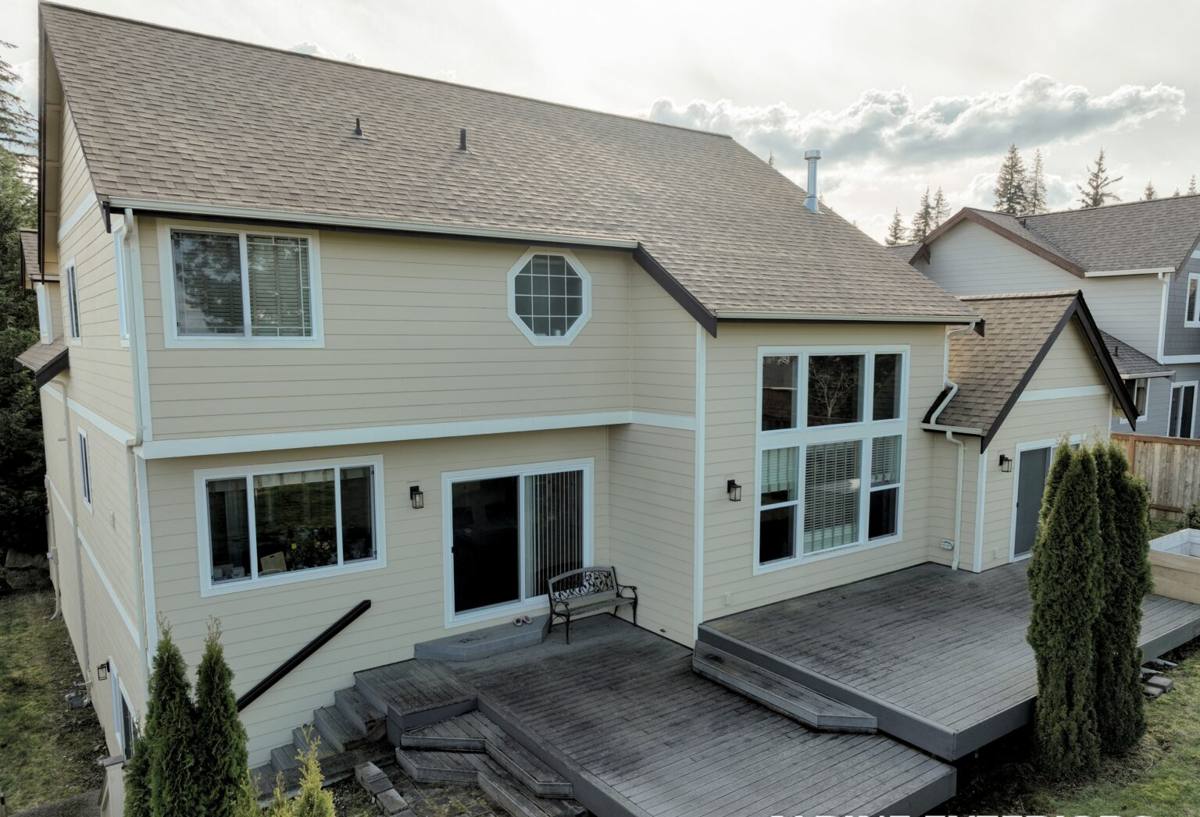
What Renton's Climate Actually Does to a Deck
Moss and Standing Moisture
King County's long, mild, wet stretch means many decks stay damp for weeks at a time, especially in shaded yards or under mature trees common in Renton's older neighborhoods. Moss doesn't just look bad — it holds water against the wood surface, which speeds up rot in untreated or poorly finished lumber and makes composite decking slick and slippery underfoot.
Driving Rain and Wind-Driven Water
Rain in this region rarely falls straight down. Wind pushes it sideways, which drives water into joints, under railings, and against the house where the deck ledger attaches. If that ledger connection wasn't properly flashed when the deck was built — common in older construction — water works its way behind the siding and into the rim joist, rotting the structure from the inside where you can't see it.
Salt Air and Metal Fatigue
Renton isn't oceanfront, but King County's proximity to Puget Sound means salt-laden air reaches inland further than people assume, especially on breezy days. Over years, this accelerates corrosion on lower-grade fasteners, joist hangers, and railing hardware. Corroded fasteners lose holding strength quietly — you often don't notice until a board or a railing post moves under load.
Signs Your Renton Deck Needs Replacing, Not Repairing
- Boards that feel spongy, spring back slowly, or flex noticeably when walked on
- Persistent gray or black staining that won't clean off with a wash
- Rust streaking around fastener heads or visible corrosion on hardware
- Gaps opening up between boards from repeated wet-dry cycling
- A ledger board or rim joist that feels soft when probed with a screwdriver
- Railings or posts that wiggle more than a firm push should allow
- Moss or algae that returns within weeks of cleaning
- Visible daylight or water staining underneath the deck near the house connection
If you're only seeing one or two of these and the framing tests solid, repair or refinishing may still be an option. Once several show up together, or the substructure itself is compromised, replacement is usually the more honest answer — patching a failing frame just delays the same conversation a year or two later, at greater cost.
What a Correct Deck Replacement Involves
Tear-Out and Framing Assessment
We remove the old decking and inspect the ledger board, joists, beams, and posts before deciding what stays and what gets replaced. In a climate like ours, hidden rot at the ledger-to-house connection is one of the most common findings, even on decks that looked fine from the surface.
Ledger Flashing Done Right
This is the single most important detail on any deck attached to a house in a wet climate. A correctly flashed ledger sheds water away from the house structure instead of letting it pool behind the board. We use proper flashing (metal, self-adhered membrane, or both depending on the wall assembly) and never rely on caulk alone to keep water out — caulk fails over time; flashing that's installed with the right laps doesn't depend on staying perfectly sealed to work.
Structural Framing and Hardware
New framing gets sized and spaced to current code, with joist hangers, post bases, and fasteners rated for exterior and, where called for, coastal-grade corrosion resistance. Given the salt air and moisture cycling in this region, we don't cut corners on hardware grade — it's a small cost difference for a large difference in how long connections hold up.
Decking Material Installation
Whether you choose wood, composite, or PVC decking, correct installation includes proper gapping for expansion, hidden or exterior-rated fasteners, and attention to how the board profile sheds water rather than trapping it. Poor installation practices — boards laid too tight, inadequate ventilation underneath — are what cause premature moss growth and cupping regardless of how good the material itself is.
Drainage and Ventilation Underneath
A deck that can't breathe underneath stays damp longer after every rain. We grade and, where needed, add ventilation gaps or drainage solutions so airflow can dry the structure between wet spells instead of trapping moisture against the framing.
Choosing a Decking Material for Renton Conditions
There's no single "best" decking material — the right choice depends on your budget, how much upkeep you want to do, and how the deck sits relative to sun, shade, and moisture. Here's how the common options actually perform in King County's climate:
| Material | Moss/Moisture Behavior | Maintenance | Typical Lifespan Here |
|---|---|---|---|
| Pressure-treated wood | Needs regular sealing to resist moss and water absorption; shaded areas need more frequent cleaning | Annual cleaning, re-seal every 1-2 years | 10-15 years with upkeep |
| Cedar | Naturally moisture-resistant but still needs finish maintenance to prevent graying and moss in shaded spots | Re-seal or stain every 2-3 years | 15-20 years with upkeep |
| Composite decking | Resists rot but can stay slick with algae/moss film if underside airflow is poor | Periodic washing, no sealing needed | 25-30 years |
| PVC/capped polymer decking | Best moisture resistance of the group; won't absorb water into the core | Occasional washing | 25-30+ years |
For heavily shaded Renton lots — common near mature landscaping — we often steer homeowners toward composite or PVC precisely because the maintenance burden of keeping wood sealed against constant damp shade is higher than most people want to keep up with year after year.
Why We're Selective About Certain Wood Products
Some lower-grade treated lumber on the market is inconsistent in how evenly the preservative penetrates the board, which matters a lot in a climate where every board spends months of the year saturated. Our standard is to use lumber and fastener combinations that are matched for exterior/ground-contact-rated exposure and to avoid mixing incompatible metals that accelerate galvanic corrosion in damp, salt-influenced air. This isn't about any one brand being bad — it's about matching materials to what this specific climate demands over a 15-20 year service life.
Our Process for a Renton Deck Replacement
- On-site assessment: We inspect the existing deck, ledger connection, and framing to determine true scope — not just what's visible from the surface.
- Written estimate: You get a clear scope of work and price before anything starts, including material options at different price points.
- Permitting: Most deck replacements in King County require a permit, especially when framing or footings change. We handle this as part of the job.
- Tear-out and disposal: Old decking and any compromised framing are removed and hauled off.
- Framing and flashing: New or reinforced structure goes in with correct ledger flashing and code-rated hardware.
- Decking installation: Your chosen material is installed with proper gapping, fastening, and drainage detail.
- Final walkthrough: We go over the finished deck with you and address anything before calling the job complete.
Why Hiring a Crew That Already Works Renton Matters
King County's building department has specific requirements for deck permits, footing depth, and guardrail code that vary by jurisdiction detail and by how the deck attaches to the house. A crew that regularly pulls permits and works decks in this county already knows what inspectors here look for, which avoids the delay of a failed inspection over a detail that's second nature to a local crew. Just as important, a contractor who's replaced decks throughout Renton and the surrounding area has already seen how the local mix of shade, rainfall, and lot drainage plays out on real houses — not just in a manual. That's the difference between a deck that's built to a generic spec and one that's built for what this specific climate will actually throw at it over the next two decades.
Planning and Budgeting for Your Project
Deck replacement costs vary widely based on size, material choice, framing condition, and site access, so we don't publish blanket pricing — it depends too much on what we find once we're assessing your specific deck. What we can tell you honestly: composite and PVC materials cost more upfront than wood but typically cost less over a 20-year span once you account for repeated sealing, staining, and earlier replacement of wood. If your framing turns out to be in worse shape than expected once we open things up, we'll walk you through the added cost before doing the work, not after.
A few practical things to consider before you start:
- Do you want to change the deck's footprint or shape, which affects permitting and framing cost
- How much shade the deck gets, which should influence your material choice
- Whether railings, stairs, or lighting need replacing as part of the same project
- Your realistic maintenance appetite — sealing wood every year or two is a real ongoing commitment
Get a Straight-Talk Estimate
If your Renton deck is showing soft spots, persistent moss, or hardware that's starting to rust, it's worth having someone look at the framing before you decide between repair and replacement. We'll give you an honest read on what's actually going on underneath and a clear estimate for fixing it right — no pressure, no upsell. Use the form below to request your free estimate.