 King County
 Siding Repair Built for Renton's Wet, Marine Climate
Renton sits in one of the wetter corners of King County, and the siding on a Renton home works harder than most homeowners realize. Between the marine, moisture-laden air that moves through the Puget Sound region, months of driving rain, and a moss season that can stretch from fall through spring, exterior siding here is under near-constant pressure. Small problems that would take years to matter in a dry climate can turn into rot, staining, and structural damage in a fraction of that time when the siding in question isn't holding up its end of the job.
Siding repair is not just a cosmetic fix. Done correctly, it's an inspection of how water is moving around your home, a correction of whatever let it in, and a restoration of the barrier that's supposed to keep it out. Done poorly — caulk smeared over a symptom instead of a cause — it buys a season or two before the same spot fails again, often worse. This page walks through what Renton homes actually need from a siding repair, what a correct repair involves, and how we approach it.
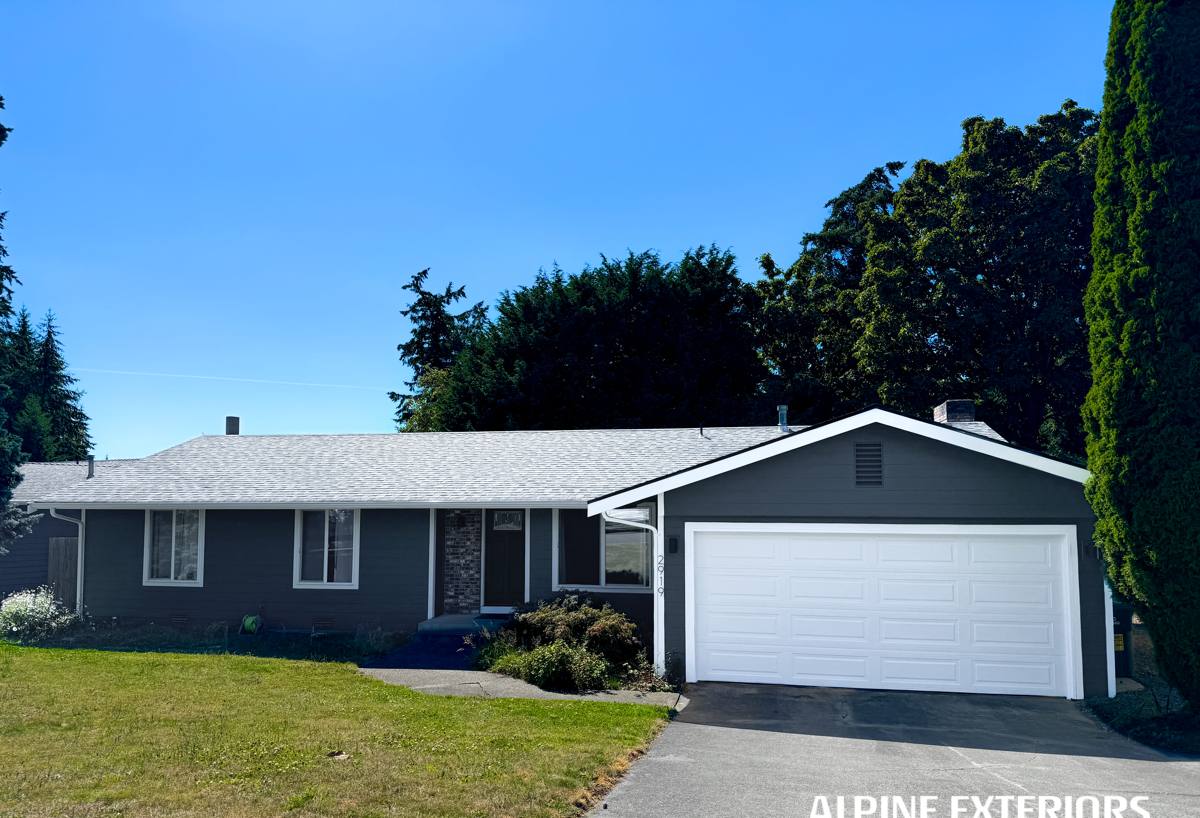
What King County's Climate Does to Siding Over Time
Constant Moisture Exposure
King County doesn't get dramatic weather events as often as it gets long, low-grade exposure — weeks of drizzle, wind-driven rain that finds its way under trim and around fasteners, and humidity that never fully clears between storms. Siding materials that aren't dimensionally stable or that absorb water expand, contract, and eventually crack or delaminate under that cycle. Even well-installed siding needs its seams, flashing, and caulk joints checked periodically, because that's where water finds a way in first.
Moss, Algae, and Organic Growth
A long moss season is one of the more underestimated stressors on Renton homes. Moss and algae don't just look bad — they hold moisture against the siding surface far longer than open air would, which accelerates rot in wood-based products and can stain or degrade the finish on lower-quality siding. North-facing walls, areas shaded by trees, and sections close to grade tend to show the worst of it.
Temperature Swings and Material Fatigue
Western Washington's temperature swings are mild compared to the rest of the country, but siding still expands and contracts with every warm afternoon and cool, damp night. Over years, that constant small movement stresses caulk joints, fasteners, and any seams where two materials meet. It's rarely dramatic — it's cumulative, and it's exactly why siding that looked fine five years ago can develop real problems now.
Common Siding Repair Issues We See in King County Homes
Most siding repair calls in this area fall into a handful of categories. Recognizing which one you're dealing with matters, because the fix — and the urgency — is different for each.
- Soft or rotted panels, usually near ground level, under windows, or wherever water has been draining against the wall instead of away from it.
- Cracked or split boards, often from impact, improper fastening, or material that was never rated for this climate to begin with.
- Failed caulking and sealant at joints, corners, and trim, which lets water behind the siding long before any damage is visible from the street.
- Buckling or warping panels, a sign of moisture trapped behind the siding or a original installation that didn't allow the material to move properly.
- Staining, discoloration, or persistent moss growth that signals a moisture problem even before the siding itself has failed.
- Damage around penetrations — hose bibs, vents, light fixtures, and anywhere else something passes through the siding plane.
What a Correct Siding Repair Actually Involves
Diagnosing the Cause, Not Just the Symptom
Anyone can caulk a crack or nail a loose board back down. A correct repair starts by figuring out why that spot failed in the first place. Is water draining onto the wall from a gutter or roofline? Is there a gap in the weather-resistive barrier behind the siding? Is the damage isolated, or is it the leading edge of a wider moisture problem working its way through the wall assembly? Skipping this step is the single most common reason siding repairs don't last in a climate like King County's.
Checking What's Behind the Siding
Where there's rot or long-term moisture staining, we check the sheathing and the weather-resistive barrier underneath, not just the visible siding. Replacing a damaged board over compromised sheathing just hides the problem for another season. If the substrate is damaged, that gets addressed as part of the repair, not left for later.
Matching Materials and Finish
A repair should blend in, not stand out as an obvious patch. That means matching profile, reveal, and — where the siding is James Hardie ColorPlus — matching the factory finish rather than repainting a small section a slightly different shade. On older homes where the exact product has been discontinued, we're upfront about what a close match looks like versus a perfect one.
Sealing and Flashing Done Right
Most siding failures in this region trace back to flashing and sealant details, not the siding material itself. A correct repair re-establishes proper flashing at windows, doors, and horizontal trim, and uses sealant only where it belongs — as a secondary defense, not the primary one. Caulk that's doing the job water-shedding design should be doing is a repair that's already failing.
Repair vs. Replace: How We Make the Call
Not every siding problem needs a full replacement, and not every damaged section can be responsibly patched. We look at the extent of the damage, what's underneath it, and what it would take to make a repair actually last.
| Factor | Favors Repair | Favors Replacement |
|---|---|---|
| Extent of damage | Isolated to one or two sections | Spread across multiple walls or elevations |
| Sheathing condition | Solid, dry, undamaged | Soft, rotted, or water-stained over a wide area |
| Siding material | Sound James Hardie fiber cement elsewhere on the home | Original material is failing systemically (warping, chronic moisture issues) |
| Age of existing siding | Well within expected service life | Nearing or past the end of its practical lifespan |
| Underlying cause | A fixable, localized water intrusion point | A design or drainage issue affecting the whole wall system |
When a repair is the right call, we do it properly and tell you honestly what to expect from it. When the damage points to a wider problem, we'll say so rather than patch something that's going to fail again in a year or two.
Why We Repair — and Replace — Only With James Hardie Fiber Cement
We install and repair one siding system: James Hardie fiber cement. We don't work with vinyl, LP SmartSide, Cemplank, Allura, primed spruce, or cedar, and that's a deliberate standard, not a limitation we apologize for.
Fiber cement is non-combustible, which matters on its own merits. It's also engineered for exactly the kind of climate King County has — Hardie's HZ5 product line is formulated for regions with significant moisture exposure, resisting the swelling, cracking, and moss-friendly surface texture that wood-based and some engineered wood sidings struggle with over time. The ColorPlus factory finish is baked on under controlled conditions, which holds color and resists fading far better than field-applied paint, and it comes with a strong, transferable manufacturer warranty when installed to spec.
That last part — installed to spec — is where a lot of siding problems actually originate, regardless of brand. Hardie's own installation guidelines are specific about clearances, fastening, flashing, and caulking, and repairs done off-spec are a common reason otherwise good material fails early. When we repair Hardie siding, we repair it to the same standard it should have been installed to in the first place. When a repair calls for replacement material, it's Hardie, matched and installed correctly — never a mixed-brand patch that behaves differently than the rest of the wall.
Our Siding Repair Process in Renton
- Inspection. We look at the damaged area and the surrounding wall assembly, not just the spot you called about, since siding problems in this climate rarely stay isolated for long.
- Honest diagnosis. We explain what's actually causing the damage — moisture source, installation gap, material failure — and what it will take to fix it right.
- Clear scope and pricing. You get a straightforward explanation of what the repair involves before any work starts, including whether it's a true repair or whether replacement makes more sense.
- Correct repair work. Damaged material and, where needed, damaged sheathing are removed and replaced; flashing and drainage details are corrected, not just covered over.
- Matched materials and finish. Replacement siding is matched to the existing Hardie product as closely as the current product line allows.
- Final check. We confirm the repair sheds water the way it's supposed to before we consider the job done.
A Homeowner's Siding Repair Checklist
A few minutes walking your property can catch problems while they're still cheap to fix. Look for:
- Soft spots when you press on siding near the ground, under windows, or below downspouts
- Visible cracks, splits, or gaps at panel joints and corners
- Persistent moss, algae, or dark staining that doesn't wash off easily
- Caulk that's cracked, shrunk, or pulling away from the joint
- Paint or finish that's peeling, bubbling, or noticeably faded in one area but not others
- Warped, bowed, or buckling panels, especially after a stretch of wet weather
- Any musty smell or interior staining on a wall that backs up to the affected siding
Why Hiring a Crew That Already Works in Renton Matters
Siding repair is very local work. A crew that regularly handles siding repair across King County knows which orientations in Renton neighborhoods take the worst of the driving rain, how long moss tends to build up before it starts causing real damage, and what correct flashing and drainage details look like for homes built to this region's typical construction practices. That familiarity shows up in faster, more accurate diagnosis — knowing where to check first instead of guessing — and in repairs that account for what this specific climate will do to them over the next several winters, not just how they'll look the day the work is finished.
It also means straightforward, local accountability. You're not dealing with a crew passing through the area for one job; you're working with a contractor who has a reputation to maintain in the community and stands behind the repair after the truck leaves.
If you've got a section of siding that's cracked, staining, growing moss, or just doesn't look right, we're happy to take a look and give you a straight answer about what it needs. Reach out for a free, no-pressure estimate using the form below.