 King County
 Windows Built for the Way Sammamish Actually Weathers
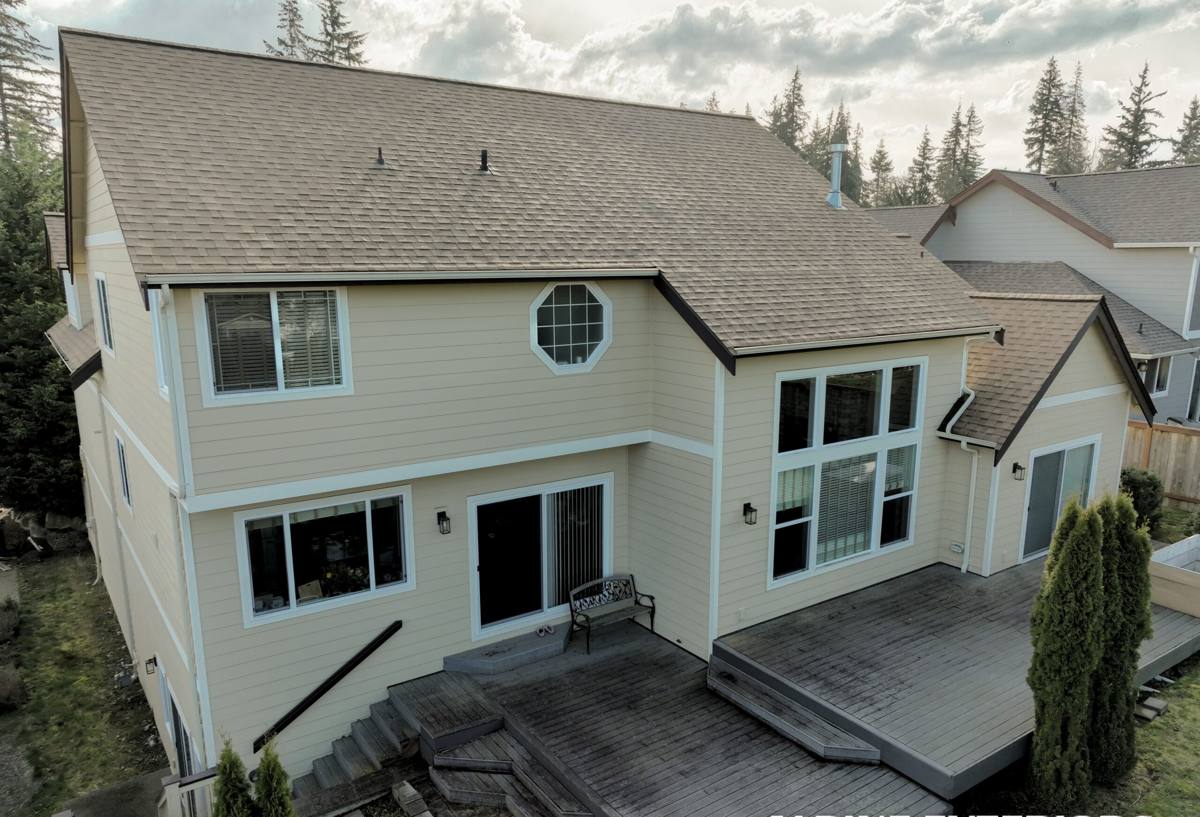
Sammamish sits inland from the salt water, up on the plateau between Lake Sammamish and the foothills, so it doesn't take the same direct marine spray that homes closer to Puget Sound deal with. But that doesn't mean the windows here have it easy. King County's long, wet winters still dump heavy rain on this area for months at a stretch, and the dense tree cover that makes Sammamish neighborhoods so shaded also keeps things damp longer after a storm than you'd get in a more open, sun-exposed spot. Add in the moss and algae that thrive on shaded, north-facing surfaces here, plus the swing between cold, wet winters and dry, hot summer afternoons, and you've got a climate that's genuinely hard on window frames, seals, and glazing over time.
A window that's "fine" in a drier climate can fail early here — not because it's a bad window, but because it wasn't matched to what this specific area does to a house year-round. That's the difference between installing whatever's on the truck and actually specifying custom windows for a Sammamish home.
What This Climate Does to Windows Over Time
Moisture is the constant enemy
Wind-driven rain finds any gap in flashing or sealant and works it wider every season. Once water gets behind a frame, it doesn't dry out quickly here — the humidity and shade keep things damp far longer than in a drier climate, which is exactly the condition wood rot and mold need to take hold.
Condensation and fogged glass
Cold, wet winters combined with warm interiors push a lot of condensation onto glass and into frame cavities. On older dual-pane units, a failed seal shows up as fog or haze trapped between the panes — a sign the argon fill is gone and the insulating value has dropped, even if the window still looks okay from across the room.
Moss, algae, and shaded exposures
Homes tucked under mature trees or facing north tend to stay damp longer after rain, and that's where you'll see moss and green staining creep onto sills, tracks, and trim first. It's mostly cosmetic at first, but it holds moisture against the frame and accelerates whatever's already going wrong underneath.
UV and temperature swings
Sammamish still gets real summer sun between the rainy stretches, and UV breaks down vinyl and rubber seals over years of exposure, especially on south- and west-facing walls. Combined with winter cold, that expansion-and-contraction cycle is what eventually cracks old caulking and loosens frames.
Signs a Sammamish Home Needs Custom Windows, Not Just Repairs
- Fogging or haze between panes that won't clear — the seal is gone and the gas fill has escaped
- Soft, spongy, or discolored wood at the sill or lower frame corners
- Visible daylight, drafts, or whistling around the frame in wind and rain
- Windows that are painted or caulked shut, or that stick and won't latch properly
- Persistent moss, black staining, or peeling paint concentrated around window openings
- Rooms near certain windows that feel noticeably colder or draftier than the rest of the house
- Condensation forming on the inside of the glass regularly, even with normal ventilation
Any one of these can sometimes be handled with a repair. Several at once, or a home where the original windows are original to a build from the 1990s or early 2000s (common across a lot of Sammamish's growth-era neighborhoods), usually points to full replacement being the more honest recommendation.
What "Custom" Actually Means for a Window Job
"Custom windows" doesn't mean fancier for the sake of it — it means the window is specified to fit the actual opening, the actual wall assembly, and the actual style of the house, instead of forcing a stock size to work. On real jobs that shows up as:
- Exact measurement of each opening, since older homes settle and openings are rarely perfectly square anymore
- Matching grid patterns, sightlines, and trim profiles to the home's existing architectural style rather than defaulting to whatever's cheapest to stock
- Choosing frame material and glass package based on the wall's actual sun and rain exposure, not a one-size-fits-all spec for the whole house
- Coordinating color and hardware with any homeowners association guidelines — a lot of Sammamish's newer planned communities have HOA rules that govern exterior window appearance
- Correct flashing and sill pan detailing for that specific wall assembly, since siding type and wall construction vary house to house
Frame Material Trade-Offs for This Climate
There's no single "best" window material — each one is a different set of trade-offs, and the right call depends on the specific wall, exposure, and budget. Here's how the common options actually compare for a wet, tree-shaded climate like this one:
| Material | Moisture Behavior | Maintenance | Typical Lifespan | Best Fit |
|---|---|---|---|---|
| Vinyl | Won't rot; seals and welded corners can degrade with UV over time | Low — occasional cleaning | 20-30 years | Budget-conscious replacements, most house styles |
| Fiberglass | Very stable in wet/dry cycling; minimal expansion and contraction | Low | 30-40+ years | Homes with heavy sun/rain exposure or extreme temperature swings |
| Wood-clad | Good if cladding and flashing are done right; wood core still needs a sound exterior seal | Higher — exterior clad protects, but interior wood needs occasional attention | 20-30+ years with maintenance | Traditional or craftsman-style homes where interior wood look matters |
| Aluminum (older stock) | Poor thermal performance; prone to condensation without a thermal break | Low, but performance issues aren't fixable with maintenance | Varies widely | Generally not what we recommend replacing into today |
We don't push one brand or material on every job. We'll tell you honestly which option fits your home's exposure, your budget, and how much upkeep you actually want to sign up for.
What a Correct Installation Actually Involves
The window itself is only part of the job — most window failures we see in this area trace back to installation shortcuts, not the product. A correct install includes:
- Removing the old window and inspecting the rough opening for hidden rot or moisture damage before anything new goes in
- Installing (or repairing) a proper sill pan so any water that does get past the exterior seal drains out, not into the wall
- Integrating new flashing correctly with the existing weather-resistive barrier and siding — this is the detail that determines whether wind-driven rain stays out
- Shimming and leveling the frame so it operates smoothly and doesn't rack over time as the house settles
- Insulating the gap between frame and rough opening properly — not stuffed too tight, not left with gaps
- Sealing the exterior with the right sealant for the siding type, and finishing interior trim cleanly
Skip any one of those steps and you can end up with a brand-new window that still leaks or fogs within a few years — which is exactly the kind of preventable failure we're trying to help homeowners avoid.
How We Handle a Sammamish Custom Window Job
1. On-site assessment
We look at each opening, the wall assembly, current condition, sun and rain exposure, and any HOA or style considerations before recommending anything.
2. Honest product recommendation
We'll walk you through material and glass options with real trade-offs — not just the highest-margin option — based on what that specific wall and opening actually need.
3. Precise measurement and ordering
Each opening gets measured individually. Older homes rarely have perfectly uniform openings, and custom sizing avoids the gaps and shimming problems that come from forcing a stock size.
4. Installation day
Old windows come out, openings get inspected and any hidden damage addressed before the new unit goes in, flashing and sill pans are installed correctly, and everything is sealed and trimmed to match.
5. Walkthrough and cleanup
We test every window's operation and seal before we consider the job done, and we clean up the site like we're leaving our own house.
Why Hire a Crew That Already Works Sammamish
A window contractor who works this specific area regularly already knows the things that only come from experience here: which wall assemblies and siding types are common in Sammamish's newer developments, how HOA architectural guidelines typically handle window color and grid patterns, and how much shade and moisture a given exposure is realistically dealing with. That local familiarity shortens the guesswork and reduces the odds of a callback for something that could've been caught up front. It also means we're not learning King County permitting and inspection expectations on your project — we already know them.
Before You Decide: A Quick Homeowner Checklist
- Walk the exterior and note any windows with visible staining, moss buildup, or peeling paint around the frame
- Check for fogging or haze between panes on a bright day, when it's easiest to spot
- Feel for drafts around frames on a windy or rainy day
- Note which windows face north or sit under heavy tree cover — these usually need attention first
- Check whether your neighborhood has HOA guidelines on window color, grid style, or trim
- Get more than one opinion before committing to full-house replacement versus targeted repairs
If you're weighing whether a window needs repair or replacement, or you're just noticing early signs of moisture or fogging, it's worth getting it looked at before it turns into something bigger. We're happy to come take a look at your Sammamish home and give you a straight answer — no pressure, no upsell, just what your windows actually need. Use the form below to request a free estimate.