 King County
 Storm Damage Roof Repair Built for Sammamish Conditions
Sammamish sits up on the plateau between Lake Sammamish and the foothills, and that elevation means homes here catch weather a little differently than roofs down in the valley. Wind funnels through the tree lines, rain comes in sideways during the big fall and winter systems, and the tree cover that makes Sammamish neighborhoods so pleasant also means more debris, more shade, and more moss pressure on every roof plane. When a storm damages a roof here, the fix has to account for all of that — not just patch the visible hole and move on.
We work on roofs across King County, and Sammamish jobs have a consistent pattern: wind-lifted shingles along ridgelines and eaves, branch strikes from the mature trees that line so many properties, and moss-softened decking that turns a small storm event into a bigger repair once we get the old roofing pulled back. Understanding that pattern before we ever get on the roof is what separates a repair that holds up from one that fails again next winter.
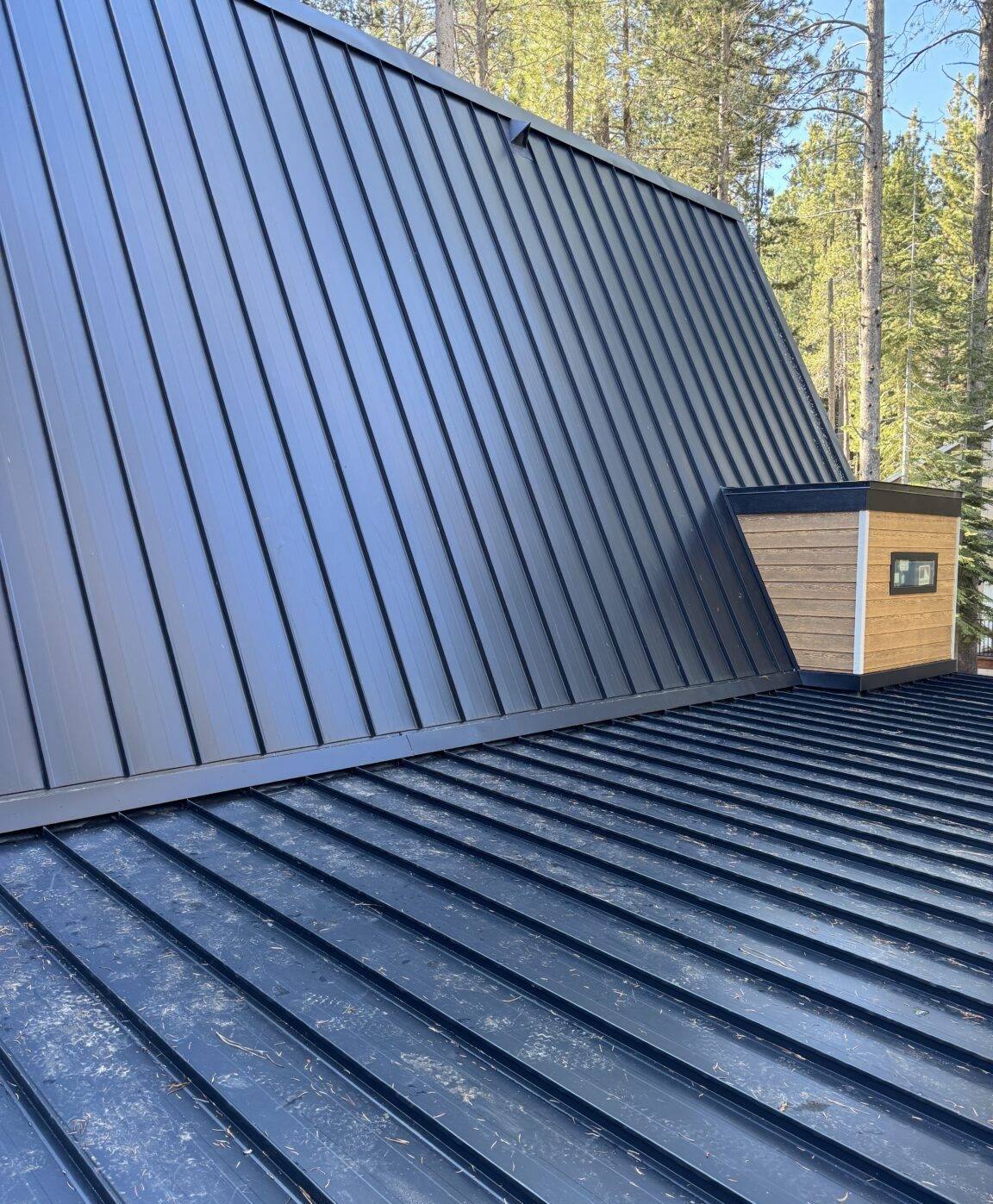
What Counts as Storm Damage on a Sammamish Roof
Storm damage isn't always dramatic. Some of it is obvious — a tree limb through the roof deck, shingles scattered across the yard, a soffit torn loose. But a lot of storm damage is quieter and shows up weeks or months later as a stain on a ceiling or a soft spot underfoot in the attic.
Common storm damage types we see locally
- Wind-lifted or creased shingles, especially along ridge caps and roof edges where uplift is strongest
- Displaced or cracked ridge and hip caps after sustained gusts
- Punctures and fractured decking from falling branches or whole limbs
- Flashing pulled loose around chimneys, skylights, and roof-to-wall transitions
- Gutter and downspout damage that redirects water back under the roofline
- Granule loss on asphalt shingles from wind-driven debris and hail-adjacent impact
- Moisture intrusion that wasn't caused by the storm itself, but was exposed by it once wind opened a seam that moss and standing water had already weakened
That last point matters in Sammamish specifically. A long, wet moss season softens shingle mat and decking over years. A storm doesn't create that weakness — it just finds it. So part of an honest storm damage repair is telling a homeowner when we see pre-existing wear alongside the acute storm damage, rather than blaming everything on one weather event.
Why the Regional Climate Changes the Repair, Not Just the Cause
Salt-tinged air moving in off the Sound, driving rain during frontal systems, and a moss season that can run from fall through spring all shape how we approach a repair here, not just what caused the damage in the first place.
Driving rain and wind-driven water
When rain comes in at an angle instead of straight down, water gets pushed up under shingle edges and around flashing details that would stay dry in calmer weather. A storm repair in Sammamish has to re-establish that wind-driven-rain resistance, which usually means paying close attention to fastener placement, shingle seal strips, and flashing laps — not just matching the old material.
Moss and organic growth
Shaded lots and tree cover across Sammamish mean moss gets a head start on north-facing and shaded roof planes. Moss holds moisture against the roofing surface long after a storm has passed, which slows drying and can mask ongoing damage under a patch that looks fine from the ground. We factor moss exposure into how we sequence a repair and where we recommend follow-up maintenance.
Salt air and corrosion
Proximity to Puget Sound and Lake Sammamish means metal roof components — flashing, fasteners, gutter hardware — see more corrosion pressure over time than the same materials would inland. A repair that reuses corroding fasteners or unsealed metal is a callback waiting to happen.
| Climate Factor | Effect on the Roof | What a Correct Repair Does |
|---|---|---|
| Driving, wind-driven rain | Pushes water under shingle edges and flashing laps | Re-seals laps properly, rebuilds seal-strip contact, doesn't just overlay a patch |
| Long moss season | Holds moisture, softens shingle mat and decking over time | Checks decking condition under the damaged area, not just the surface layer |
| Salt-influenced air | Accelerates corrosion on metal flashing and fasteners | Uses corrosion-resistant fasteners and flashing, avoids reusing compromised metal |
| Mature tree cover | More branch-strike risk, more debris load, more shade | Inspects surrounding limbs and clearance, not just the impact point |
What a Correct Storm Damage Repair Actually Involves
A storm repair done right is more than swapping out the shingles that are obviously missing. It starts with figuring out how far the damage actually extends, because wind and water don't respect the boundaries of the visible damage.
Inspection before any repair work starts
- Full roof-plane inspection, not just the area the homeowner pointed out
- Attic check from the inside for water staining, wet insulation, or light coming through the deck
- Flashing and penetration check around chimneys, vents, and skylights near the damaged area
- Decking assessment once shingles are pulled back — soft or delaminated plywood gets replaced, not roofed over
- Photo documentation for insurance purposes, taken before and during the repair
The repair itself
Once we know the real scope, the repair matches materials and installation method to what's already on the roof where possible, replaces any compromised decking, re-flashes any disturbed transitions correctly rather than caulking over them, and re-establishes proper shingle coursing and seal-strip contact so the repaired section performs the same as the surrounding roof — not as a visibly different patch that becomes its own weak point.
Insurance Claims: What Adjusters Need to See
Most storm damage repairs in King County involve a homeowner's insurance claim, and the single biggest reason claims get delayed or underpaid is thin documentation. We photograph the damage before we touch anything, document decking condition once it's exposed, and provide a written scope that separates storm-caused damage from any pre-existing wear we find — like moss-related softening that predates the storm. That distinction protects the homeowner's credibility with the adjuster and keeps the claim moving instead of stalling on a dispute.
We're glad to meet an adjuster on-site or provide documentation directly to them. We don't inflate scopes to chase a bigger payout, and we don't downplay real damage to make a repair look simpler than it is — both approaches cause problems for the homeowner later, either with the insurer or with the roof itself.
Our Process for Sammamish Storm Repairs
- Fast initial response — storm damage that's actively letting water in gets a tarp or temporary cover on the same visit when needed, before anything else.
- Full inspection — roof, attic, flashing, and surrounding trees, with photo documentation.
- Written scope and estimate — a clear breakdown of what's storm damage, what's pre-existing, and what the repair involves.
- Insurance coordination — documentation provided directly to the adjuster if the homeowner is filing a claim.
- Repair — matched materials, proper flashing and decking work, done to hold up through the next storm season, not just pass a visual check.
- Follow-up recommendations — if we spot moss buildup or drainage issues nearby that aren't part of the current damage, we'll flag them so they don't turn into the next storm's damage.
Signs it's time to call, even before the next storm
- Shingles in the yard or gutters after any windy day
- A ceiling stain that appeared after a storm and hasn't gone away
- Visible daylight or damp insulation in the attic near a roof edge or valley
- A branch or limb that made contact with the roof, even if nothing looks obviously broken
- Granules collecting in gutters or at downspout outlets after heavy rain
Why Hiring a Crew That Already Works Sammamish Matters
A roofer who mainly works flatter, drier parts of the region can still do competent work, but they're guessing at things a Sammamish-based crew already knows from repetition: which roof orientations take the worst wind-driven rain on the plateau, how aggressively moss builds under the tree canopy common to this area, and what documentation King County insurance adjusters actually want to see on a claim. That local repetition shows up in fewer surprises during the repair and fewer callbacks afterward.
It also matters for response time. Storm damage that's actively leaking doesn't wait for a convenient appointment slot, and a crew that already routes through King County regularly can get a tarp on a roof faster than one driving in from outside the area.
Get a Free, No-Pressure Estimate
If your Sammamish home has storm damage — or you're not sure whether what you're seeing is storm damage or long-term wear finally catching up — we'll take a look, document what we find, and give you a straight answer along with a written estimate. There's no obligation and no pressure. Use the form below to get started.