 King County
 Why More Seattle Homeowners Are Considering Metal Roofing
Seattle sits in a climate that's genuinely hard on a roof. Nine months of the year, water is either falling, blowing sideways, or sitting under a canopy of trees waiting to grow moss. Add proximity to Puget Sound and the salt-laden air that comes with it, and you've got a combination that shortens the life of a lot of roofing materials faster than homeowners expect. Metal roofing has become a serious option here not because it's trendy, but because it holds up to exactly the conditions this region throws at it: sustained rain, wind-driven water, temperature swings, and moss pressure that never really lets up.
This page covers what metal roofing actually involves for a home in Seattle specifically — not a generic overview of metal roofing everywhere, but what changes when the job is done here, in King County, in this climate.
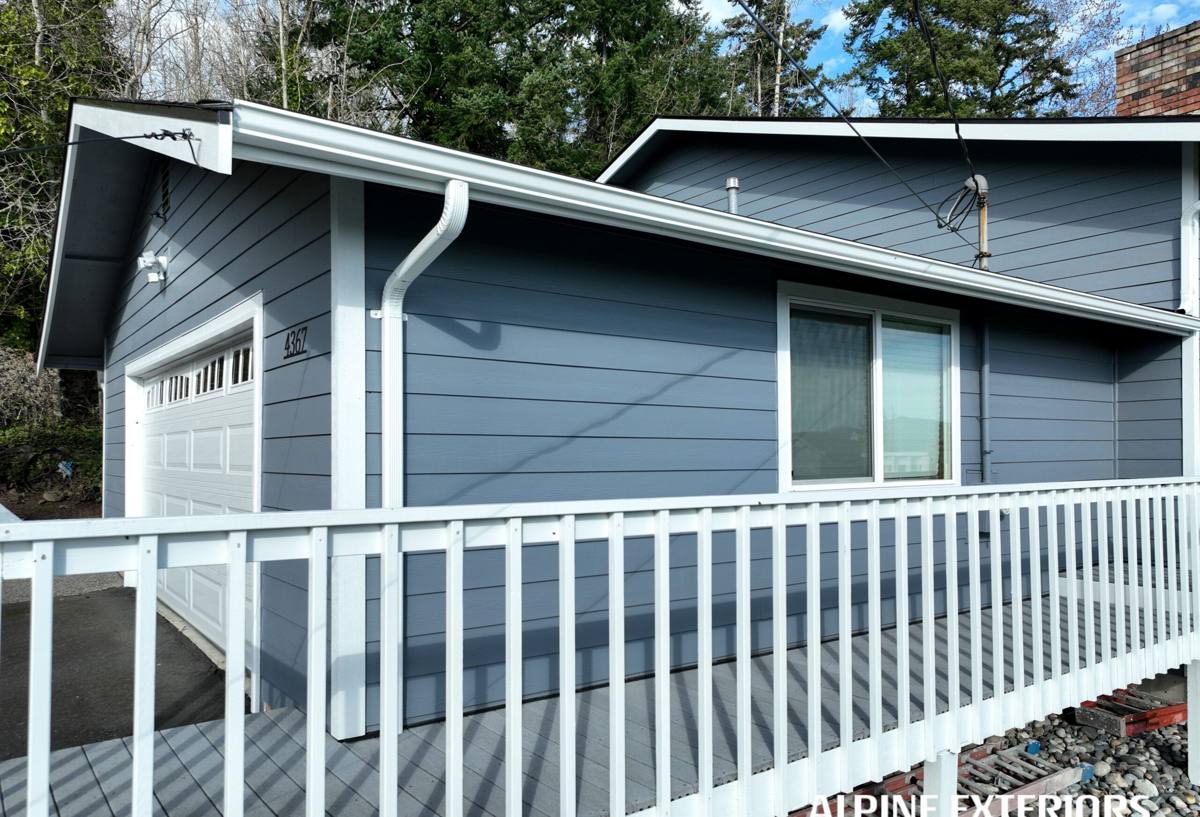
What Seattle's Climate Actually Does to a Roof
Driving Rain and Wind-Driven Water
Seattle doesn't usually get violent storms, but it gets a lot of rain over a long season, often pushed sideways by wind off the Sound. That kind of weather doesn't just test how waterproof a roof covering is — it tests every seam, fastener, and flashing detail. A roof that sheds water fine in a light, straight-down rain can still leak during a wind-driven event if the laps, seams, or penetrations weren't detailed correctly. Metal roofing, when installed right, handles this well because a properly seamed metal roof has far fewer places for wind-driven water to find a way in compared to a shingle roof relying on gravity and adhesive strips.
Salt Air and Marine Exposure
Homes closer to Puget Sound deal with a slow, steady exposure to salt-laden moisture in the air. Over years, that air can accelerate corrosion on unprotected or poorly coated metal — fasteners, flashing, gutters, and the roofing panels themselves. This is one of the biggest reasons material and coating choice matters more here than it would inland. Not every metal roofing product is built with the same corrosion resistance, and using the wrong one near the water is how homeowners end up with premature rust streaking and fastener failure years before the roof should need attention.
Moss, Shade, and the Long Wet Season
King County's tree cover and extended damp season make moss and algae growth almost unavoidable on north-facing slopes and shaded roof areas. On asphalt shingles, moss roots into the granule surface and lifts it over time, shortening the roof's life. Metal doesn't give moss the same foothold — there's no porous granule surface for it to grip — but moss and organic debris can still collect in valleys, at panel laps, and around penetrations if a roof isn't detailed and maintained with that in mind.
Metal Roofing Systems We Install
"Metal roofing" isn't one product — the panel type, gauge, and finish all affect how a roof performs in this climate. We install systems suited to Seattle's rain and moisture load rather than defaulting to whatever's cheapest to source.
| System | Best Fit | Key Trade-Off |
|---|---|---|
| Standing seam (concealed fastener) | Most Seattle homes, especially near the water or with low-slope sections | Higher material and labor cost, but far fewer exposed penetration points for water to work into |
| Exposed-fastener panel | Outbuildings, shops, and budget-conscious re-roofs on steeper pitches | Lower upfront cost, but fasteners and gaskets are a long-term maintenance item in wet climates |
| Metal shingle / shake profile | Homes wanting a traditional look with metal's durability | More seams and lap joints than standing seam, so installation detail quality matters even more |
Standing Seam vs. Exposed-Fastener Panels
The practical difference comes down to how water is kept out. Standing seam panels lock together with raised, concealed seams — there's no exposed screw sitting in the weather path for decades, gradually working loose or corroding. Exposed-fastener panels are held down with screws through the panel face, each one sealed with a rubber washer that eventually hardens and needs replacement. In a climate that stays wet as long as Seattle's does, that difference in long-term maintenance is worth understanding before choosing a system based on price alone.
What a Correct Metal Roof Installation Involves
A metal roof is only as good as what's underneath it and how it's detailed at every transition. The panels themselves are rarely where problems start — the failures we get called to fix on other installs almost always trace back to shortcuts in these areas:
- Underlayment: A high-temperature, self-adhered underlayment at eaves, valleys, and penetrations, not just builder's felt, to back up the panels if wind ever drives water past a seam
- Ventilation: Proper intake and exhaust airflow so condensation doesn't form on the underside of the panels during Seattle's cold, damp nights
- Flashing: Custom-formed flashing at every wall intersection, chimney, skylight, and valley — these are the highest-failure points on any roof, metal or otherwise
- Fastening pattern: Correct clip spacing and fastener type for the panel profile and local wind exposure, not a generic pattern used everywhere
- Panel expansion: Metal expands and contracts with temperature swings; seams and clips need to allow for that movement without stressing the panel or fasteners
Skipping any of these doesn't usually show up as a leak in year one. It shows up in year five or six, after the panels have gone through enough wet-dry and hot-cold cycles to expose the shortcut — which is exactly why installation quality matters more than the brand name on the panel.
Moss and Debris: What Changes (and What Doesn't) With Metal
Switching to metal roofing significantly reduces moss growth on the main roof surface, but it doesn't eliminate the need to manage debris. Needles, leaves, and moss spores still land on a metal roof and still collect in valleys, behind chimneys, and in gutters. Left alone, that organic buildup holds moisture against the panel finish and fasteners longer than it should, which works against the exact corrosion resistance you're paying for. The advantage with metal is that clearing debris is usually simpler and less damaging than on a shingle roof — there's no granule surface to scuff or lift while doing it — but it's not a "never touch it again" material, regardless of what that's sometimes marketed as.
Our Process From First Call to Final Walkthrough
- On-site assessment: We look at your existing roof structure, deck condition, ventilation, and any problem areas — valleys, chimneys, low-slope sections — before recommending a system
- System and panel selection: Based on your home's exposure (proximity to the Sound, tree cover, roof pitch), we recommend the panel type and finish suited to that specific exposure, not a one-size answer
- Written estimate: A clear scope covering tear-off or overlay, underlayment, flashing details, ventilation work, and panel system, so there are no surprises mid-job
- Installation: Deck inspection and repair as needed, underlayment, flashing, panel installation, and trim — with attention to the details that actually determine whether the roof performs in a driving rain
- Final walkthrough: We go over the completed roof with you, including what routine maintenance it needs and what to watch for over the years ahead
Maintaining a Metal Roof in King County
Metal roofing is genuinely low-maintenance compared to shingles, but "low" isn't "none." A short annual routine keeps a metal roof performing the way it's supposed to for decades:
- Clear valleys, gutters, and downspouts of needles and leaf debris at least once a year, more often under heavy tree cover
- Check and clear any moss or organic buildup in shaded valleys before it holds moisture against the panel finish
- Visually inspect flashing at chimneys, skylights, and wall intersections for gaps or sealant that's aged and cracked
- Look for any scuffs or scratches in the panel finish after storms or after any work done on the roof (satellite mounts, solar brackets, etc.) and have them touched up before bare metal is exposed to the weather
- Keep overhanging branches trimmed back to reduce debris load and limit abrasion during wind
Cost Factors for Metal Roofing in Seattle
Metal roofing costs more upfront than asphalt shingles, and the range depends on real variables specific to your home rather than a flat per-square number. Broadly, homeowners should expect metal roofing to run from a moderate premium over quality shingles up to several times that, depending on system and complexity — we'll give you an exact number after seeing your roof, but these are the factors that move the price:
| Factor | Why It Matters |
|---|---|
| Panel system (standing seam vs. exposed-fastener) | Standing seam runs higher due to material and labor; exposed-fastener is more budget-friendly but needs more upkeep |
| Roof complexity | Valleys, dormers, skylights, and multiple roof planes all add labor and flashing work |
| Tear-off vs. overlay | Removing an existing roof adds cost but lets us inspect and repair the deck underneath — important before sealing it under metal for decades |
| Panel gauge and coating | Heavier gauge and marine-grade coatings cost more but matter more the closer a home sits to Puget Sound |
| Ventilation upgrades | Older homes often need intake or exhaust vent work added as part of the re-roof to prevent condensation issues |
Why Hire a Crew That Already Works in Seattle
Metal roofing performs differently depending on where it's installed, and a crew that mostly works drier climates or different roof styles doesn't automatically know how to detail a roof for King County's rain load and moss season. Local experience means knowing which valleys in this region collect the most debris, which panel finishes hold up near the water, and how to flash correctly for a roof that stays wet for months at a stretch rather than dries out between storms. It also means being available for the maintenance check-ins and occasional repairs that come with owning a home here — not a crew that installed your roof once and moved on to the next region.
If you're weighing metal roofing for a home in Seattle, we're happy to take a look and walk you through what it would actually involve for your specific roof — no pressure, just a straight answer. The form below gets you a free estimate.