 King County
 Roof Repair Built for Shoreline's Climate
Shoreline sits right along Puget Sound, which means local roofs deal with a combination most inland King County homes don't: salt-laden air off the water, wind-driven rain that finds its way under marginal flashing, and a moss season that can run eight or nine months out of the year. None of these things individually destroy a roof overnight. What they do is work slowly, in the background, until a homeowner notices a stain on a ceiling or a shingle in the yard after a windstorm. Roof repair here isn't just patching what broke — it's understanding why it broke in a location like this one.
We work on roofs throughout Shoreline and the surrounding King County communities regularly enough to know the patterns: which slopes hold moss the longest, which older neighborhoods still have roofs installed before current flashing standards, and which repair shortcuts show up again a year or two later because they were done by someone who doesn't work this area day to day.
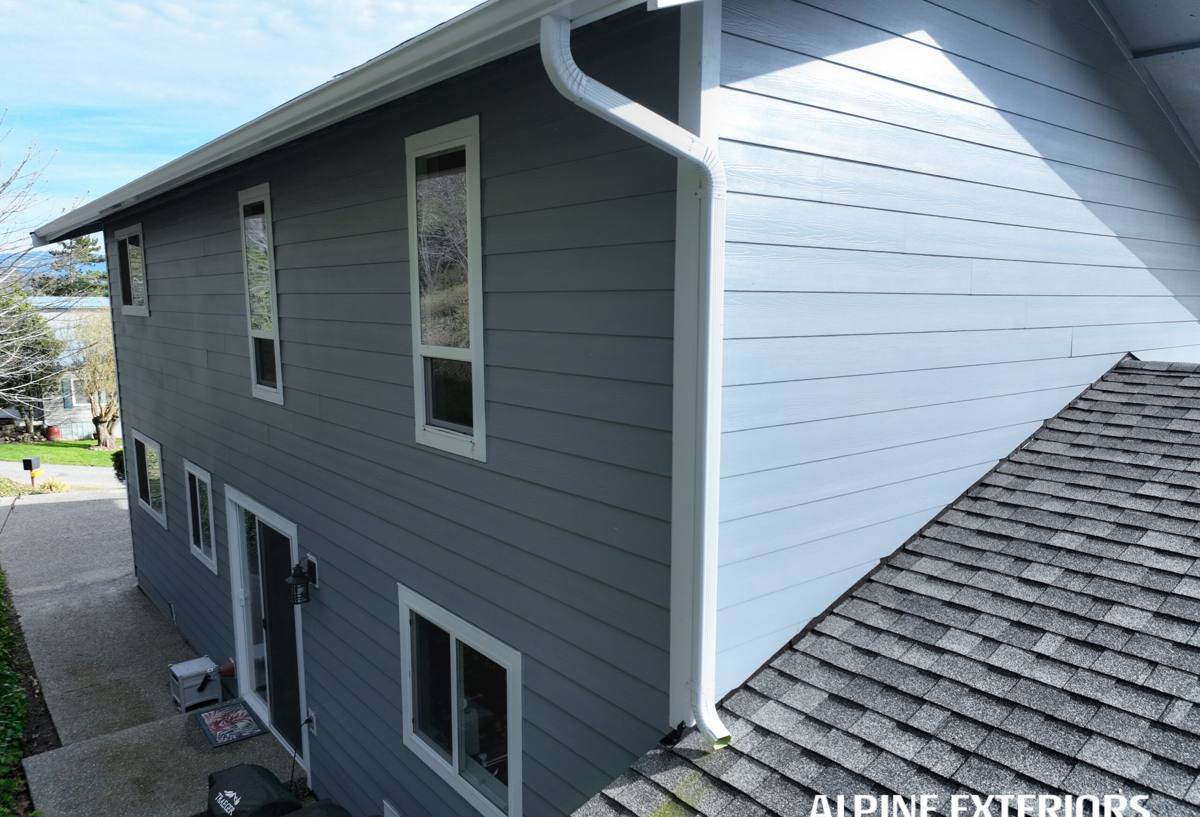
What Shoreline's Climate Actually Does to a Roof
Salt Air and Metal Fatigue
Proximity to Puget Sound means airborne salt settles on roofing surfaces, gutters, and especially exposed metal — flashing, fasteners, vents, and gutter hardware. Over years, that salt exposure accelerates corrosion on lower-grade metal components faster than it would happen a few miles inland. Corroded flashing doesn't fail all at once; it thins out and starts leaking at seams and nail penetrations, which is exactly where most roof leaks in this area actually start.
Driving Rain and Wind-Driven Water
Rain that falls straight down is fairly forgiving of a roof with minor flaws. Rain that comes in sideways during a Puget Sound windstorm is not. Wind-driven rain gets pushed uphill under shingle edges, into loose or lifted flashing, and through gaps that would never leak in calmer weather. This is why some leaks only show up during specific storms and seem to disappear the rest of the year — the roof isn't failing constantly, it's failing under a specific wind direction and rain intensity.
Moss: The Slow, Quiet Damage
King County's damp, shaded conditions are close to ideal for moss growth, and Shoreline's tree cover and marine humidity make it worse. Moss itself doesn't punch holes in a roof, but it does three damaging things over time: it holds moisture against the roofing material far longer than the material was designed to handle, it lifts shingle edges as it grows and thickens, and its root-like structures work into granule surfaces and seams. A roof that looks fine from the ground can have moss doing quiet damage under the surface for a season or two before a leak shows up.
Signs a Shoreline Roof Needs Repair, Not Just a Wash
A lot of homeowners reach for a moss treatment or a roof cleaning when the real issue is a repair need underneath. Here's how to tell the difference before calling anyone out:
- Granules collecting in gutters or at downspout outlets — a sign of shingle wear, not just dirt
- Dark streaking that doesn't wash off — often algae/moss staining on aging shingle surfaces
- Visible moss buildup along ridge lines, valleys, or the shaded north-facing slope
- Curling, cupping, or lifted shingle edges, especially on older sections of roof
- Rust streaks below metal flashing, vents, or fasteners
- Ceiling stains that appear only after certain storms, especially wind from the water side
- Sagging or soft spots felt underfoot on a roof walk (best assessed by a professional, not a homeowner on a ladder)
- Daylight visible through the roof deck from inside an attic space
If you're seeing more than one or two of these, it's worth a proper inspection rather than guessing from the ground.
What a Correct Roof Repair Actually Involves
A repair that holds up in this climate starts with finding the real source of the problem, not just the visible symptom. Water often travels along the underside of roofing material before it shows up as a stain, so the spot on the ceiling isn't always directly below the actual entry point. Our process on a repair call generally includes:
1. Full Inspection, Not a Spot Check
We look at the whole roof plane, not just the reported leak area — flashing at chimneys, vents, valleys, skylights, and wall intersections, plus the general condition of the shingles or roofing material nearby. A leak at a valley is sometimes actually originating a few feet upslope where wind-driven rain pushed water past a compromised shingle.
2. Identifying Root Cause
Is this a flashing failure from salt-air corrosion? A moss-related moisture issue? Storm damage from wind? Aging material that's simply past its service life in a few spots? The repair approach is different for each, and treating the wrong cause means the leak comes back.
3. Matching Materials and Techniques
Repairs should match the existing roofing material as closely as possible in both product and installation method, so the patched area performs and weathers consistently with the rest of the roof rather than becoming a new weak point.
4. Addressing the Underlying Contributor
If moss caused the failure, we address the moss and the conditions letting it thrive — not just patch over it. If it's flashing corrosion, we replace the flashing with material suited to a marine-air environment rather than reusing compromised metal.
5. Verification
Once repaired, we check the work holds under water testing where appropriate, rather than assuming a patch is sound just because it looks right.
Repair vs. Replacement: An Honest Comparison
Not every roof issue in Shoreline needs a full replacement, and not every issue is a simple patch. Here's how we generally think through it:
| Situation | Repair usually makes sense | Replacement worth discussing |
|---|---|---|
| Age of roofing material | Under roughly 15-20 years, isolated issue | Near or past expected service life overall |
| Extent of damage | Localized — one slope, one flashing detail, one storm event | Widespread wear, multiple leak points, granule loss across the field |
| Moss condition | Surface growth, caught early | Long-term moss damage with underlying material breakdown |
| Decking condition | Solid, dry decking under the affected area | Soft, rotted, or repeatedly wet decking |
| History of leaks | First occurrence or isolated cause | Recurring leaks in different spots each season |
We'll always tell you honestly which category your roof falls into. A repair that's likely to fail again within a year or two isn't a good use of your money, and we'd rather say so upfront than sell a patch we don't believe in.
Flashing, Valleys, and Vents: The Usual Suspects
In our experience working Shoreline roofs, the majority of repair calls trace back to one of a handful of locations rather than the shingle field itself:
- Chimney flashing — a common corrosion and separation point, especially on older installations
- Roof valleys — where two slopes meet and water volume concentrates, making them vulnerable to wind-driven rain and debris buildup
- Vent boots — the rubber or plastic collars around plumbing vents crack and shrink with age and UV/salt exposure
- Skylight perimeters — flashing seals here can fail well before the skylight glass itself is an issue
- Wall-to-roof intersections — step flashing along dormers or additions is a frequent, and frequently overlooked, leak source
A repair that only addresses the shingles and ignores these details often leaves the actual leak path untouched.
Moss Management as Part of Repair Work
Given how much of a factor moss is on King County roofs, we treat moss control as part of a proper repair, not a separate upsell. That generally means physically removing built-up moss where it's causing damage, addressing surface staining, and discussing longer-term moss prevention appropriate to the roof's material and the property's shade and moisture conditions. We won't pressure-wash aggressively in ways that strip granules or shorten the roof's remaining life — that trades a short-term clean look for real long-term damage, which isn't a trade we're willing to make on a customer's behalf.
Why Hiring a Crew That Works Shoreline Regularly Matters
Roofing crews that come from outside the immediate area sometimes miss the details that matter most here — the way marine air accelerates metal corrosion, which shaded slopes need extra moss attention, or how a particular storm direction off the Sound tends to expose flashing weaknesses that wouldn't show up in a drier, more inland part of King County. A crew that regularly works Shoreline and nearby Puget Sound communities has already seen how local roofs age and fail, which means less guesswork and a repair that's built for the conditions the roof actually faces, not generic conditions.
We also stand behind our repair work with clear communication about what we found, what we fixed, and why — no vague explanations, no unnecessary upsells to a full tear-off when a targeted repair will genuinely hold.
What to Expect When You Call Us
We start with a straightforward inspection and a clear explanation of what we find — photos and plain language, not just a quote. If it's a simple, contained repair, we'll say so. If the damage is more extensive than it looks from the ground, we'll walk you through why, and what your realistic options are, including cost factors like accessibility, roof pitch, material availability, and the extent of flashing or decking work involved. There's no pressure to upgrade to a full replacement if a repair is the honest, durable answer.
If you're dealing with a leak, moss buildup, or storm damage on your Shoreline home, we're happy to take a look. Reach out for a free, no-pressure estimate using the form below.