 King County
 Why Siding Replacement in Bothell Is Different From a Drier Climate
Bothell sits in the Puget Sound lowlands, where moisture is a year-round fact of life rather than a seasonal event. Homes here deal with a long wet season, heavy tree canopy on many lots, and marine air moving in off the Sound that keeps humidity elevated for months at a time. That combination of driving rain, shade, and damp air is exactly the environment where the wrong siding choice — or a rushed installation of the right one — shows problems early: swelling at seams, moss and algae staining, soft spots at the bottom courses, and paint that fails years ahead of schedule.
Siding replacement isn't just a cosmetic upgrade in a climate like this. It's the single biggest factor in whether your home's structure stays dry behind the cladding for the next several decades. A correct job accounts for how water moves across a wall, how vapor escapes, and how the product itself handles being wet more often than it's dry.
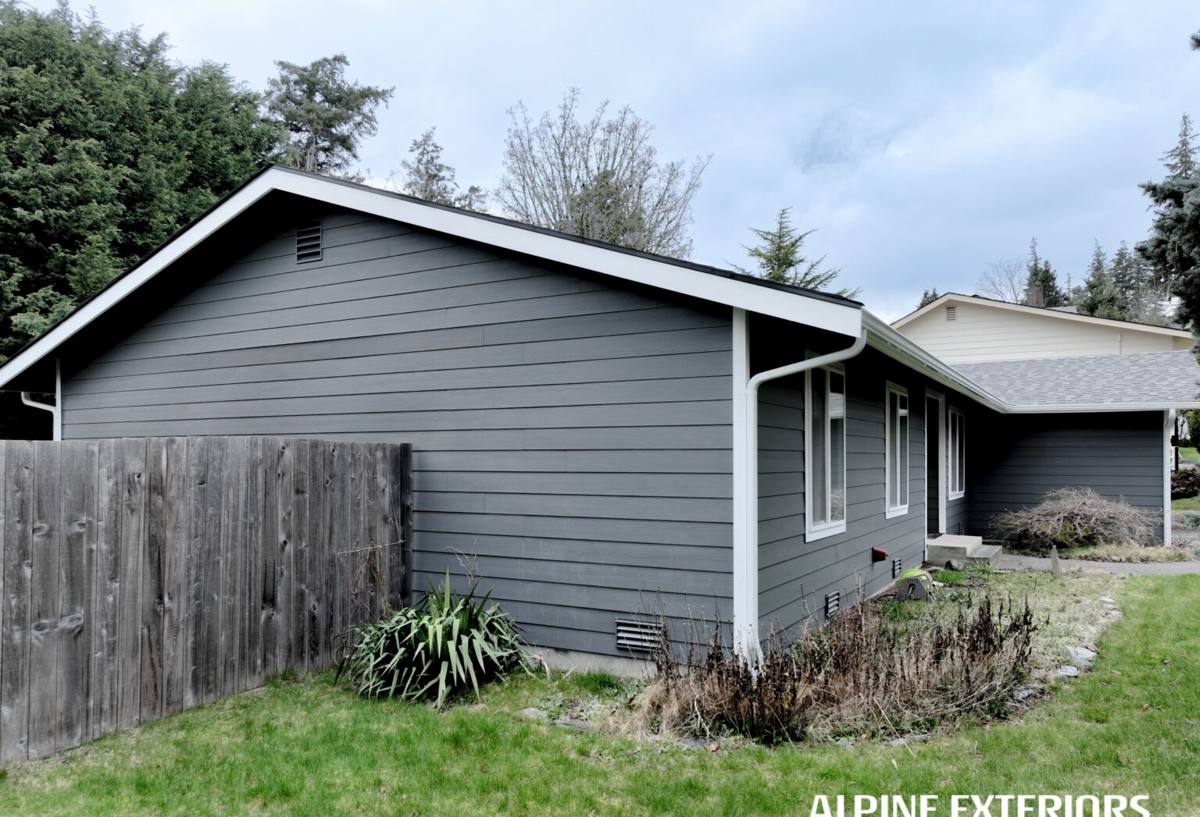
Signs a Bothell Home Needs Siding Replaced, Not Just Patched
Homeowners often ask us whether a section can be spot-repaired instead of fully replaced. Sometimes it can. But in this climate, moisture problems rarely stay contained to the spot where they're visible — by the time siding shows damage, the issue has often been developing behind it for a while. Watch for these signs:
- Persistent moss or dark green/black staining that returns quickly after cleaning
- Soft, spongy, or crumbling siding near the bottom of walls or under windows
- Paint that's peeling, bubbling, or chalking well before its expected repaint interval
- Visible gaps, warping, or cupping in siding boards or panels
- Musty smells or discoloration on interior walls that share an exterior wall with damaged siding
- Siding that's original to a home built more than 20-25 years ago, especially in wood or older composite products
Any one of these can be an isolated issue. Several at once, or damage that keeps recurring in the same spot, usually means the underlying water management system — not just the surface material — needs to be redone.
What a Correct Siding Replacement Actually Involves
A siding replacement is a water-management project with a finish material on top. The visible board or panel matters, but it's only one layer of a system that has to work together.
Moisture Management Comes First
Before any new siding goes up, the wall needs a proper weather-resistive barrier (housewrap or building paper) installed with correct overlaps and sealed penetrations, and flashing at every window, door, and horizontal trim break. In a climate that sees as much sustained rain as this region does, flashing details matter more than they would somewhere drier — water that gets behind siding here has more opportunities to sit and soak in before it dries out. We also pay attention to rainscreen gaps or drainage planes where the wall assembly calls for them, since a ventilated gap behind the siding lets bulk water drain and the wall dry out between storms instead of trapping moisture against the sheathing.
Fastening and Installation to Manufacturer Spec
Every siding manufacturer publishes exact requirements for fastener type, spacing, clearance from grade and roof lines, and caulking at joints. Skipping or guessing at these details is one of the most common ways a siding job fails early — not because the material was wrong, but because it wasn't installed the way it was engineered to be installed. Correct clearances at the ground and at roof-to-wall intersections are especially important on wooded, shaded lots common around Bothell, where siding stays damp longer after a storm than it would on an open, sunny site.
Trim, Caulking, and Finish Details
The small details — corner boards, J-channel, caulk joints, touch-up paint at cut edges — are where a lot of installers cut corners because they're time-consuming and not very visible on install day. They're also where water gets in first. We treat these as part of the job, not an afterthought.
Why We Install Only James Hardie Fiber Cement
We get asked regularly about vinyl, LP SmartSide, and other fiber cement brands like Cemplank or Allura, as well as primed wood products like cedar or spruce. We don't install any of them, and we think homeowners deserve an honest explanation why rather than a sales pitch.
Vinyl is inexpensive and low-maintenance, but it's a thin plastic product that expands and contracts significantly with temperature swings, can crack in impacts, and has no real fire resistance. LP SmartSide and similar engineered wood products perform reasonably well when kept dry, but they're wood-based — meaning the long-term risk in a consistently wet, shaded climate is real if any water intrusion or installation flaw goes uncaught. Cedar and primed spruce are attractive materials with a long tradition in this region, but they require ongoing maintenance (recoating, caulking, moisture monitoring) that most homeowners underestimate, and they're the most vulnerable of the group to the rot and moss issues this climate produces. Cemplank and Allura are also fiber cement and share some of Hardie's core advantages, but we standardized on one product line so our crews install it constantly, know its quirks cold, and can back it with a warranty process we fully understand.
James Hardie fiber cement is non-combustible, doesn't expand and contract like vinyl, doesn't rot like wood, and comes from the factory with a baked-on ColorPlus finish that holds up far longer than field-applied paint. It's not the cheapest option on the market, and it's heavier and less forgiving to install than vinyl — which is precisely why installation quality matters so much and why we don't treat it as a side product alongside others.
Matching the Right Hardie Product to a Bothell Home
James Hardie engineers its siding by climate zone, and the Pacific Northwest falls into their HZ5 line, built specifically for regions with sustained moisture exposure. That matters here more than in drier parts of the country, because a product engineered for a humid, wet-winter climate handles the freeze-thaw and moisture cycling of a Puget Sound-area winter better than a generic version of the same product.
Beyond the climate engineering, homeowners choose between a few common profiles and finishes:
| Product | Best For | Key Trade-Off |
|---|---|---|
| HardiePlank lap siding | Traditional horizontal look, most common choice | Widest color and texture selection |
| HardiePanel vertical siding | Modern look, board-and-batten style | Often paired with trim for accent walls |
| HardieShingle | Homes wanting a shingle-style accent | More labor-intensive install, higher cost per square foot |
| ColorPlus prefinished | Homeowners who want to skip repainting for years | Touch-up paint must be Hardie-matched, not generic exterior paint |
We walk homeowners through these options based on the home's exposure — how much direct rain and shade it gets, roofline complexity, and the existing trim and color scheme — rather than pushing one default choice on every house.
Cost Factors for Siding Replacement in Bothell
Every home is different, so we won't quote a number without seeing the house, but a few factors consistently move the price of a siding replacement up or down:
| Factor | Effect on Cost |
|---|---|
| Extent of hidden water damage to sheathing/framing | Increases cost — discovered once old siding comes off |
| Home size and number of stories | More surface area and staging/scaffolding needs |
| Roofline and wall complexity | More cuts, corners, and flashing details |
| Product line and finish (standard vs. ColorPlus, panel style) | Material cost varies by profile and finish |
| Access and site conditions (tree cover, tight lots, slopes) | Common on wooded Bothell lots; affects labor time |
The one factor homeowners rarely anticipate is hidden sheathing damage. On a home that's had a slow leak for years, we sometimes find soft or rotted sheathing once the old siding is off — that has to be repaired before new siding goes on, and it's the kind of thing that's genuinely impossible to price accurately until we can see behind the old material.
How Our Siding Replacement Process Works
- On-site assessment: We inspect the current siding, trim, and visible signs of moisture or damage, and talk through what you're seeing from the inside of the home too.
- Removal and inspection: Old siding comes off and we inspect the sheathing and framing underneath before anything new goes up. Any rot or damage gets addressed here, not covered over.
- Weather-resistive barrier and flashing: A new housewrap or barrier goes on with correct overlaps, and flashing is installed at every window, door, and trim transition.
- Hardie installation to spec: Siding is fastened, spaced, and clearanced according to James Hardie's published installation requirements — not shortcuts that happen to look fine on day one.
- Trim, caulk, and finish work: Corner boards, J-channel, and joints are finished and, if using standard (non-ColorPlus) product, painted.
- Final walkthrough: We go over the finished exterior with you and flag anything a homeowner should keep an eye on going forward.
Why Hiring a Crew That Already Works in Bothell Matters
Building departments and permitting requirements vary between King County jurisdictions, and a crew that regularly works in and around Bothell already knows the local process rather than learning it on your project. Just as important is climate familiarity: a crew used to installing siding in a consistently wet, shaded environment builds habits — extra attention to flashing, awareness of which wall orientations dry out slowest, comfort working around mature trees and tighter lots — that a crew unfamiliar with the area simply hasn't had to develop. None of that shows up in a quote, but it shows up in how the siding performs five and ten years out.
Caring for Your New Siding After Installation
James Hardie siding is low-maintenance compared to wood, but "low-maintenance" doesn't mean "no maintenance," especially here. A periodic gentle wash to keep moss and algae from taking hold, prompt attention to any caulk that cracks or pulls away at joints, and keeping vegetation trimmed back from walls to improve airflow and sun exposure all go a long way. If you have standard-finish Hardie rather than ColorPlus, plan on repainting on a normal exterior paint cycle — the fiber cement substrate will outlast the paint film either way.
If your Bothell home's siding is showing moss, soft spots, failing paint, or you're simply planning ahead for a home that's due, we're glad to come take a look. The estimate is free, there's no pressure, and you'll get a straight answer about whether you need a full replacement or something less.