 King County
 Why West Seattle Roofs Wear Differently Than Roofs Inland
West Seattle sits out on its own peninsula, with Puget Sound wrapping much of it on more than one side. That location is part of what makes the neighborhood a great place to live, and it's also exactly why roofs here take a different kind of beating than roofs ten or fifteen miles inland. Salt-laden air moves off the water and settles on exposed metal, granule surfaces, and fastener heads. Wind-driven rain doesn't just fall straight down — on exposed lots and hillside streets it gets pushed sideways under shingle tabs and around flashing that was never designed to handle it. And King County's long, damp shoulder seasons keep roof surfaces wet and shaded for months at a time, which is exactly the recipe moss and algae need to take hold.
None of that means a roof here is doomed to fail early. It means the roof has to be built and maintained with those specific stresses in mind, rather than installed the same generic way you'd install one in a drier, more sheltered part of the county.
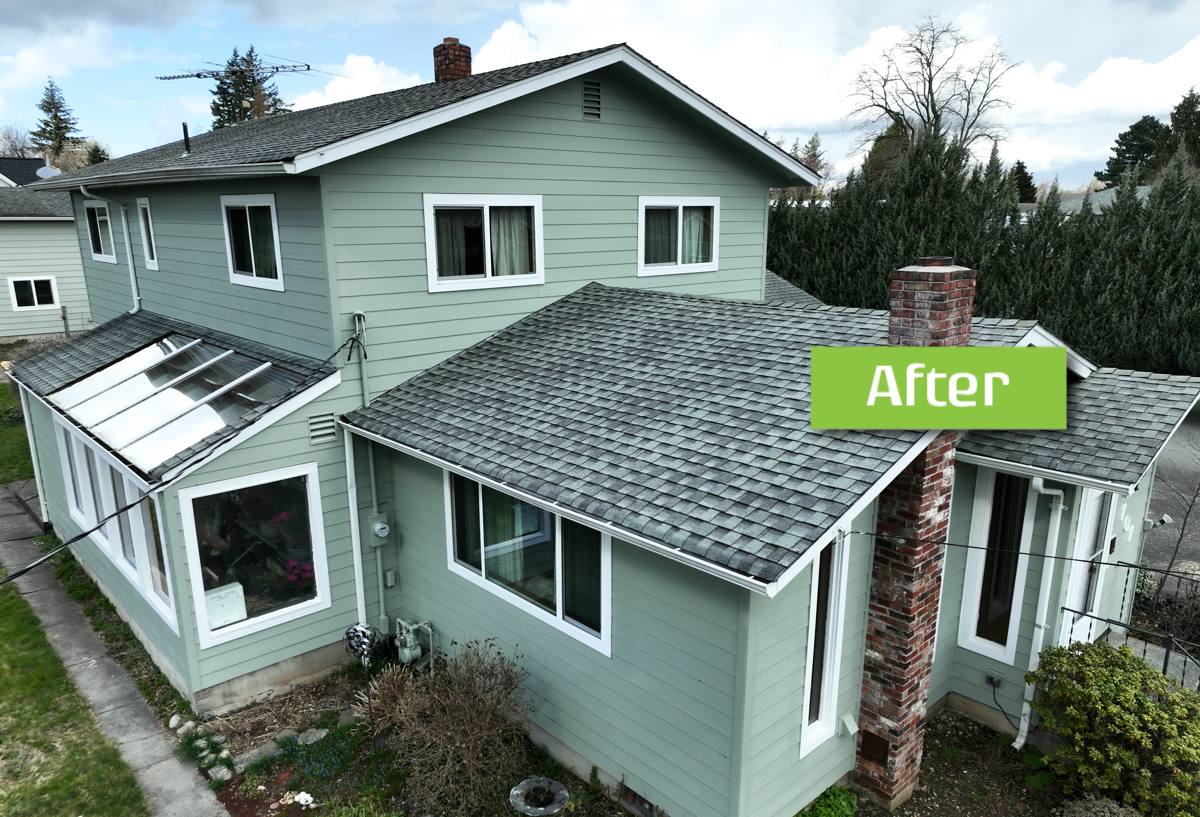
What an Asphalt Shingle Roof Needs to Handle Here
Salt Air and Metal Components
Flashing, fasteners, and drip edge are the parts of a roof most likely to show wear from salt exposure first, long before the shingles themselves look tired. We pay attention to the metal on a roof as much as the shingle field — cheap or under-gauged flashing corrodes faster near the water, and once flashing fails, water finds its way in at valleys, chimneys, and wall intersections long before you'd notice anything wrong with the shingles up top.
Moss, Shade, and Standing Moisture
Mature trees, north-facing slopes, and our marine cloud cover all add up to roof surfaces that stay damp far longer than they would in a sunnier climate. Moss doesn't just look bad — its root structure lifts shingle edges and holds water against the roof deck, which is how a moss problem quietly turns into a rot problem underneath.
Wind Exposure on Open and Waterfront-Facing Lots
Homes with a clear line to the Sound often catch more direct wind than homes tucked into denser blocks. That affects which shingle products make sense and how much attention the installation crew needs to pay to nailing pattern and sealant strip activation — details that matter more here than they would on a sheltered inland lot.
Signs Your Roof Is Telling You Something
Most roof problems in this climate show up gradually, not as a sudden leak. Here's what we tell West Seattle homeowners to watch for between inspections:
- Dark streaking or visible moss growth, especially on north-facing slopes or shaded sections
- Granules collecting in gutters or at downspout outlets after rain
- Shingle edges that are curling upward or cupping in the middle
- Any shingles that are missing, cracked, or visibly lifted after a windstorm
- Rusty streaking below metal flashing or vent boots
- Daylight visible through the roof deck from inside the attic
- Water stains, discoloration, or sagging on interior ceilings
Any one of these on its own isn't necessarily an emergency, but they're worth a professional look rather than a wait-and-see approach — moisture problems in this climate compound quickly because the roof rarely gets a long enough dry stretch to fully recover on its own.
Choosing the Right Asphalt Shingle for This Climate
Not all asphalt shingles are built the same, and the differences matter more in a marine, moss-prone climate than they would somewhere drier. We generally steer West Seattle homeowners toward products with algae-resistant (AR) granules and a solid wind rating, since those two factors do the most real-world work against the specific conditions here.
| Shingle Type | Typical Lifespan | Wind Rating | Best Fit |
|---|---|---|---|
| 3-Tab Asphalt | 15–20 years | Lower end of the range | Budget-driven projects on sheltered lots |
| Architectural (Laminate) Asphalt | 25–30+ years | Mid-to-high, varies by product | Most West Seattle homes; the standard we recommend |
| Impact-Resistant Asphalt | 25–30+ years | High, plus impact rating | Exposed, wind-heavy, or waterfront-facing lots |
Color and granule surface matter too. Algae-resistant granules are treated to resist the dark streaking common in damp Pacific Northwest climates, and a slightly lighter or more reflective color can help a shaded, moss-prone roof dry out a little faster between rain events. These are trade-offs to weigh against your home's style, not one-size-fits-all rules — we'll walk through the honest pros and cons for your specific roof rather than push a single product.
What a Correct Installation Actually Involves
A roof that's going to hold up to salt air, driving rain, and a long moss season is won or lost in the details that nobody sees once the shingles are down. A correct asphalt shingle installation includes:
- Full tear-off and a real inspection of the deck underneath — not just a re-layer over old material
- Repair or replacement of any soft, rotted, or delaminated decking before anything new goes down
- Ice-and-water shield membrane at eaves, valleys, and other vulnerable areas prone to wind-driven water intrusion
- A synthetic underlayment across the full field for a second line of defense against moisture
- Properly lapped and sealed metal flashing at chimneys, walls, skylights, and valleys
- Correct starter strip installation at eaves and rakes so the first course of shingles seals down properly
- Manufacturer-specified nailing pattern and placement — under-nailing is one of the most common causes of wind lift failures
- Balanced intake and exhaust ventilation so moist air isn't trapped against the underside of the deck
Skipping or rushing any one of these doesn't usually show up as a problem on day one. It shows up two, five, or ten years later as a leak, premature granule loss, or shingles that lift in a windstorm well before they should have.
How Our Process Works
Inspection and Estimate
We start by getting on the roof, not just looking at it from the ground. We check the shingle field, flashing, ventilation, and — where accessible — the attic side, then walk you through what we find and what your realistic options are, in plain language and with a straightforward cost range.
Tear-Off and Deck Check
Old material comes off completely so we can see the actual deck condition. Any soft or damaged sheathing gets flagged and replaced before a single new shingle goes on — this is the step that determines whether the new roof actually performs, and we won't cut it short to save time.
Installation Day
Underlayment, ice-and-water shield, flashing, and shingles go on in the correct sequence and to manufacturer nailing specs, with extra attention to valleys, penetrations, and any wall or chimney intersections — the spots most likely to leak if rushed.
Cleanup and Walkthrough
We clear the site of debris and nails, then walk the finished roof with you so you know what was done and what to watch for going forward.
Maintenance Through a Long Moss Season
A well-installed roof still needs some upkeep in this climate, and it's cheaper than most homeowners expect. Keeping gutters clear so water isn't backing up under the eaves, addressing moss early with an appropriate treatment rather than letting it establish, and having the roof looked at every couple of years rather than only when there's an obvious problem — these small habits go a long way toward getting the full lifespan out of an asphalt shingle roof in a damp, shaded climate. Zinc or copper strips near the ridge can also help slow moss regrowth on shaded slopes, and we're happy to talk through whether that makes sense for your specific roof.
Why a Crew That Already Works West Seattle Matters
Roofing code, permitting expectations, and inspection processes are consistent across King County, but the practical side of a job — staging material on a sloped driveway, working safely on a steep hillside lot, sequencing a tear-off around narrower streets and limited parking, or simply knowing which shingle products actually hold up against salt air and moss versus which ones just look good on a brochure — comes from having done the work here before. A crew that regularly works this peninsula isn't guessing at any of that on your job.
If you're weighing a repair against a full replacement, or just want a straight answer about what condition your roof is really in, we're glad to take a look. Reach out for a free, no-pressure estimate using the form below.