 King County
 Why West Seattle Decks Wear Differently Than Decks Inland
West Seattle sits out on a peninsula with water on multiple sides, and that location shapes everything about how an outdoor deck ages here. Salt-laden air off Puget Sound settles into wood grain, metal fasteners, and railing hardware in a way that inland King County neighborhoods simply don't deal with. Add in West Seattle's long stretch of driving rain, low winter sun angles, and shaded, north-facing yards that barely dry out between storms, and you get a moss season that can run from October through May. A deck built without that environment in mind will show it within a couple of seasons — soft spots, black streaking, corroded fasteners, and a green film that never quite goes away.
Composite decking exists specifically to push back against that cycle. It doesn't mean zero maintenance, and it doesn't mean every composite product performs the same way in this climate. It means choosing the right board, detailing the substructure correctly, and installing it the way the manufacturer's warranty actually requires — which, in our experience, is the step most likely to get skipped on a rushed job.
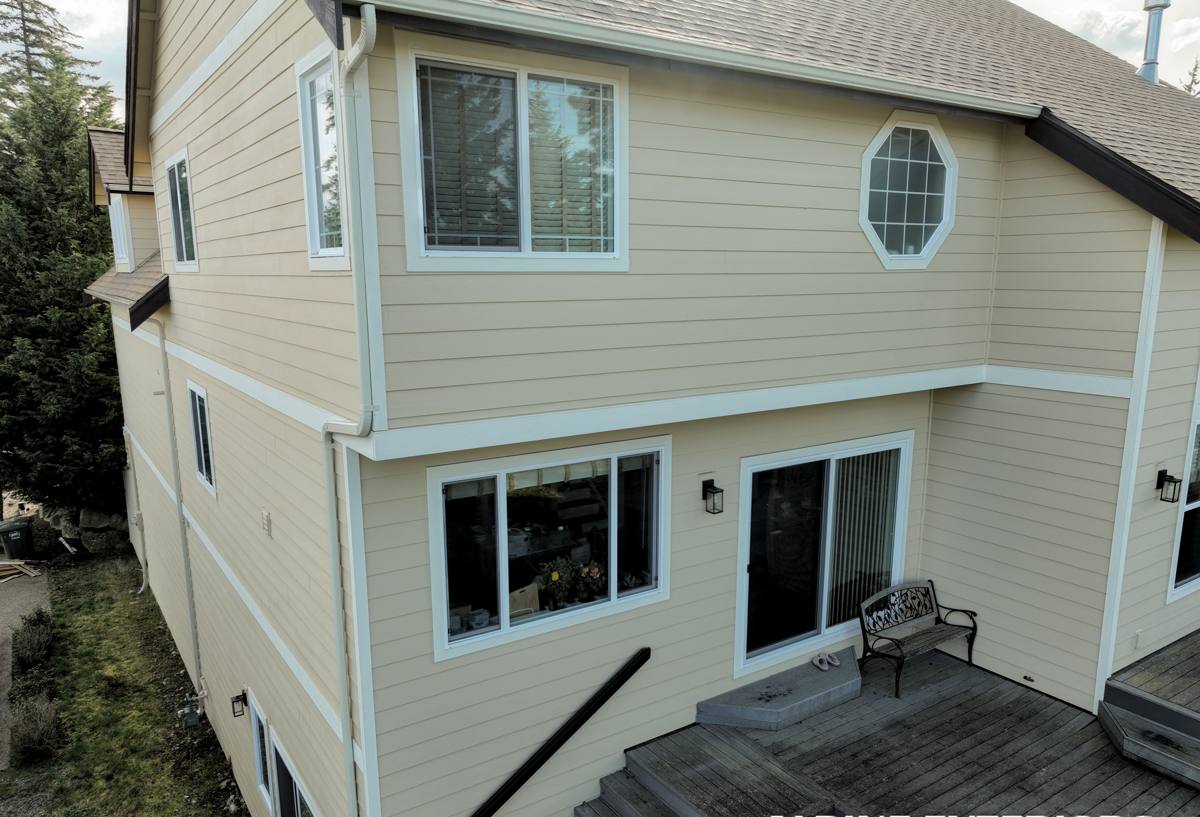
What Salt Air, Rain, and Moss Actually Do to a Deck
Salt Air
Airborne salt is corrosive to fasteners, brackets, and railing hardware long before it does anything visible to the decking itself. Standard coated screws and joist hangers can start rusting from the inside of the connection, which is exactly where you can't see it until a board starts to feel loose underfoot.
Driving Rain
West Seattle's weather doesn't just rain straight down — wind-driven rain gets pushed sideways into railing posts, ledger connections, and the gap between decking boards and house siding. Any place water can be forced in but can't easily drain back out becomes a rot or corrosion starting point over time.
Moss and Shade
Moss needs moisture and low light to take hold, and a lot of West Seattle lots have exactly that combination thanks to mature trees, fences, and homes built close together. Moss on a deck surface isn't just cosmetic — it holds water against the board and turns the surface slick and genuinely dangerous on stairs and ramps.
Composite vs. Wood: The Honest Trade-Offs for This Climate
We install both wood and composite decking, and we tell homeowners the truth about each rather than pushing one product line. For a shaded, damp, salt-exposed West Seattle lot, composite generally holds up better with less ongoing work — but it comes with its own installation sensitivities that matter more here than in a drier climate.
| Factor | Wood Decking | Composite Decking |
|---|---|---|
| Moss resistance | Absorbs moisture, moss takes hold in grain and checking | Capped boards resist moisture absorption, moss sits on surface and rinses off easier |
| Annual maintenance | Cleaning, sealing/staining, inspecting for rot | Periodic cleaning, no staining or sealing required |
| Salt air / hardware | Standard fasteners can corrode faster in fir or hem-fir | Still requires corrosion-resistant fasteners, but board itself won't rot around them |
| Upfront cost | Lower material cost | Higher material cost, generally lower lifetime cost |
| Installation sensitivity | Forgiving of minor gapping/spacing errors | Expansion gaps, hidden fasteners, and ventilation must be exact or warranty is at risk |
| Appearance over time | Grays and weathers, character changes yearly | Color holds consistently for the warranty term |
We don't discourage wood decking outright — it's the right call for some budgets and some homeowners who like the look and don't mind the upkeep. What we won't do is install composite decking the same way we'd frame a wood deck, because composite has real physical properties — thermal expansion, moisture behavior at cut ends, ventilation needs under the boards — that get ignored on jobs where the crew is used to wood.
What a Correct Composite Deck Build Involves
Substructure First
The framing underneath a composite deck matters as much as the decking on top, especially in a wet climate. That means pressure-treated or corrosion-resistant framing, joist tape or flashing on top of every joist to keep water off the wood, and joist spacing that matches what the composite manufacturer specifies — composite boards typically need tighter joist spacing than wood, particularly on angled or picture-frame layouts.
Fasteners and Hardware
Given the salt air exposure common to West Seattle, we use stainless steel or high-grade coated fasteners and hardware throughout, not just at the visible surface. Hidden fastener clip systems, where the product supports them, also reduce the number of surface penetrations where water and salt can work their way in over time.
Ventilation and Drainage
Composite decking needs airflow underneath to manage moisture and prevent the substructure from staying damp — this is one of the most commonly skipped details on lower-end installs. Proper skirting design, gaps at the perimeter, and attention to how water sheds off the deck and away from the house foundation all factor into a build that will actually last through a Puget Sound winter.
Ledger and House Connection
Where the deck attaches to the house is the single highest-risk point for water intrusion on any deck, wood or composite. Correct flashing at the ledger board, sealed fastener penetrations, and proper standoff from siding are non-negotiable details we don't shortcut, because a failure here can lead to hidden rot in the house structure itself, not just the deck.
Our Process on a West Seattle Composite Decking Job
- On-site assessment — we look at sun exposure, shade patterns, existing drainage, and how exposed the site is to wind-driven rain and salt air before recommending a board type or layout.
- Product and layout discussion — we walk through board options, color, and layout (including picture-framing or borders) along with what each choice means for cost and long-term upkeep.
- Substructure inspection or rebuild — if we're replacing an existing deck surface, we inspect the framing underneath before deciding whether it can be reused or needs to be rebuilt to current standards.
- Installation to manufacturer spec — correct joist spacing, fastening method, expansion gaps, and ventilation, done to the standard the product's warranty actually requires.
- Railing, stairs, and hardware — matched to the decking system and installed with corrosion-resistant hardware suited to this area's salt exposure.
- Final walkthrough — we go over basic care so the deck performs the way it's supposed to for the length of the warranty.
Sizing the Job: Cost Factors Homeowners Should Understand
Composite decking costs vary widely by square footage, board tier, and how much substructure work is involved, so we won't quote a number that doesn't mean anything without seeing the site. What we can walk through up front are the factors that actually move the price:
| Factor | Why It Affects Cost |
|---|---|
| Deck size and shape | Complex shapes, angles, and picture-framing require more cutting and labor than a simple rectangle |
| Substructure condition | Reusing sound existing framing costs less than a full tear-out and rebuild |
| Board tier | Composite lines range from entry-level to premium capped boards with longer warranties |
| Height and access | Elevated decks and difficult site access add labor time and safety requirements |
| Railing system | Cable, glass, and metal railing systems cost more than standard composite balusters |
| Site drainage needs | Lots with poor existing drainage may need grading or drainage work alongside the deck |
Maintaining a Composite Deck Through a West Seattle Winter
Composite decking cuts down on maintenance, but "low-maintenance" isn't "no-maintenance," especially with a moss season this long. A few habits make a real difference:
- Sweep leaves and debris off the deck regularly through fall — trapped debris holds moisture against the board surface.
- Clean the deck with a soft-bristle brush and a manufacturer-approved cleaner once or twice a year, focusing on shaded areas where moss tends to start.
- Keep gutters and downspouts clear so runoff isn't dumping extra water directly onto or under the deck.
- Check railing posts and stair connections annually for any looseness, which can signal a hardware or framing issue underneath.
- Trim back overhanging branches and vegetation where practical to cut down on shade and moisture buildup on the deck surface.
- Avoid pressure washing at close range or high pressure, which can damage the composite's cap layer over time.
Why Local Experience Matters for This Job
Composite decking installation isn't complicated in theory, but doing it correctly in a marine climate takes attention to details that don't show up in a generic install manual. A crew that regularly works West Seattle already knows which framing details fail first in this environment, which fastener grades hold up against salt air over years rather than months, and how to design ventilation and drainage for lots that see this much rain and shade. That local pattern recognition is the difference between a deck that looks good on installation day and one that still looks and performs well five winters later.
We also stand behind the work with warranty coverage on our installation, separate from the manufacturer's product warranty — because a composite board is only as good as the framing and fastening underneath it, and we want homeowners to know both are covered.
Signs Your Existing West Seattle Deck Needs Attention
If you already have a deck and aren't sure whether it needs a repair or a full replacement, a few warning signs are worth taking seriously before the next wet season:
- Soft, spongy, or bouncy spots underfoot, which usually point to rot in the framing below.
- Persistent moss or algae that comes back within weeks of cleaning.
- Rust streaking around fasteners or hardware.
- Gaps opening up between decking boards or boards that have started to cup or warp.
- Railing posts that feel loose or flex when pushed.
Any one of these is worth a look before it turns into a bigger structural repair. Catching framing rot early often means a partial fix; waiting until a board fails under weight usually means a full rebuild.
If you're weighing a new composite deck or a replacement for an aging wood deck in West Seattle, we're happy to take a look and give you a straightforward, no-pressure estimate — just fill out the form below and we'll get in touch.