 King County
 West Seattle Asks More of Its Siding Than Most of King County
West Seattle sits out on a peninsula, exposed to Puget Sound on multiple sides. That position gives homeowners the views, but it also means the siding on these homes deals with a rougher mix of conditions than a house tucked into an inland neighborhood. Salt-laden air off the Sound accelerates corrosion on fasteners and finishes that weren't built for it. Driving rain — often blown sideways by wind coming off the water — finds every gap in flashing and trim that a calmer climate would never expose. And the long, wet stretch from fall through spring gives moss and algae months to take hold on anything that stays damp.
None of this is exotic. It's just consistent, and consistency is what wears siding out. A product or installation that's "good enough" in a drier, more sheltered part of King County can fall short here, and the failures usually show up as soft trim, streaking, cupped boards, or paint that needs redoing years before it should.
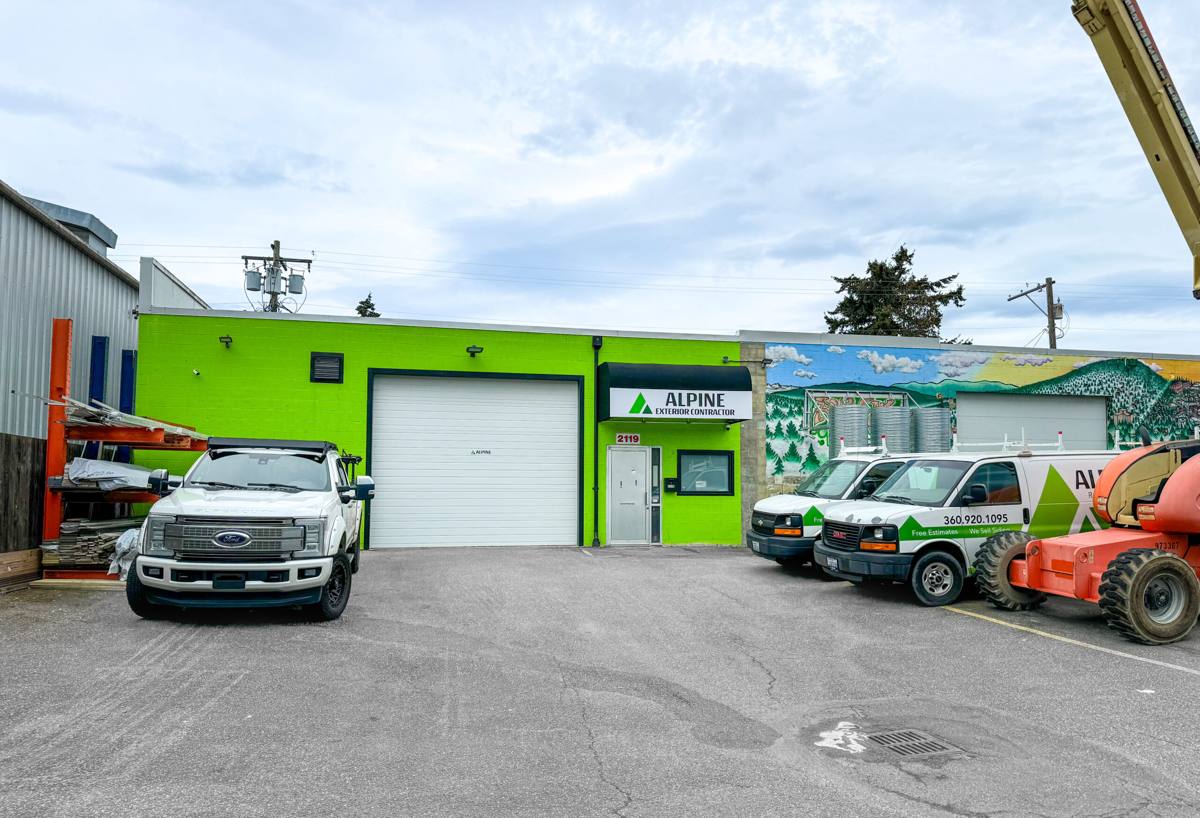
Why We Only Install James Hardie Fiber Cement
We install James Hardie fiber cement siding exclusively. We don't install vinyl, LP SmartSide, Cemplank, Allura, primed spruce, or cedar. That's not a marketing line — it's a standard we hold because of what we've seen these products do over time in exactly this kind of climate, and because fiber cement, done right, handles moisture, wind-driven rain, and salt exposure better than the alternatives.
What Fiber Cement Actually Is
Fiber cement siding is made from cellulose fiber, sand, and Portland cement, cured into a dense, stable board. It doesn't absorb water the way wood does, it won't warp or rot, and it's non-combustible — a real advantage given how many West Seattle lots sit close to neighboring structures. Because it's dimensionally stable, it holds paint and factory finishes far longer than wood-based products, which matters when your siding is getting rained on sideways for half the year.
Why We Don't Use the Alternatives
Vinyl is inexpensive and low-maintenance, but it flexes and expands with temperature swings, and in high-wind exposure like the West Seattle waterfront, seams and panels are more prone to working loose over time. LP SmartSide and other engineered wood products use a wood-strand core — better than raw lumber, but still wood-based, meaning any breach in the finish lets moisture in and the clock starts on rot at that spot. Cedar and primed spruce are honest, attractive materials, but they're organic: they need repainting or restaining on a real schedule, and in a marine climate with a long moss season, that schedule gets shorter, not longer. We're not saying these products don't work anywhere. We're saying that for the conditions this peninsula sees, we don't think they hold up long enough to justify what a full re-side costs, and we'd rather install one product we trust completely.
James Hardie's Climate-Engineered Lines
James Hardie makes different formulations of fiber cement for different climate zones — their HZ5 product line is engineered for regions with freeze-thaw cycles and sustained moisture exposure, which describes the Pacific Northwest well. The factory-applied ColorPlus finish is baked on under controlled conditions, which gives it better fade and chip resistance than field-applied paint, and it comes with its own finish warranty separate from the product warranty. For a house exposed to Sound-driven weather, that factory finish is doing real work every day.
What a Correct Installation Involves
Fiber cement is only as good as the installation behind it. Most siding failures we're called out to inspect aren't a material problem — they're a water-management problem hiding under siding that looks fine from the sidewalk.
Water Management Comes First
Before a single plank goes up, the wall needs a correctly lapped weather-resistant barrier, properly flashed windows and doors, and rainscreen or drainage detailing so any moisture that does get behind the siding has somewhere to go. This step matters more in West Seattle than in a sheltered inland neighborhood, because wind-driven rain pushes water into places gravity alone wouldn't.
Fastening, Clearances, and Caulking
James Hardie publishes specific fastening patterns, minimum clearances from grade, roofing, and decks, and gapping requirements at butt joints and trim. Skipping these — nailing too close to an edge, closing up clearances, over-caulking joints that are supposed to allow movement — is how installers create the exact moisture traps that fiber cement was supposed to avoid. Correct installation also accounts for expansion gaps sized for our local temperature swings, not a generic spec.
Trim and Transitions
The vulnerable points on any siding job are the transitions: where siding meets trim, where trim meets roofline, where a deck ledger board penetrates the wall. These details take more time to do correctly, and they're where corner-cutting shows up first — usually as staining or soft spots within a few winters.
Common Problems We Find on Re-Sides in This Area
- Moss and algae buildup on north-facing walls and anywhere siding stays shaded and damp longer than the rest of the house
- Caulk that's failed at trim joints, letting wind-driven rain track behind the boards
- Fasteners showing corrosion or bleed-through stains, usually a sign of the wrong fastener type for a marine environment
- Soft or delaminating trim at deck ledgers, hose bib penetrations, and roof-to-wall intersections
- Paint failure on wood siding well before the wall assembly itself has any structural problem
Comparing Siding Options for This Climate
| Factor | James Hardie Fiber Cement | Vinyl | Cedar / Primed Wood |
|---|---|---|---|
| Moisture behavior | Doesn't absorb water; dimensionally stable | Won't rot, but seams can loosen under wind exposure | Absorbs moisture; prone to rot at breaches |
| Salt air / corrosion resistance | Strong, especially with factory finish | Generally stable but can chalk and fade | Finish degrades faster near the Sound |
| Maintenance cycle | Repaint/refinish rarely needed for years | Low maintenance but limited repair options | Repaint or restain every few years |
| Fire resistance | Non-combustible | Combustible | Combustible |
| Typical lifespan (properly installed) | Multiple decades | Multiple decades, variable in high wind | Shorter, maintenance-dependent |
Upfront cost is one part of the decision, but the more useful comparison is cost over the life of the siding — how often it needs attention, and what happens if water does find a way in. That's the comparison that tends to favor fiber cement once you factor in West Seattle's exposure.
Our Process
We keep the process straightforward and give you a clear picture of what's happening at each stage:
- On-site assessment of your current siding, trim, and any moisture or rot already present
- Inspection of the wall assembly once old siding is removed — this is where hidden problems get found and addressed, not covered up
- Correct installation of weather-resistant barrier and flashing before any Hardie product goes up
- Installation of James Hardie planks or panels to manufacturer fastening and clearance specifications
- Trim, caulking, and finish work at all transitions
- Final walkthrough so you know what was done and what maintenance, if any, to expect
Living With Fiber Cement in a Marine Climate
One of the practical advantages of a correctly installed James Hardie system is how little it asks of you afterward. It won't need repainting on the schedule wood does. That said, no siding is maintenance-free in a climate that grows moss for half the year. A periodic gentle wash on shaded, damp-prone walls keeps moss and algae from taking hold, and it's worth a visual check after major windstorms for any loosened trim or caulk. That's a fraction of the upkeep a wood-based product asks for in the same conditions.
Why Local Experience on This Peninsula Matters
A crew that mainly works drier, more sheltered parts of King County can still install siding competently — but they may not default to the flashing details, fastener choices, and clearances that matter most on an exposed West Seattle lot, because they don't see that exposure every day. Working this neighborhood regularly means we already know which walls take the worst of the wind-driven rain, which orientations grow moss fastest, and where corners tend to get cut on jobs we're called in to fix. That's knowledge that shows up in the details of the install, not in the sales pitch.
If your siding is showing moss, staining, soft trim, or you're just planning ahead for a re-side, we're happy to take a look and give you a straightforward, no-pressure assessment of what your home actually needs. Use the form below to request a free estimate.