 King County
 West Seattle's Siding Climate: Salt Air, Driving Rain, and a Long Moss Season
West Seattle sits on a peninsula wrapped by Puget Sound and Elliott Bay, which means homes here deal with a version of King County's marine climate that's more intense than what you'll find a few miles inland. The water moderates temperatures, but it also delivers near-constant humidity, salt-laden air, and wind that drives rain sideways instead of straight down. Siding on this peninsula works harder than siding almost anywhere else in the region, and it shows on homes where the wrong material or a rushed installation was used.
Salt Air and Marine Exposure
Homes closest to the shoreline — and even those several blocks up on the bluffs above the water — get a steady dose of salt-bearing air. Salt is corrosive to exposed metal fasteners and trim, and it accelerates the breakdown of coatings that aren't formulated to resist it. Over years, cheaper paint systems chalk, fade, and lose adhesion faster near the water than they would in a drier, inland neighborhood.
Wind-Driven, Driving Rain
West Seattle's exposure to Puget Sound means storms often arrive with real wind behind them. Rain doesn't just fall here, it gets pushed sideways into wall assemblies, seeking any gap at a butt joint, a window flange, or a poorly lapped piece of trim. A siding system that isn't detailed correctly for wind-driven rain will eventually let moisture behind the cladding, even if the surface looks fine.
The Long Moss Season
Between the marine humidity and the tree cover common in West Seattle's older neighborhoods, moss and algae have a long growing season — realistically much of the year. Siding that stays damp longer because it lacks a proper drainage gap gives moss and mildew more time to take hold, which stains the finish and, on organic materials, can contribute to slow decay.
What West Seattle's Housing Stock Needs From Its Siding
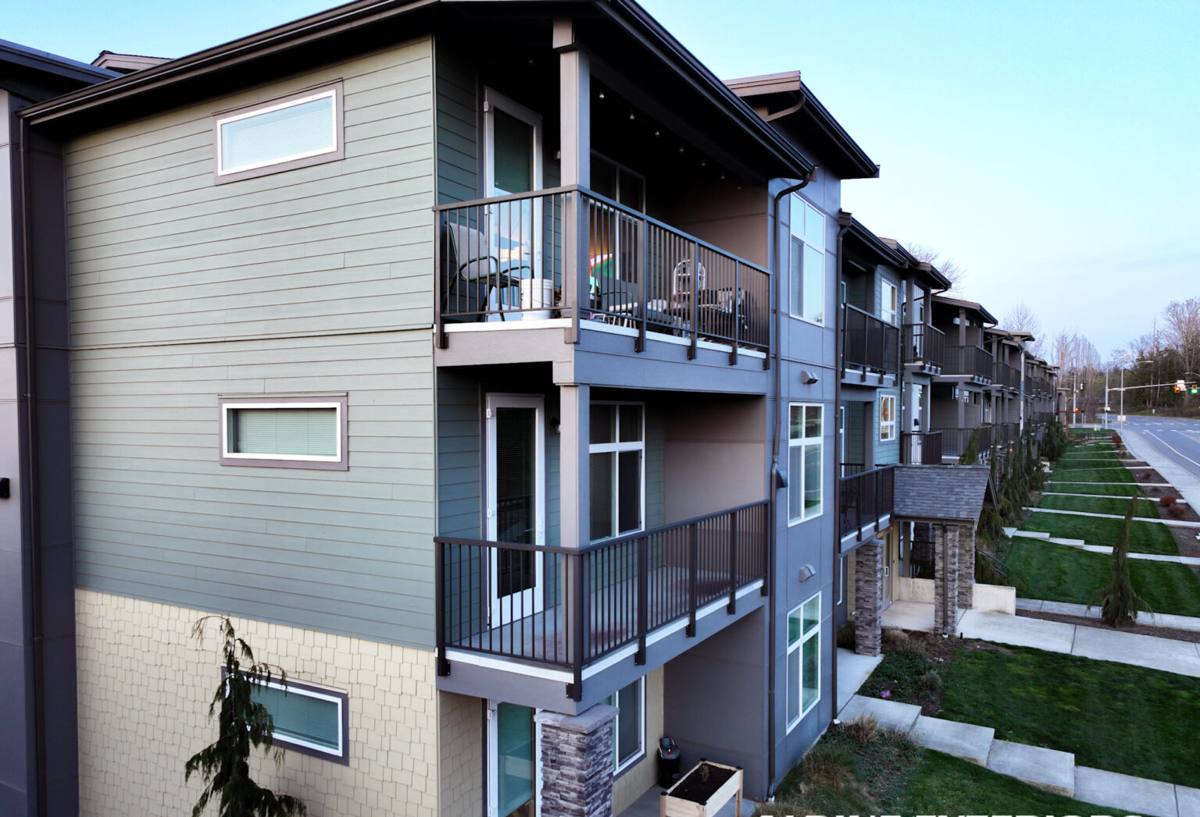
West Seattle's housing mix includes older craftsman bungalows and early-20th-century homes near the business districts, along with a large share of mid-century houses and newer construction on view lots overlooking the Sound. Older homes were frequently sided in wood or early manufactured products that have since reached the end of their useful life, and many were never built with a modern drainage plane behind the cladding. Newer homes on exposed, elevated lots face the added stress of direct wind load along with the moisture. In both cases, the fix isn't just "new siding" — it's a siding system engineered for wet, salt-influenced, wind-exposed conditions, installed with the water-management details this specific location demands.
Why We Install Only James Hardie Fiber Cement Siding
We standardized on James Hardie fiber cement and don't install vinyl, LP SmartSide, Cemplank, Allura, primed spruce, or cedar. That's not a marketing position — it's a professional judgment based on what holds up in King County's marine climate and what we're willing to put our name behind.
Fiber cement is non-combustible, which matters in a region where wildfire smoke seasons have made fire-resistant building materials a bigger consideration for homeowners than they used to be. Hardie's ColorPlus factory-applied finish is baked on under controlled conditions, which gives it more consistent adhesion and fade resistance than field-applied paint — a real advantage against salt air and UV exposure over the long haul. Hardie also engineers specific product lines, including its HZ5 formulation, for regions with sustained moisture exposure like ours, rather than selling one generic product everywhere. Combined with a strong transferable warranty, it's the system we've found performs the most predictably when it's installed correctly — which is the other half of the equation.
What a Correct Siding Installation Actually Involves
Fiber cement is only as good as the assembly behind it. Most siding failures we're called to look at in older West Seattle homes trace back to installation shortcuts, not the material itself.
Drainage Plane and Rain Screen Gap
Correct installation starts with a code-compliant water-resistive barrier and, ideally, a rain screen gap that lets any moisture that gets behind the siding drain and dry out instead of sitting against the sheathing. In a climate with West Seattle's humidity and rainfall, skipping or shortcutting this layer is the single biggest reason siding fails early.
Flashing and Water Management at Every Penetration
Every window, door, vent, and utility penetration is a place water can find its way in, especially under wind-driven rain. Head flashing above openings, properly lapped weather-resistive barrier, and kick-out flashing at roof-wall intersections all have to be done in the right order — house wrap under the top layer, over the bottom layer — so water sheds down and out, never behind the assembly.
Fastening, Gaps, and Factory-Finish Care
Hardie panels and lap siding need the manufacturer-specified fastener pattern, correct nail set depth, and proper clearance at butt joints and inside corners so the material can move slightly with temperature and moisture changes without cracking the finish. Field-cut edges get sealed per Hardie's specifications to protect the factory finish at the cut line, which matters most in a climate where those edges stay damp longer than they would inland.
Our Process, From Estimate to Finished Job
A siding project on a West Seattle home generally follows the same disciplined sequence, adjusted for the specific exposure of the lot:
- On-site assessment of the existing siding, sheathing condition, and any moisture damage, with particular attention to wall sections facing prevailing wind and weather.
- A written estimate detailing the Hardie product line and profile recommended for the home, with the reasoning behind it tied to the home's exposure.
- Removal of existing siding and inspection of the sheathing underneath, repairing or replacing any rot or damage found before anything new goes back on.
- Installation of a code-compliant water-resistive barrier and drainage gap, with flashing detailed at every window, door, and penetration.
- Installation of the Hardie siding and trim to manufacturer fastening and clearance specifications.
- Final walkthrough covering the finished work, warranty documentation, and basic care guidance for the home's specific exposure.
What Siding Installation Costs Depend On
Every home is different, but the same handful of factors drive most of the variation in a siding installation quote:
| Cost Factor | Why It Matters |
|---|---|
| Home size and number of stories | More surface area and taller walls mean more material, more labor, and more staging or lift equipment. |
| Condition of existing sheathing | Hidden rot found during tear-off has to be repaired before new siding goes on, which affects both cost and schedule. |
| Trim, gables, and architectural detail | Homes with more corners, gables, and trim transitions take more cutting, fitting, and flashing work per square foot. |
| Site access and exposure | Hillside lots, tight side yards, and homes close to the water can add setup time and require extra weather protection during the job. |
| Product line and profile | Hardie offers multiple lap widths, panel styles, and the HZ5 climate-specific formulation, which vary in material cost. |
| Full tear-off vs. new construction | Removing and disposing of old siding adds labor beyond what a bare-sheathing new-build install requires. |
Signs Your West Seattle Home May Be Due for New Siding
Some warning signs are easy to spot from the ground; others take a closer look. Before scheduling an estimate, it's worth checking for:
- Soft, spongy, or visibly warped siding panels, especially on walls facing prevailing wind and rain
- Persistent moss or algae staining that returns quickly after cleaning
- Peeling, chalking, or fading paint that reappears within a year or two of repainting
- Visible gaps, cracked caulking, or separated joints around windows and doors
- Rust streaks or corrosion around fasteners and trim pieces
- Rising energy bills that suggest moisture or air infiltration behind the walls
- Any musty smell or visible staining on interior walls that share an exterior wall with a suspect area
Why Hiring a Crew That Already Works in West Seattle Matters
A crew that regularly works this peninsula already understands how to sequence a tear-off around its weather patterns, which wall orientations need extra flashing attention, and how the local building department handles siding permits and inspections. That familiarity shows up in fewer surprises mid-project and a finished assembly that's actually built for the conditions the home will face, not a generic installation dropped into a demanding climate.
Caring for Your Siding After Installation
Correctly installed Hardie siding is low-maintenance, but "low" isn't "none." In West Seattle's climate, a periodic gentle rinse to keep salt residue and organic growth from building up, along with prompt attention to any caulking or trim that shows wear, goes a long way toward getting the full lifespan out of the system. Because the ColorPlus finish is factory-applied, most homeowners find they're not repainting on the same cycle they'd expect with field-finished materials.
If your West Seattle home's siding is showing its age, or you're planning ahead for a replacement, we're happy to take a look and walk you through what your home specifically needs. Reach out below for a free, no-pressure estimate.