 King County
 Why Woodinville Decks Wear Out the Way They Do
Woodinville sits inland along the Sammamish River valley, tucked between wooded hillsides and open vineyard land. That means direct salt air off Puget Sound isn't the primary issue here the way it can be for shoreline King County communities — but that doesn't let your deck off the hook. What Woodinville lacks in salt exposure, it makes up for in shade, tree cover, and standing moisture. Mature trees around many properties keep decks damp long after a storm has passed, and that shade slows drying time to a crawl for weeks at a stretch during the wet season.
Add in King County's long stretch of driving rain from fall through spring, and you get the conditions that quietly break decks down: wood that never fully dries between storms, fastener corrosion, and a moss and algae layer that holds moisture against the surface instead of shedding it. None of this happens overnight. It happens over several rainy seasons, which is exactly why deck damage in Woodinville tends to show up as a slow surprise — a board that used to feel solid suddenly doesn't, or a railing that used to be tight starts to wiggle.
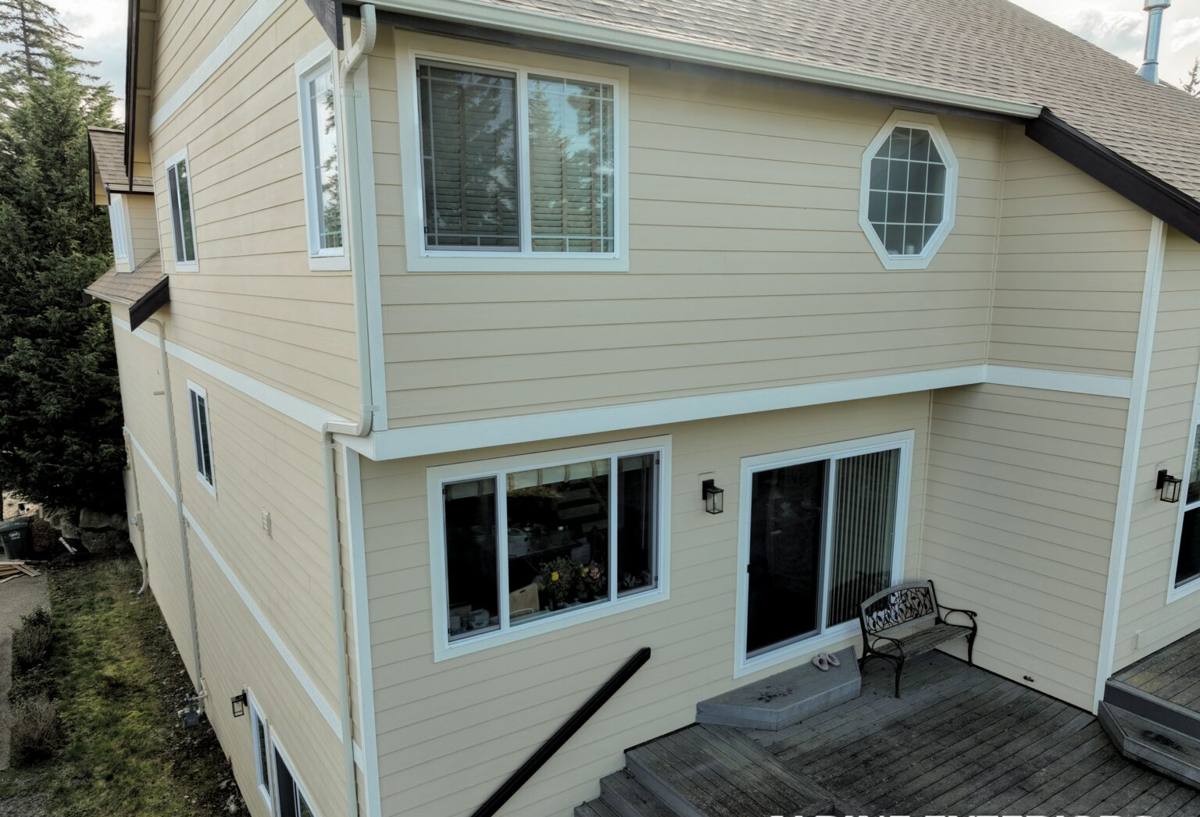
Signs Your Deck Needs Repair — Not Just Cleaning
Soft or Spongy Boards
Press on deck boards, especially near the edges, around posts, and anywhere leaves or debris tend to collect. If a board flexes or feels spongy underfoot, moisture has gotten into the wood fibers and rot has likely started. This is one of the most common repair calls we get in Woodinville, and it's almost always concentrated in shaded, low-airflow spots rather than spread evenly across the whole deck.
Ledger Board and Structural Connections
The ledger board — where the deck attaches to the house — is the single most important structural connection on the whole structure, and it's also the one homeowners can least easily inspect themselves. Water intrusion behind the ledger, often from a missing or failed flashing detail, can rot both the ledger and the house rim joist behind it without much visible warning from the top side.
Railings, Guards, and Stair Connections
Any looseness in a railing post, guard, or stair stringer is a safety issue, not a cosmetic one. Loose railings are usually a sign that the post base or blocking behind it has started to rot, and tightening the hardware without addressing the wood underneath is a temporary fix at best.
What a Correct Deck Repair Actually Involves
A repair that actually holds up starts with figuring out how far the damage extends — not just replacing what's visibly bad and moving on. Rot spreads along the grain of wood, so a soft board often means the joist underneath it needs a closer look too. Here's how we break repairs down by material:
Wood Decks
For cedar, pressure-treated, and other wood-framed decks, repair means removing damaged boards and framing back to solid wood, treating cut ends of pressure-treated lumber that get exposed during the repair, and matching fastener types so you're not mixing metals that corrode against each other. We also check flashing at the ledger and any post bases sitting in contact with concrete or soil, since those are the spots that fail first in King County's wet season.
Composite and Capped-Composite Decks
Composite decking rarely rots the way wood does, but the substructure underneath it — almost always wood-framed — can still fail, and hidden fastener systems can loosen or the boards can develop surface issues at cut ends that weren't properly capped. Repairing a composite deck usually means addressing the framing below while matching board profiles and colors as closely as the manufacturer's current lineup allows, since exact matches to older, weathered boards aren't always possible.
Fasteners and Hardware
We use fasteners and structural hardware rated for exterior and ground-contact use, matched to the type of lumber involved. Using the wrong fastener — for example, standard steel screws in treated lumber — accelerates corrosion and can cause the exact kind of loosening that brings homeowners to us in the first place.
Repair or Replace? How We Help You Decide
Not every deck problem calls for a full rebuild, and not every repair is worth doing if the underlying structure is too far gone. We look at the age of the deck, how much of the framing is affected, and whether repeated repairs are starting to cost more than a partial or full rebuild would.
| Factor | Leans Toward Repair | Leans Toward Replacement |
|---|---|---|
| Extent of rot | Isolated to a few boards or one area | Spread across multiple framing members |
| Deck age | Under 10-15 years, built to current standards | Older deck, outdated framing or connections |
| Ledger/structural condition | Sound, properly flashed | Water damage behind ledger or at posts |
| Repair history | First significant repair needed | Third or fourth repair in a few years |
| Code compliance | Railings and guards meet current code | Old railing height/spacing out of code |
When a deck is a genuine borderline case, we'll say so plainly and lay out both options with honest pricing ranges rather than steering you toward the bigger job.
Our Deck Repair Process
- On-site inspection. We check boards, framing, ledger connection, posts, and railings — probing suspect areas rather than just looking at the surface.
- Written scope and estimate. You get a clear description of what's damaged, what we're replacing, and a firm cost range before any work starts.
- Removal of damaged material. We pull rotted or compromised boards and framing back to solid wood, not just the section that looks bad.
- Structural repair. Framing, ledger flashing, and post connections get repaired or reinforced to current structural standards.
- Decking and railing reinstallation. New boards, hardware, and railing components go in, matched to your existing material where possible.
- Final walkthrough. We check every repaired area with you before calling the job done.
Keeping a Repaired Deck in Good Shape
A repair is only as good as the maintenance that follows it, especially in a shaded, rain-heavy climate like ours. This is the same checklist we walk homeowners through after finishing a repair:
- Sweep leaves and debris off the deck regularly during fall, especially between boards and against the house
- Clean moss and algae off the surface before it builds a thick layer that holds moisture
- Check that gaps between boards stay clear so water can drain instead of pooling
- Inspect railings and stair connections for looseness once or twice a year
- Keep gutters and downspouts near the deck clear so runoff doesn't drain directly onto it
- Reapply sealant or stain on wood decks on the schedule the product calls for, not just when it looks faded
Permits, Code, and King County Requirements
Structural deck repairs — particularly anything touching the ledger board, footings, or framing — can fall under King County or local jurisdiction permitting requirements depending on the scope of work. Railing height, guard spacing, and stair rise/run also have to meet current building code, which matters most when we're repairing an older deck that was built to older standards. We handle the scope assessment as part of the estimate so you know upfront whether your project needs a permit, rather than finding out partway through.
Why Hire a Crew That Already Works in Woodinville
Deck repair looks different depending on what the local climate throws at a structure, and Woodinville's mix of tree cover, valley moisture, and long wet seasons creates a specific pattern of wear — heavier on shaded framing and ledger connections than on open, sun-exposed decks elsewhere in King County. A crew that already works in this area has seen that pattern often enough to know where to look first, instead of treating every deck as a blank slate. We also know which fastener and flashing details actually hold up through a Pacific Northwest winter versus what looks fine on install day and fails in year three.
Local also means accountability. We're not driving in from out of the area for one job — we're available if a question comes up after the work is done, and our reputation in Woodinville and the surrounding King County communities depends on repairs that actually last.
If you've noticed soft boards, a wobbly railing, or moss creeping across your deck, it's worth getting a second set of eyes on it before the next wet season makes the problem worse. Reach out for a free, no-pressure estimate using the form below — we'll take a look, tell you honestly what's going on, and give you a clear picture of your options.