 King County
 Asphalt Shingle Roofing Built for Redmond's Climate
Redmond sits in one of the wettest, most tree-covered pockets of King County, and that combination is hard on a roof. Long stretches of steady rain, heavy tree canopy that keeps roof surfaces shaded and damp, and the moisture that rolls in off the Sound all add up to conditions that push asphalt shingles harder than they're pushed in drier parts of the country. A roof that's installed correctly for this climate will hold up for decades. One that's installed with shortcuts — thin underlayment, poor ventilation, nails driven at the wrong angle — will show problems in half that time, usually starting with moss, granule loss, and slow leaks that don't announce themselves until there's water damage underneath.
This page is about one thing: asphalt shingle roofing, done right, on homes in Redmond. Not a general overview of every roofing product we offer — just what matters for this specific area and this specific material.
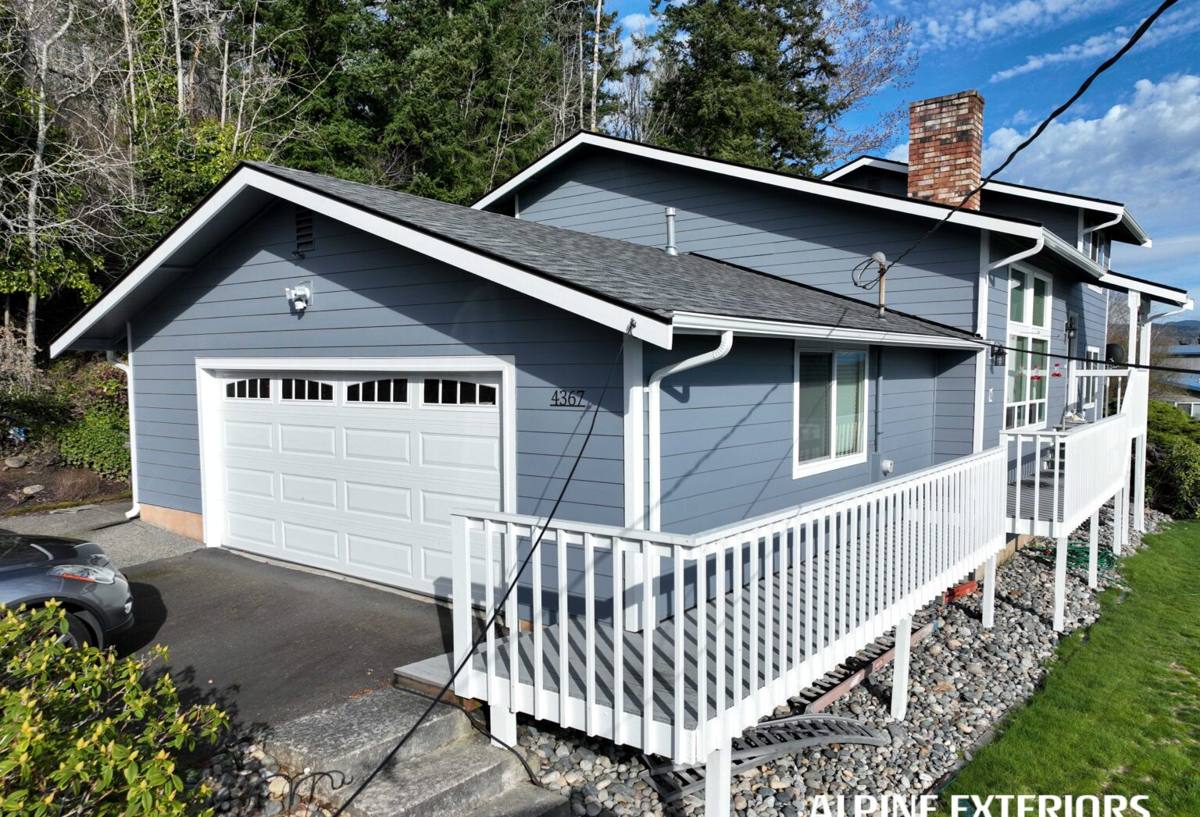
What Redmond's Weather Actually Does to a Shingle Roof
Moisture that never really leaves
Between the rain and the shaded lots common in this part of King County, roof surfaces here often don't get the sun exposure that dries a roof out between storms. Shingles stay damp longer, which is exactly the environment moss and algae need to take hold. Once moss establishes itself under the shingle tabs, it lifts them slightly, which lets wind-driven rain work its way underneath.
Driving rain finds the weak points
It's rarely a straight-down rain here — wind pushes it sideways during storms, which means water gets tested against every seam, valley, and flashing point on a roof instead of just running off the surface. A roof built for a drier climate, or built without attention to detail at the valleys and edges, will eventually leak from this kind of exposure even if it looks fine from the ground.
A long moss season, not just a fall cleanup
In a lot of the country, moss is a once-a-year nuisance. In Redmond, the combination of tree cover and extended damp weather means moss and algae growth is active for most of the year. Roofs need to be designed and maintained with that in mind, not treated as a seasonal afterthought.
What a Correctly Installed Roof Needs Here
Asphalt shingle roofing is a mature, well-understood product, but "correctly installed" means something more specific in a climate like this one. The materials underneath the shingles matter as much as the shingles themselves.
- Ice-and-water shield at vulnerable points — valleys, eaves, and roof-to-wall transitions get a self-adhering waterproof membrane underneath the shingles, not just felt paper.
- Synthetic underlayment across the field — more consistent water resistance than old-style felt, and it holds up better to the extended damp periods common here.
- Balanced attic ventilation — intake at the eaves and exhaust at the ridge, sized to the attic volume, so moisture from inside the home doesn't condense against the roof deck from below.
- Correct nailing pattern — the right number of nails, placed in the manufacturer's nailing zone, not just "close enough." This is one of the most common shortcuts on rushed installs and one of the hardest to spot without getting on the roof.
- Metal flashing done properly — at chimneys, skylights, and sidewalls, formed and layered so water sheds outward instead of being caught by caulk alone.
None of this is exotic. It's standard trade practice — but it only works if it's actually done, every time, on every roof, which is where quality varies a lot between contractors.
Signs a Redmond Roof Needs Attention
Because leaks in this climate often start slow — a damp spot in the attic insulation, a soft patch of sheathing — it helps to know what to look for before it becomes a bigger repair.
- Moss or dark green-black streaking building up on the north or shaded slopes of the roof
- Granules collecting in gutters or at the base of downspouts
- Shingle edges that look curled, cupped, or lifted rather than lying flat
- Daylight visible through the attic roof deck, or damp insulation near the eaves
- Sagging or soft spots anywhere on the roof surface
- A roof that's 18–25 years old and has never had a full inspection
Any one of these on its own isn't necessarily an emergency, but it's worth a look before the next wet season adds to the problem.
Choosing the Right Shingle for This Climate
Not every asphalt shingle product performs the same way once moss, moisture, and wind are part of the equation. Here's how the common options compare for a home in Redmond specifically.
| Shingle Type | Typical Lifespan Here | Moss/Algae Resistance | Cost Factor |
|---|---|---|---|
| Standard 3-tab | 15–20 years | Low unless algae-resistant granules are specified | Lowest upfront cost |
| Architectural (dimensional) | 25–30 years | Better mat and granule quality; algae-resistant options widely available | Moderate — most common choice for this climate |
| Premium/designer laminate | 30+ years | Highest granule density and algae-resistant coatings | Higher upfront, longer service life |
| Impact-resistant (Class 4) | 25–30+ years | Good, plus added resistance to debris impact from falling limbs | Higher cost, sometimes offset by insurance discounts |
For most Redmond homes, we steer people toward architectural shingles with algae-resistant (copper-infused) granules as the practical middle ground — the granule technology specifically fights the algae and moss staining this climate produces, and the heavier mat handles wind-driven rain better than a basic 3-tab. Impact-resistant shingles are worth discussing on lots with a lot of overhead tree cover, where falling limbs and debris are a real, ongoing factor rather than a one-time storm risk.
Why we don't push the cheapest option
Basic 3-tab shingles aren't a bad product, but in a climate that stays damp this long, the thinner mat and lower granule density mean moss and algae take hold sooner and the shingle degrades faster. Our standard is to recommend what will actually perform for the number of years it's supposed to, not just what has the lowest sticker price on installation day.
How We Approach a Redmond Roofing Job
1. Inspection first, quote second
We get on the roof — not just a look from the driveway — to check the deck condition, existing ventilation, flashing details, and how much of the roof's problems are cosmetic versus structural. That determines whether a repair makes sense or a full replacement is the smarter long-term move.
2. A written scope that names the materials
You should know exactly what underlayment, ice-and-water shield coverage, shingle brand and line, and flashing approach is included before work starts — not find out after the fact that corners were cut on the parts you can't see once the shingles are down.
3. Tear-off and deck check
We remove the old roofing down to the deck rather than layering over it, which lets us catch soft or rotted sheathing early and replace it before it becomes a hidden problem under new shingles.
4. Installation to manufacturer spec
Nailing pattern, starter course, valley treatment, and ventilation are all installed to the manufacturer's published specifications — the details that actually determine whether a warranty is enforceable and whether the roof performs the way it's supposed to in this weather.
5. Cleanup and final walkthrough
Magnetic sweep for stray nails, full site cleanup, and a walkthrough so you know what maintenance (if any) the roof needs going forward.
Ventilation and Moss Prevention Matter as Much as the Shingles
A lot of homeowners focus entirely on the shingle brand and skip past ventilation, but in a climate like Redmond's, attic ventilation is doing just as much work. Poor airflow traps warm, moist household air against the underside of the roof deck, which speeds up deterioration from the inside — a problem that has nothing to do with the shingle quality and everything to do with the ventilation system underneath. We check intake and exhaust balance on every roof we work on, because a beautiful new shingle installed over a poorly ventilated attic will still show premature wear.
On moss specifically: the most effective long-term approach is limiting the conditions moss needs — shade, standing moisture, and debris buildup — rather than relying only on chemical treatments after the fact. That means keeping gutters and valleys clear of needles and leaf litter, and, where it's practical, addressing overhanging branches that keep a section of roof shaded and damp longer than the rest.
Why a Local King County Crew Makes a Real Difference
A crew that works Redmond and the surrounding King County area regularly knows things that don't show up in a generic install manual: which neighborhoods run heavier tree cover and need extra attention to moss-prone slopes, how local permitting works, and how to schedule around this region's weather instead of getting caught mid-tear-off when a rain system moves in. That local knowledge is the difference between a roof that's technically installed and one that's installed to actually hold up here.
It also matters for accountability. A local, established contractor is still around — and easy to reach — years later if a warranty question comes up. That's worth factoring in alongside price when comparing bids.
What This Typically Costs
Asphalt shingle roofing costs vary based on roof size, pitch, number of layers being removed, deck repairs needed, and shingle grade chosen. Rather than quote a number that doesn't reflect your specific roof, we provide a firm, itemized estimate after an on-site inspection — so you're pricing your actual roof, not a rough average.
If your Redmond home's roof is showing moss, granule loss, or age, or you're planning ahead for a replacement, we're happy to take a look and walk you through your options. Reach out below for a free, no-pressure estimate — there's no obligation, and you'll get a straight answer about what your roof actually needs.