 King County
 Decks Built for Ballard's Marine Climate
Ballard sits close to Puget Sound and the ship canal, which means homes here deal with a different set of conditions than decks built further inland in King County. Salt-laden air off the water, driving rain that comes in sideways during winter storms, and a moss season that can run from October through May all put steady stress on outdoor structures. A deck that holds up fine in a drier part of the county can fail early here if it wasn't built with this specific environment in mind. We build and repair custom decks throughout Ballard, and the details below reflect what we've learned working in this exact climate, not a generic checklist.
A custom deck built for this neighborhood isn't just about layout and looks, though those matter too. It's about material choices, fastening, and drainage details that hold up specifically to salt air and wind-driven rain, rather than a generic design that happens to get installed here. This page covers what a Ballard deck actually needs, what a correct build involves, and how our process works for a custom deck project in this part of King County.
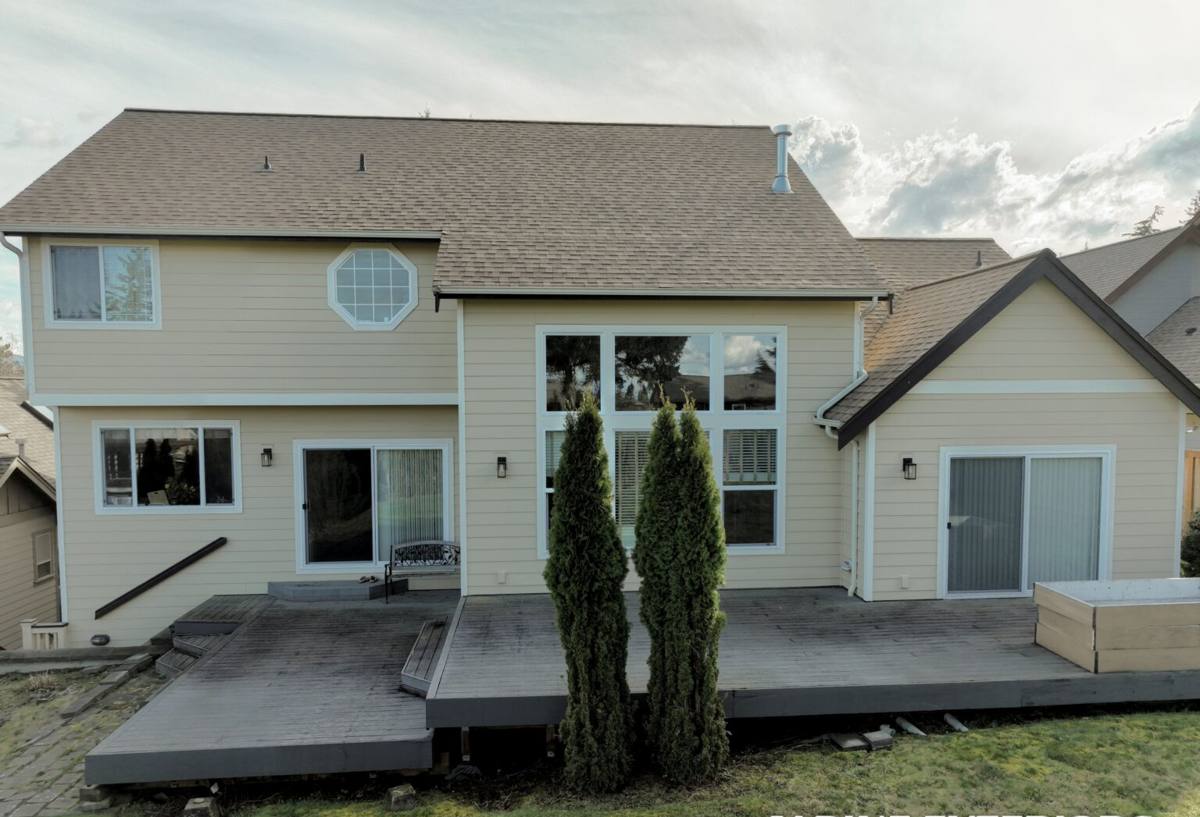
What Ballard's Weather Actually Does to a Deck Over Time
It helps to understand the failure patterns before talking about the fix. Three things drive almost every deck problem we see in this part of Seattle:
Salt Air and Metal Corrosion
Airborne salt from Puget Sound accelerates corrosion on anything metal — nails, screws, joist hangers, bolts, and railing hardware. Standard hardware that's fine in a dry inland climate can start rusting within a few years this close to the water. Once fasteners corrode, they lose holding strength long before the wood or decking around them shows any visible damage, which is part of what makes this a hidden risk rather than an obvious one.
Driving Rain and Trapped Moisture
Rain here rarely falls straight down. Wind off the Sound pushes it sideways and up under railings, against ledger boards, and into any gap where two pieces of material meet. A deck that isn't detailed to shed and drain that water — rather than just tolerate a normal rain shower — ends up holding moisture in the framing long after the surface looks dry.
Moss, Algae, and Surface Buildup
Long stretches of damp, mild weather are ideal growing conditions for moss and algae. On wood decking this buildup holds moisture against the boards and creates a slick, slippery surface. On composite decking it's mostly cosmetic, but it still needs to be addressed or it spreads. Either way, deck design — spacing, airflow, and how much shade the deck gets — has a real effect on how bad this gets each year.
Choosing the Right Decking Material for This Neighborhood
There's no single "best" decking material for Ballard — there's a best material for your budget, your maintenance appetite, and how much sun or shade your yard gets. We walk every homeowner through the real trade-offs rather than pushing one product line.
| Material | How It Handles This Climate | Maintenance | Typical Lifespan |
|---|---|---|---|
| Pressure-treated wood | Prone to moss growth and surface graying; needs sealing to resist moisture uptake | Annual cleaning, periodic staining or sealing | 10-15 years with upkeep |
| Cedar or other softwoods | Natural rot resistance is decent but surface still grays and hosts moss without upkeep | Regular cleaning and refinishing | 15-20 years with upkeep |
| Composite decking | Doesn't absorb water like wood; resists rot, but can still grow surface algae or moss if not cleaned | Periodic washing, no staining or sealing | 25-30 years |
| PVC or capped polymer decking | Fully sealed surface handles standing moisture and salt exposure very well | Occasional washing | 25-30+ years |
Cost generally rises as you move down that table, but so does the amount of time and money you'll spend maintaining the deck over its life. For a shaded, damp lot that stays wet most of the winter, we usually steer homeowners toward composite or capped polymer decking unless they specifically want the look and feel of real wood and are willing to keep up with sealing and cleaning.
What a Correct Decking Job Involves, No Matter the Material
- Boards spaced correctly for drainage and airflow underneath, not tight-fitted for looks
- Hidden or exposed fastening done with corrosion-resistant hardware rated for coastal or marine exposure
- Proper expansion gaps for composite and PVC products, since they move more with temperature than wood
- Blocking and joist spacing that matches the manufacturer's span rating for the specific product installed
- A layout that accounts for drainage slope so water doesn't pool on the surface
Framing and Substructure: The Part Nobody Sees
The decking boards get all the attention, but the framing underneath is what actually determines how long a deck lasts in this climate. We build substructures using pressure-treated lumber rated for ground contact where it sits near soil, and we pay close attention to a few things that get skipped on lower-quality builds:
- Joists and beams sized correctly for the actual span and load, not just "close enough"
- Post bases that keep wood off concrete and off standing water, rather than posts set directly into wet soil or a puddle-prone footing
- Cut ends of pressure-treated lumber re-sealed after cutting, since factory treatment doesn't penetrate a fresh cut
- Adequate clearance and airflow under the deck so the substructure can dry out between storms instead of staying damp all winter
A deck can look finished and solid for the first few years even with shortcuts in the framing. The problems usually show up five to ten years in, when it's a far more expensive fix than getting it right the first time.
Drainage, Ledger Attachment, and Moisture Management
If the deck attaches to the house — which most do — the ledger board connection is one of the most important details on the entire project. It's also one of the most commonly done incorrectly on older or budget builds. Water that gets behind a poorly flashed ledger board doesn't just damage the deck; it can work its way into the house's wall framing and cause rot that's far more expensive to repair than the deck itself.
We flash every ledger connection to shed water away from the house, use standoff hardware where it makes sense, and make sure the ledger is bolted, not just nailed, into solid framing. For decks that aren't attached to the house, we still grade and detail the footing area so water drains away from the posts instead of pooling around them through the wet season.
Railings, Fasteners, and Hardware in a Corrosive Environment
Hardware is the single most overlooked detail on decks built by crews who don't regularly work this close to Puget Sound. Standard zinc-coated fasteners can start showing rust streaks and losing strength within just a few years of salt-air exposure. We use stainless steel or heavy-duty coated fasteners and connectors rated for coastal exposure on the components that matter most — ledger bolts, joist hangers, and railing post connections — because those are the parts holding the structure together if anything ever gives.
Railings deserve the same attention. Whether you're going with wood, metal, or composite and cable railing systems, the posts and their connection to the framing need to be solid enough to meet code load requirements, and the hardware needs to be rated for the same exposure as everything else on the deck. A railing system that looks great when it's installed but starts loosening or rusting within a few winters isn't saving anyone money.
Our Process, Start to Finish
1. On-Site Visit and Assessment
We come out, look at the yard, the grade, sun and shade exposure, and, for a rebuild, the condition of the existing structure. This is also where we talk through material options based on your budget and how much maintenance you actually want to do.
2. Design and Layout
We work out size, shape, railing style, stairs, and any features like built-in seating or a pergola, along with a straightforward written scope so there's no ambiguity about what's included.
3. Permitting
Most new decks and significant rebuilds in Seattle and King County require a permit, especially above a certain height or when attached to the house. We handle the permit process rather than leaving it on the homeowner to sort out.
4. Framing and Structural Work
This is the substructure work described above — footings, posts, beams, joists, and ledger attachment, all built to the load and span requirements for your specific design.
5. Decking, Railing, and Finish Work
Decking installation, railing installation, stairs, and any trim or fascia work, followed by a final cleanup of the site.
6. Walkthrough
We walk the finished deck with you, cover basic care for the specific material installed, and answer any questions before we consider the job done.
Cost Factors Worth Understanding Before You Budget
Every deck project is different, but a few factors move the price more than homeowners expect. Knowing them up front makes it easier to have a realistic conversation with any contractor, not just us.
| Factor | Why It Affects Cost |
|---|---|
| Decking material | Wood costs less up front; composite and PVC cost more initially but less over the deck's lifetime in upkeep |
| Height and grade | A deck built high off a sloped Ballard lot needs more substructure, railing, and often stairs than a low, flat one |
| Attachment to the house | Ledger flashing and structural tie-ins add labor but are not optional for an attached deck |
| Railing style | Cable, glass, and custom metal railings cost more than standard wood or composite balusters |
| Permit and inspection requirements | Larger or higher decks require more design detail and inspection steps, which adds time |
Maintenance: What a Ballard Deck Actually Needs Year to Year
The right maintenance schedule depends on the material, but every deck in this climate benefits from the same basic rhythm. This is the checklist we give homeowners after a build:
- Clean the surface at least once a year, ideally in early fall before the wet season sets in and again in spring as moss growth ramps up
- Clear leaves and debris from between boards and off the surface regularly through fall, since trapped debris holds moisture
- Check railing posts and stair stringers annually for looseness, which can signal hardware corrosion or wood movement
- For wood decks, reseal or restain on the manufacturer's recommended schedule, typically every one to three years depending on sun exposure
- Keep gutters and downspouts near the deck clear so runoff isn't dumping directly onto or under the structure
- Inspect underneath the deck once a year for standing water, soft wood, or signs of pest activity
Why a Crew That Already Works Ballard Matters
Deck-building isn't the same job everywhere in King County. A crew that mostly builds in drier, more inland parts of the county can still turn out a good-looking deck that isn't actually detailed for salt air and driving rain — and the difference doesn't show up until years later. Working regularly in Ballard means we already know which hardware holds up here, how to detail flashing and drainage for this rainfall pattern, and what Seattle's permitting process expects for deck projects in this neighborhood. That local familiarity is part of what keeps a deck performing for decades instead of needing early repairs.
If you're planning a new deck or need to replace one that's showing its age, we're happy to come take a look and talk through honest options for your yard, your budget, and how much maintenance you want to take on. Reach out for a free, no-pressure estimate using the form below.