 King County
 Ballard's Climate Puts Real Stress on Siding
Ballard sits close to Salmon Bay and the Ballard Locks, which means homes here deal with a version of King County weather that's a notch tougher than what you'll find further inland. Salt-laden air off the water, long stretches of driving rain in fall and winter, and a moss season that can run most of the year all work against siding that isn't built or installed to handle it. If you've owned a home in this neighborhood for more than a few years, you've probably already seen what that combination does — paint that fails early, trim that stays damp long after a storm passes, and green growth creeping up north-facing walls that never get direct sun.
None of that is unusual for this part of King County. It's just the environment. The difference between siding that holds up and siding that doesn't usually comes down to two things: what the siding is made of, and whether it was installed correctly for this climate. This page covers both, specific to Ballard.
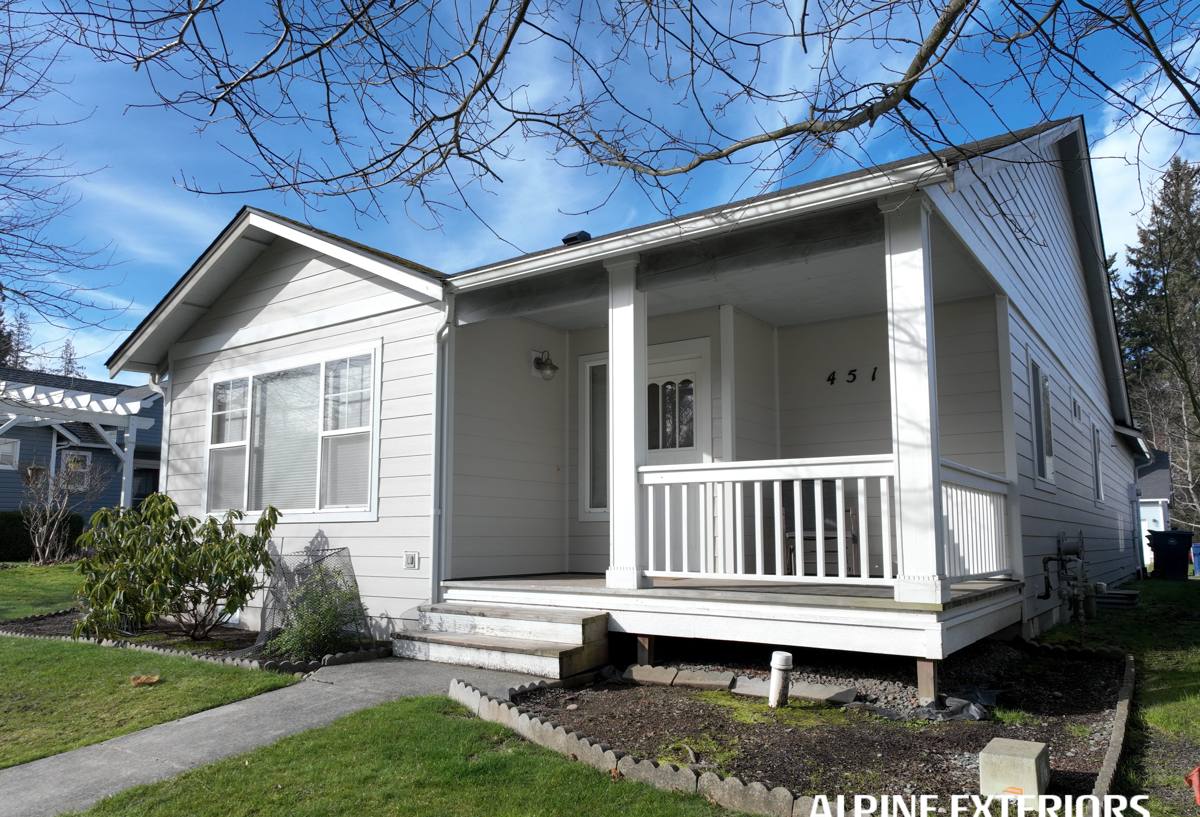
What Salt Air and Moss Actually Do to a Home
Salt Air
Homes closer to the water pick up airborne salt that settles on exterior surfaces. Over time it accelerates corrosion on exposed metal fasteners and trim, and it can break down lower-grade paint finishes faster than the same product would fail further from the water. Siding that relies on a field-applied paint job is more exposed to this than siding with a factory-cured finish, simply because factory finishes are baked on under controlled conditions and bond differently than a coat applied on-site in variable weather.
Driving Rain
Ballard doesn't just get rain — it gets rain pushed sideways by wind coming off the water, which finds every gap, unsealed seam, and poorly lapped joint in a wall assembly. Siding installation in this kind of environment isn't just about the panels; it's about the water management system behind them. A wall that looks fine from the curb can still be taking on moisture at the seams if the flashing and weather-resistive barrier underneath weren't detailed correctly.
Moss and Sustained Damp
Shaded walls, especially north- and east-facing ones under mature trees (common throughout Ballard's older residential blocks), stay damp longer between rain events. That sustained moisture is exactly what moss and mildew need to take hold. Siding material that absorbs water rather than shedding it gives moss more to grow on and holds moisture against the wall assembly longer, which is where rot risk starts.
What a Correct Siding Installation Actually Involves
Good siding installation is mostly invisible once the job is done — it's what's underneath the panels that determines whether the wall performs for the next 30-plus years. For a Ballard home, that means:
- A continuous, properly lapped weather-resistive barrier (WRB) installed shingle-style so water is always directed outward and down
- Correct flashing at every window, door, and roofline intersection — the majority of siding failures we see start at these transitions, not in the field of the wall
- A rain screen gap where conditions call for it, so any moisture that does get behind the cladding can drain and dry instead of sitting against the sheathing
- Fasteners placed and set to the manufacturer's specification — over-driven or under-driven nails are a leading cause of premature siding problems
- Correct panel gapping and caulking at seams, sized for the way fiber cement expands and contracts with temperature and moisture
- Proper clearance from grade, decks, and roof lines to keep the bottom edge of the siding from sitting in standing water or snow load
Skip any one of these and the siding on top can be a great product and still underperform. This is the part of the job that doesn't show up in a walk-around inspection after installation — it only shows up years later, as a callback.
Why We Only Install James Hardie in Ballard
We install James Hardie fiber cement siding exclusively. We don't install vinyl, LP SmartSide, primed spruce, cedar, or other fiber cement brands. That's a deliberate standard, not a sales pitch, and it's worth explaining why — especially in a neighborhood with the climate profile Ballard has.
Fiber cement is non-combustible, which matters given the wildfire smoke and ember exposure the Puget Sound region has seen in recent summers. It doesn't absorb moisture the way wood-based products can, which is directly relevant to Ballard's moss and damp-shade problem. And James Hardie's ColorPlus finish is factory-applied and cured, so it isn't relying on a field-applied coat to hold up against the salt air and UV exposure this neighborhood gets. Hardie also engineers specific product formulations, marketed as HZ5, for the Pacific Northwest's wet climate zone — that's not a generic product being sold everywhere, it's built for the conditions we're actually working in.
We're not going to tell you every other product on the market is bad. Vinyl is inexpensive and low-maintenance in mild climates; cedar has real aesthetic appeal for the right homeowner willing to keep up with it. But when we weigh moisture behavior, fire resistance, finish durability, and long-term maintenance against what Ballard's climate demands, James Hardie is what we're willing to put our name behind and warranty.
Choosing the Right Hardie Product for a Ballard Home
James Hardie makes several siding profiles, and the right one depends on your home's architecture and your maintenance preferences, not just budget.
| Product | Look | Best Fit For |
|---|---|---|
| HardiePlank Lap Siding | Traditional horizontal lap, several width and texture options | Most Ballard single-family homes, from craftsman bungalows to newer builds |
| HardiePanel Vertical Siding | Clean vertical panels, often paired with battens | Modern builds, accent walls, gable ends |
| HardieShingle | Staggered or straight-edge shingle profile | Craftsman and cottage-style homes wanting a shingle look without cedar's maintenance |
| HardieTrim | Fascia, corner boards, window/door trim | Pairs with any of the above for a finished, consistent system |
All of these come in ColorPlus factory-finished color options, which matters in this neighborhood — a factory finish means fewer repaint cycles fighting the salt air and rain exposure than a field-painted product would need.
Our Ballard Installation Process
1. On-Site Assessment
We walk the home, check existing siding and sheathing condition, look at moisture and moss patterns on shaded and water-facing walls, and note flashing and trim details that need attention before new siding goes up.
2. Tear-Off and Sheathing Check
Old siding comes off and we inspect the sheathing underneath for rot or water damage before anything new is installed. Covering up a compromised wall with new siding just hides the problem — we address it first.
3. Weather Barrier and Flashing
This is the step that determines how the wall performs against driving rain. WRB, window and door flashing, and any rain screen components are installed to spec before a single panel goes up.
4. Siding Installation
Panels are installed to James Hardie's fastening and clearance specifications, with attention to the seams, laps, and grade clearances that matter most in wet climates.
5. Trim, Caulk, and Final Walkthrough
Trim goes on, seams are sealed where specified, and we walk the finished job with you before calling it done.
Signs a Ballard Home Needs New Siding
- Paint that's peeling, bubbling, or failing faster than a normal repaint cycle would explain
- Soft or spongy spots when you press on siding, especially near the bottom edge or below windows
- Persistent moss or dark staining on shaded walls that pressure washing only knocks back temporarily
- Visible gaps, warping, or cracked panels, particularly on the sides of the home facing prevailing wind and rain
- Rising energy bills with no other explanation, which can point to a wall assembly that's no longer sealing properly
- Siding that's original to a home built more than 20-25 years ago and hasn't been reassessed since
What Affects the Cost of a Ballard Siding Project
| Factor | Why It Matters |
|---|---|
| Home size and wall complexity | More square footage, corners, and roof intersections mean more material and labor |
| Sheathing condition | Rot or moisture damage found during tear-off adds repair work before new siding goes on |
| Product and profile choice | Lap, panel, and shingle profiles carry different material and labor costs |
| Trim and detail work | Craftsman-style homes with more trim and transitions take more time to finish correctly |
| Access and site conditions | Narrow lots, mature landscaping, and multi-story walls affect scaffolding and staging |
We give a firm, itemized quote after the on-site assessment — not a phone estimate — because these factors vary enough house to house that a ballpark number without seeing the home isn't useful to you.
Why a Crew That Already Works Ballard Matters
Ballard's mix of older craftsman homes, newer infill construction, and everything in between means the siding details that matter — trim profiles, roofline transitions, how close a wall sits to mature trees or the water — vary block to block. A crew that's worked this neighborhood knows what the moss patterns on a north wall are telling them before they even start the tear-off, and knows which flashing details tend to get missed on homes of a certain age in this area. That local familiarity, combined with installing one product line to one standard, is how we keep the callback rate low.
We're also familiar with Seattle and King County permitting requirements that apply to exterior work, which keeps projects moving instead of stalling on paperwork.
If your Ballard home's siding is showing its age, or you're planning ahead for a repaint cycle you'd rather not repeat, we're happy to walk the property and give you a straight, no-pressure estimate. Use the form below to get started.