 King County
 Storm Damage in Bellevue: What King County Weather Does to a Roof
Bellevue doesn't get hurricanes, but it gets something roofs find just as hard to shrug off: months of low-grade abuse. Pacific storm systems push through King County with sustained wind, sideways rain, and enough marine moisture in the air that a roof rarely gets a real chance to dry out between weather events. Add in the shoulder-season windstorms that knock branches loose from mature trees, and you've got a climate that damages roofs gradually and quietly, not just in one dramatic event.
That's the part homeowners underestimate. A single wind event might lift a few shingle tabs or crack a ridge cap, and it looks minor from the ground. But driving rain finds that opening fast, and the long moss season that follows keeps the area damp long after the storm has passed. By the time a stain shows up on a ceiling, water has usually been working on the deck underneath for weeks or months.
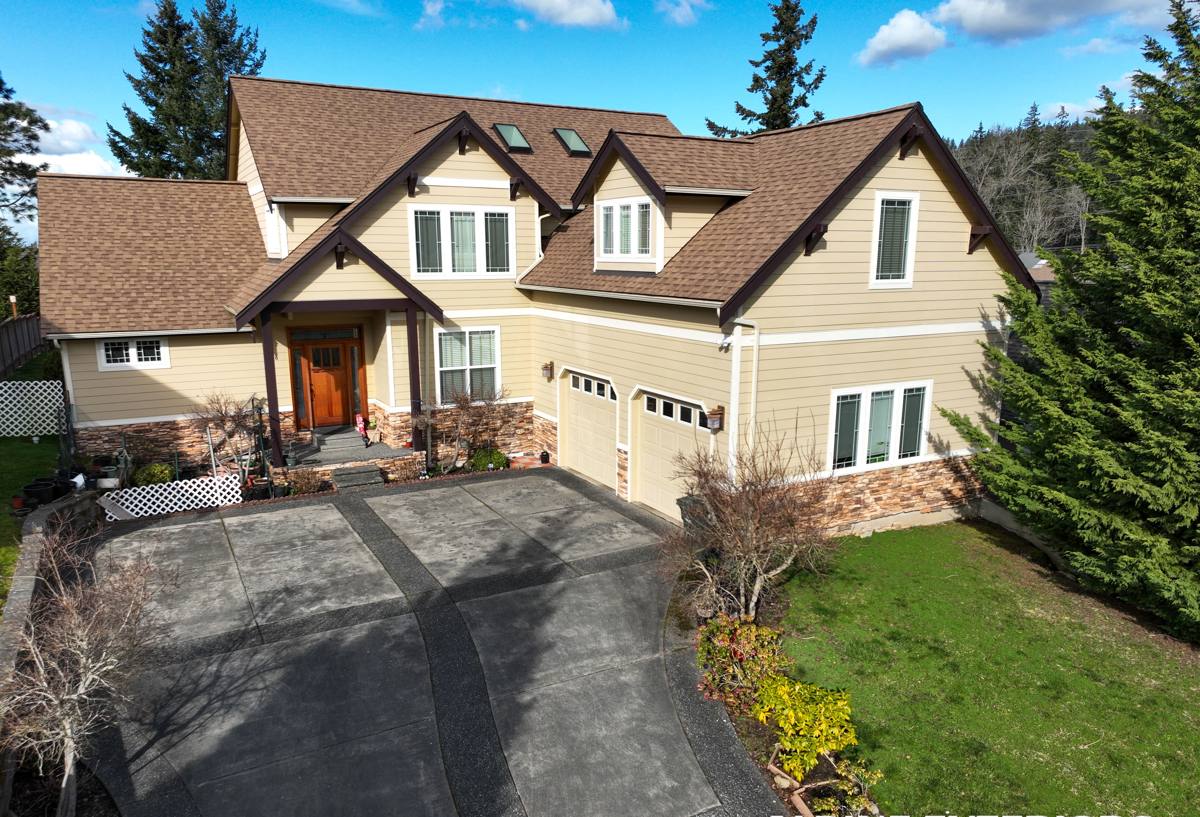
Signs Your Bellevue Roof Took Storm Damage
Most storm damage isn't obvious from the driveway. After any significant wind or rain event, it's worth doing a quick check — from the ground with binoculars is fine, no one needs to be on a wet roof.
- Shingles that look lifted, curled, or a different color/texture than the rest of the field (granule loss shows as a lighter patch)
- Granules collecting in gutters or at downspout outlets after a storm
- Bent, missing, or visibly loose flashing around chimneys, skylights, or roof-to-wall joints
- New or worsening moss growth concentrated in one area, which often means water is sitting where it shouldn't
- Gutters pulled away from the fascia or sagging under debris weight
- Any new ceiling stain, musty smell in an attic, or soft spot when walking near the attic hatch
- Debris — branches, dislodged shingles, pieces of ridge cap — in the yard after wind
None of these alone means a full roof replacement is coming. But each one is a reason to get an actual inspection before the next storm rolls through, rather than waiting for a leak to announce itself indoors.
Damage That Hides Until the Next Storm
Wind damage is often "unsealed" rather than missing — a shingle's adhesive strip has broken loose but the shingle is still sitting in place, looking fine until the next round of wind gets under it. That's why a post-storm check that only looks for missing pieces will miss a lot of real damage. A trained eye checks the seal, not just the shingle count.
What a Correct Storm Damage Repair Actually Involves
A repair that's done right addresses the storm event and the conditions it exposed — not just the visible symptom.
Full Inspection, Not a Patch Job
Storm damage rarely stays confined to one spot. Wind that lifted shingles on one slope likely stressed flashing, vents, and seals elsewhere too. A proper repair starts with checking the whole roof plane involved, plus the attic side if there's any sign water reached the deck.
Matching Materials, Not Improvising
Replacement shingles, flashing, and underlayment should match the existing roofing system in type and, where possible, appearance. A patch that mixes incompatible materials — or nails a newer, stiffer shingle over older, more brittle ones — often fails again sooner than the original roof would have.
Flashing and Underlayment Get Checked, Not Just Shingles
Most storm leaks in this region trace back to flashing and underlayment, not the shingles themselves. Valleys, chimney step flashing, and roof-to-wall transitions take the worst of King County's driving rain because wind pushes water sideways and uphill under the shingle edge. Any storm repair should include a close look at these transition points, not just the field of the roof.
Deck Condition Before Any New Material Goes Down
If water reached the roof deck, that wood needs to be checked for soft spots before new shingles or flashing go over it. Covering damaged decking is how a small storm repair turns into a bigger problem a year or two later.
Working With Your Insurance Company
Wind and storm damage is often covered under a standard homeowner's policy, but the claim process goes smoother when the documentation is solid from the start. A written scope of damage, clear photos, and an honest assessment of what's storm-related versus what's normal wear help an adjuster process the claim without back-and-forth delays. We're glad to document what we find and provide that to you for your claim — the decision to file, and the relationship with your insurer, stays yours.
One thing worth knowing: insurers distinguish between sudden storm damage and gradual deterioration (like an aging roof that was already due for replacement). Being upfront about a roof's age and prior condition, rather than presenting long-term wear as storm damage, keeps the claim clean and avoids problems down the line.
Repair or Replace? Cost Factors to Weigh
Not every storm-damaged roof needs full replacement, and not every roof is worth repairing again. The right call depends on the roof's age, how widespread the damage is, and what condition the rest of the roofing system is in.
| Factor | Leans Toward Repair | Leans Toward Replacement |
|---|---|---|
| Roof age | Under 12-15 years, otherwise sound | Nearing or past expected lifespan |
| Extent of damage | Isolated to one slope or section | Multiple areas or widespread granule loss |
| Underlying deck | Dry, solid, no rot found | Soft spots or water staining on multiple rafters |
| Shingle condition elsewhere | Rest of roof still flexible, granules intact | Brittle, curling, or balding shingles throughout |
| Repair history | First storm repair on this roof | Third or fourth repair in a few years |
When a roof is genuinely close to end-of-life, patching storm damage can still make sense as a short-term move — but it's worth going in with eyes open about the timeline, rather than being surprised by a bigger project a year later.
Our Process for Storm Calls in Bellevue
- Inspection. We look at the full roof, not just where the damage was reported, and check the attic if there's any indication water got through.
- Honest assessment. We tell you what's storm-related, what's pre-existing wear, and what your realistic options are — repair now, monitor, or plan for replacement.
- Written scope and estimate. Clear, itemized, and useful for insurance documentation if you're filing a claim.
- Repair. Matched materials, proper flashing and seal work, and deck repair where needed — not a surface-level patch.
- Cleanup and check-in. Debris cleared, gutters checked, and a straightforward explanation of what was done and why.
Why a Crew That Already Works Bellevue Matters
Storm damage repair isn't a generic skill — it's specific to what a region's weather actually does to a roof. A crew that regularly works Bellevue and the rest of King County knows which flashing details tend to fail first in this climate, how aggressively moss can undermine a repair if it's not addressed at the same time, and what driving rain from a typical Puget Sound storm does to valleys and roof-to-wall transitions that a drier climate wouldn't stress the same way. That local pattern recognition is the difference between a repair that holds through the next few storm seasons and one that needs revisiting.
It also matters for response time. Storm damage that's left open to weather — even for a few days — can turn a shingle repair into a deck repair. A crew already working in the area can typically get eyes on a damaged roof faster than one dispatching from farther out.
Reducing Storm Damage Risk Going Forward
A few habits go a long way toward limiting how much any given storm can do to a Bellevue roof:
- Keep gutters and downspouts clear so storm rain has somewhere to go — clogged gutters back water up under the roof edge
- Address moss growth before it thickens; moss holds moisture against the roof surface and lifts shingle edges over time
- Trim back tree limbs that overhang the roof, since falling branches are one of the more common causes of impact damage in wind events
- Have the roof looked at after any storm with sustained high wind, even if nothing looks obviously wrong from the ground
- Don't ignore small repairs — a single unsealed shingle left through a wet winter is often how a bigger leak starts
None of this prevents every storm from doing some damage — that's not realistic in this climate. But it keeps small issues from compounding into deck damage, interior leaks, and premature roof replacement.
If a recent storm left you wondering about your roof's condition, we're happy to take a look and give you a straight answer — no pressure, no upsell. Use the form below to request a free estimate for storm damage repair in Bellevue.