 King County
 Storm Damage Roof Repair Built for Bothell's Weather
Bothell sits in a part of King County where storms rarely announce themselves as anything dramatic. There's no hurricane season, no hail belt — just a steady pattern of wind gusts funneling through the tree canopy, heavy rain arriving sideways off a front, and long stretches of damp, shaded roof surface that never quite dries out between storms. That combination is exactly what causes the roof damage we get called out for most often here: lifted or torn shingles along ridges and eaves, granule loss from wind abrasion, moss colonies that hold moisture against the roof deck, and leaks that show up weeks after the storm that actually caused them.
Storm damage roof repair isn't just patching a hole. It's figuring out what a specific storm event did to a specific roof, distinguishing new damage from pre-existing wear, and repairing it in a way that holds up through the next round of wind-driven rain — which, in this part of King County, is never far off.
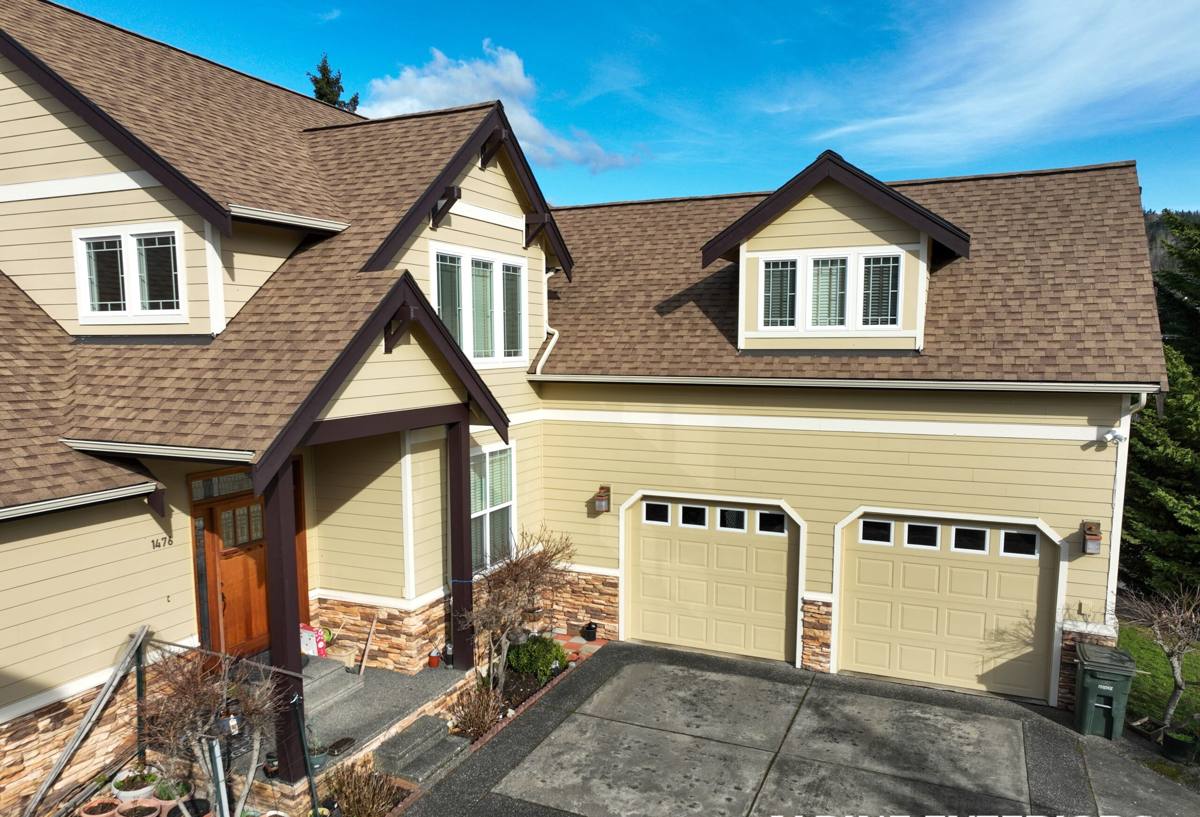
What Bothell's Climate Does to a Roof
The Pacific Northwest doesn't get the violent storms some regions do, but it makes up for it with duration and moisture. A few things are worth understanding if you own a roof in Bothell:
- Wind gusts from the south and southwest during fall and winter storms tend to get underneath shingle edges, especially on roofs that are older or were installed with marginal nailing patterns.
- Driving rain pushed by that same wind finds any gap in flashing, underlayment, or shingle overlap — water doesn't need a hole to get in, it just needs a path.
- Long moss season — the extended cool, wet, shaded stretch from fall through spring — lets moss and moss-adjacent algae get a foothold on north-facing slopes and anywhere tree cover keeps a roof from drying out. Moss growth lifts shingle edges and holds water against the roof surface long after a storm has passed.
- Tree cover throughout many Bothell neighborhoods means storm damage often comes with debris — branches, needles, and grit that clog valleys and gutters right when the roof needs to shed water fastest.
None of this is unique to any one house. It's the baseline condition every roof in this area is working against, storm or no storm.
Common Storm Damage We See on Bothell Roofs
Wind-Related Damage
Lifted, creased, or torn shingles are the most common result of a windstorm. Sometimes it's obvious — a shingle is missing entirely. More often it's subtler: a shingle looks intact but the seal strip has broken loose, leaving it able to flap in the next wind event and let water underneath. That kind of damage doesn't always leak right away, which is why post-storm inspection matters even when nothing looks wrong from the ground.
Water Intrusion
Wind-driven rain during a storm can push water up and under flashing at chimneys, skylights, dormers, and roof-to-wall transitions — areas that shed water fine under normal rainfall but get overwhelmed when wind adds horizontal force. Leaks from these points often show up inside the house at a ceiling or wall several feet from the actual entry point, which is why tracing a leak back to its source is part of a proper repair, not a guess.
Moss and Debris Aftermath
A storm can knock loose moss mats that were already undermining shingles, or pile debris into valleys and gutters that then backs water up under the roofing during the next rain. This is especially common on roofs with mature tree cover, which describes a lot of Bothell lots.
Granule Loss
Wind and driving rain accelerate granule loss on asphalt shingles, especially on roofs already past mid-life. Granules aren't cosmetic — they're the shingle's UV and weather shield. Heavy granule loss after a storm is a sign the roof's remaining service life just got shorter, even if there's no active leak yet.
What a Correct Storm Damage Repair Actually Involves
A rushed storm repair — a few shingles swapped and some sealant smeared on — is one of the more common ways a small problem turns into a bigger one. A correct repair follows a sequence:
- Inspection from the roof, not just the ground. Binoculars and a walk around the house tell you where damage might be, not what it actually is.
- Documentation of the damage — location, extent, and whether it's storm-caused or pre-existing wear that the storm exposed.
- Interior check in the attic or top-floor ceilings for water staining, wet insulation, or active moisture, since exterior damage and interior water intrusion don't always line up in an obvious way.
- Repair of the actual failure point — not just the visible symptom. A stained ceiling might trace back to a flashing failure three feet away, not the shingle directly above it.
- Matching materials where possible so the repair blends in and performs consistently with the surrounding roof, rather than creating a patchwork of different products aging at different rates.
- A final water test or close visual check on the repaired area before calling the job done.
Skipping steps in that sequence is how homeowners end up paying for the same leak twice.
Repair vs. Replacement: How We Make That Call
Not every storm-damaged roof needs to come off. But not every roof should be patched either. The honest answer depends on the roof's age, how widespread the damage is, and what condition the rest of the roofing is in.
| Factor | Leans Toward Repair | Leans Toward Replacement |
|---|---|---|
| Roof age | Under roughly 15 years | Nearing or past typical shingle lifespan |
| Damage extent | Isolated to one slope or area | Scattered across multiple slopes |
| Granule loss | Localized to storm-affected shingles | Widespread across the whole roof |
| Moss/moisture history | Recent, addressable moss growth | Long-term moss damage to the deck itself |
| Underlying deck condition | Solid, dry sheathing | Soft spots or rot found during inspection |
We'll always tell you plainly which category your roof falls into and why — including when a repair is genuinely the right call, not just the cheaper one.
Insurance and Storm Claims
Many storm-related roof repairs in King County get filed through homeowners insurance, especially when wind damage is documented and dated to a specific storm event. We provide clear photo documentation and a written description of the damage that you can hand to your adjuster or use to support your own claim. We don't handle the claim itself or promise a specific outcome — that's between you and your insurer — but we make sure the roof-side documentation is thorough enough to support whatever you decide to do.
Why Local Storm Experience Matters
A roofer who works Bothell regularly already knows the local patterns: which roof orientations take the worst of the wind, how fast moss reestablishes itself under the tree cover typical of this area, and what flashing details tend to fail first on the housing stock common to King County neighborhoods. That experience shortens the inspection, sharpens the diagnosis, and means less trial-and-error on your roof.
It also means a faster response after a storm, which matters — the gap between a storm event and a proper repair is when a small intrusion becomes a bigger one, especially with more rain typically on the way.
What to Check After a Storm
- Interior ceilings and top-floor walls for new staining, discoloration, or soft spots
- Attic for damp insulation, water streaks on rafters, or daylight showing through the roof deck
- Gutters and downspouts for granule buildup (a sign of accelerated shingle wear) or debris blockage
- Visible shingles from the ground for obvious lifting, tearing, or missing pieces
- Chimney, skylight, and vent flashing for anything that looks bent, lifted, or displaced
- Any area of roof shaded by trees for fresh moss growth loosened or spread by wind
If you notice any of these, it's worth getting a professional look before the next round of rain rather than waiting to see if it gets worse.
Our Process for Bothell Storm Repairs
We start with a roof-level inspection, not a guess from the driveway. We document what we find with photos, explain what caused it in plain terms, and give you a clear scope — repair or replace, and why. If it's insurance-related, we provide the documentation you need. Once you approve the work, we complete the repair using materials matched to your existing roof wherever possible, and we check our own work before we call it finished.
If a storm has come through Bothell and you're not sure whether your roof took damage, we're happy to take a look. Reach out for a free, no-pressure estimate using the form below — we'll tell you honestly what we see, whether that's a quick repair or nothing to worry about at all.