 King County
 Deck Replacement in Bothell: What Local Homes Are Up Against
Bothell sits in the wetter, greener stretch of King County, where decks spend most of the year under some combination of drizzle, standing fog, and shaded tree cover along the Sammamish River corridor and the neighborhoods around it. That combination is hard on outdoor structures. Wood decks stay damp longer than they would in a drier climate, moss and algae get a foothold on any surface that doesn't see direct sun, and the freeze-thaw swings we get a few times each winter work joints and fasteners loose over the years. Add in the marine-influenced air that moves through this part of King County, and you have conditions that steadily corrode exposed hardware even when the wood itself still looks fine on the surface.
None of this means a deck in Bothell is doomed — it means a deck built or replaced here needs to be built for these specific conditions, not treated like a generic outdoor carpentry project. A deck that would hold up fine in a dry inland climate can fail early here if drainage, fastener choice, and ventilation underneath weren't handled correctly the first time.
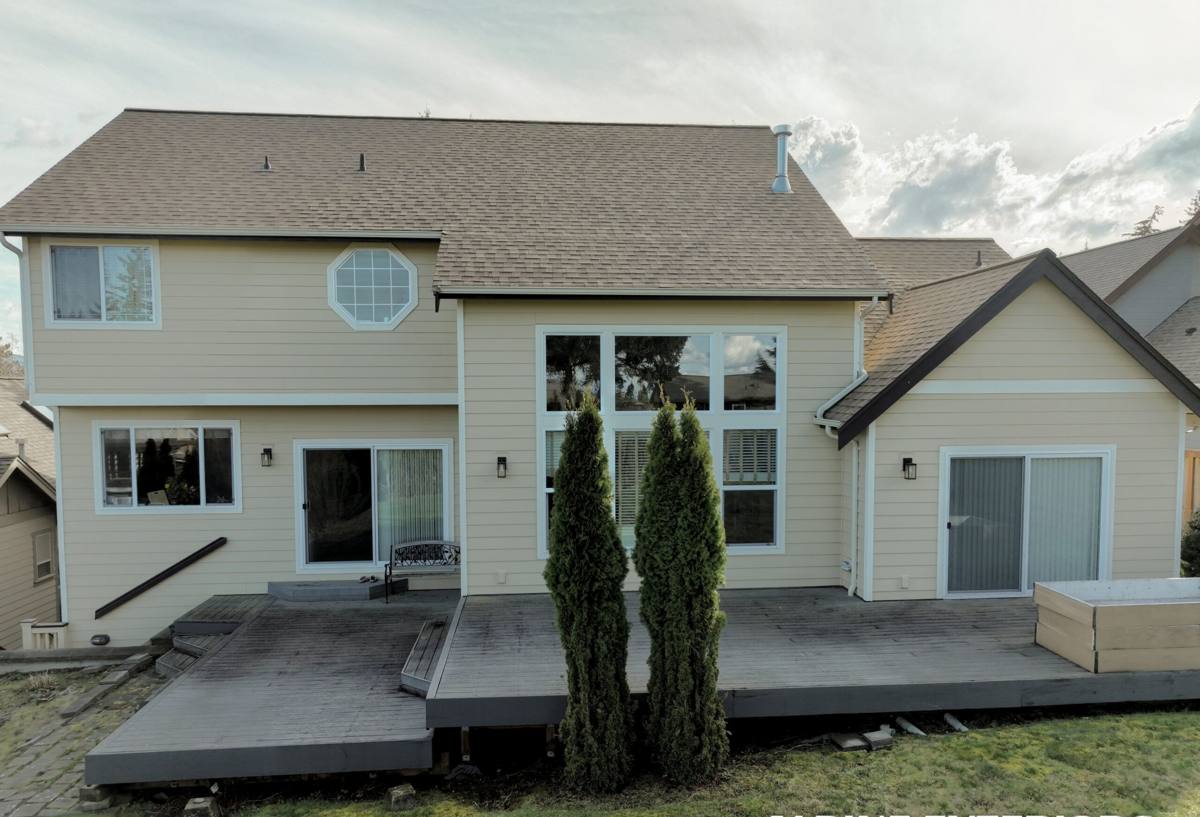
Signs Your Bothell Deck Needs Replacing, Not Just Repair
Homeowners often call us thinking they need a few boards swapped, and sometimes that's true. But there are signs that point to full replacement being the more honest recommendation:
- Soft or spongy spots in the decking that give underfoot, especially near the house or around post bases
- Visible rot or dark staining at the ledger board where the deck attaches to the house
- Rust streaks running down from screws or bolts, which usually means the fasteners are failing from the inside
- Persistent moss or black-green growth that comes back within weeks of cleaning, no matter the season
- Wobble or movement in the railing posts when you push on them
- Gaps opening up between boards that weren't there a few years ago, or boards that have cupped and no longer sit flat
- A structure built more than 20-25 years ago, before current King County code requirements for ledger attachment and post connections were standard practice
If what you're seeing is limited to a handful of boards on an otherwise sound frame, repair can make sense. If the framing, ledger, or footings are compromised, patching the surface just delays a bigger problem and spends money that would have gone toward a proper rebuild.
What a Correct Deck Replacement Actually Involves
It starts underneath, not on top
The decking boards are the part everyone sees, but the work that determines whether a deck lasts is underneath: the ledger connection to the house, the beam and joist layout, the post footings, and the flashing that keeps water from getting into the house structure itself. A deck replacement done right addresses all of it, not just the visible surface.
Ledger flashing is non-negotiable
The ledger board — where the deck bolts into the house — is the single most common failure point we see on older decks in this part of King County. Without proper metal flashing directing water away from the house sheathing, moisture works its way behind the ledger and rots both the deck framing and the wall structure behind it. This is invisible until it's serious, which is exactly why it matters during a replacement.
Footings and post connections
King County soil holds moisture, and posts set directly in ground contact or on undersized footings tend to shift over time. A proper replacement means footings sized and set to current code, with post bases that keep wood off standing water and metal connectors rated for exterior exposure.
Fasteners matched to the material
Mixing the wrong fastener with certain decking or framing materials causes premature corrosion, staining, and in some cases chemical breakdown of the wood around the fastener. We match hardware to the specific decking and framing material used, not a one-size-fits-all screw.
Choosing a Decking Material for This Climate
There isn't one universally "best" decking material — there's a best fit for your budget, your maintenance appetite, and how much sun versus shade your particular lot gets. Here's how the common options actually compare for a wet, moss-prone climate like Bothell's:
| Material | How it handles our climate | Maintenance | Typical lifespan |
|---|---|---|---|
| Pressure-treated wood | Affordable, but absorbs moisture and needs consistent sealing to resist rot and moss | Annual cleaning and re-sealing recommended | 10-15 years with upkeep |
| Cedar | Naturally moisture- and insect-resistant, but still needs care in shaded, damp spots | Periodic cleaning and staining | 15-20 years with upkeep |
| Composite decking | Doesn't rot or splinter; can still grow surface algae/moss in shaded areas without cleaning | Occasional washing, no sealing or staining | 25-30 years, manufacturer-dependent |
| PVC/capped polymer | Fully moisture-resistant surface; best option for consistently shaded, damp areas | Low — occasional washing | 25-30+ years, manufacturer-dependent |
We don't push one product line on every homeowner. Composite and PVC decking cost more up front, but for a shaded, north-facing deck that stays damp most of the year, that upfront cost often pays for itself in avoided maintenance. For a sunnier deck that dries out between rains, a well-maintained cedar or treated wood deck can be the more practical and budget-friendly choice. We'll walk the actual site with you and give you a straight recommendation based on sun exposure, tree cover, and how much maintenance you actually want to do.
Our Deck Replacement Process
- On-site assessment — we inspect the existing deck, ledger, framing, and footings to determine what's actually failing versus what's cosmetic
- Honest scope and estimate — you get a clear plan for what's being removed, what's being rebuilt, and material options with real trade-offs explained
- Permit handling — for work that requires it under King County or local jurisdiction code, we handle the permit process so you don't have to navigate it yourself
- Demolition and disposal — full removal of the old structure, including hauling away old decking, framing, and hardware
- Framing, flashing, and footings — the structural work that determines how long the new deck lasts, done to current code
- Decking, railing, and finish work — installation of your chosen material with fastening and spacing appropriate to how it will expand and contract in our climate
- Final walkthrough — we go over the finished deck with you, including basic care guidance for the specific material installed
Cost Factors for a Bothell Deck Replacement
Every deck is different, so we won't quote a number without seeing the site, but the main variables that move the price are consistent from job to job:
| Factor | Why it matters |
|---|---|
| Deck size and shape | Square footage and the number of angles, steps, or level changes directly affect labor and material |
| Decking material chosen | Treated wood, cedar, composite, and PVC span a wide cost range per square foot |
| Condition of the existing structure | Framing and footings that need full rebuilding cost more than a deck where the substructure is sound |
| Height and railing requirements | Taller decks and code-required railing systems add material and labor |
| Access to the site | Decks with difficult access for demolition and material delivery take longer to complete |
| Permit and inspection requirements | Work that triggers a permit adds time for approvals and inspections but ensures the finished deck meets code |
We give a written estimate before any work begins, and we'll tell you plainly if a repair is a more sensible option than full replacement for your situation.
Permits and Code in King County
Many deck replacement projects in King County require a permit, particularly when structural elements like framing, footings, or the ledger connection are being rebuilt, or when the deck height and railing requirements change. Permit requirements can vary depending on your specific jurisdiction within the county. We handle this process as part of the job — pulling the right permit, scheduling inspections, and making sure the finished deck is something that won't cause a problem when you go to sell the house. Skipping required permits on structural deck work is a real risk: it can complicate a future home sale and, more importantly, means nobody outside our own crew has verified the structural work is sound.
Maintaining a New Deck Through Moss Season
Whatever material you choose, a little seasonal care goes a long way in this climate:
- Sweep leaves and debris off the deck regularly in fall — trapped organic matter holds moisture and feeds moss growth
- Keep gutters and downspouts near the deck clear so runoff isn't draining directly onto the decking surface
- Wash the deck surface at least once or twice a year to remove early moss and algae before it takes hold
- For wood decks, re-seal on the schedule appropriate to the product used — don't wait until the wood looks dry and gray
- Check the underside of the deck and the ledger area once a year for early signs of moisture problems
Catching small maintenance issues early is what keeps a properly built deck lasting decades instead of a decade and a half.
Why Hire a Crew That Already Works in Bothell
Deck framing that works fine in a dry climate can be the wrong call here, and a crew that mostly works dry-climate jobs won't necessarily think about ledger flashing, footing drainage, or material choice the same way a crew working King County's wet season every year does. We work throughout the Bothell area regularly, which means we're familiar with the local permitting process, the soil and drainage conditions common to this part of the county, and the specific ways moisture and moss stress a deck here versus elsewhere. That local, repeated experience is what shows up in a deck that's still solid a decade or two after installation, not just at the final walkthrough.
If your deck is showing its age, feels unstable, or you're just ready for something that fits how you actually use your outdoor space, we're happy to take a look. Reach out for a free, no-pressure estimate — we'll assess your current deck honestly and lay out real options for a replacement built for Bothell's weather.