 King County
 Why West Seattle Decks Wear Out Faster Than the Manual Says
West Seattle sits right on Puget Sound, and that location shapes how decks age here. The salt-laden air coming off the water accelerates corrosion on fasteners, joist hangers, and railing hardware — even galvanized coatings break down faster this close to salt water than they would twenty miles inland. Add the driving, wind-pushed rain that comes off the Sound during fall and winter storms, and you get water forced sideways into places a deck was never designed to handle: under flashing laps, behind ledger boards, and into end-grain cuts on framing lumber.
Then there's moss. King County's wet season stretches from roughly October through April, and shaded, north-facing, or tree-covered decks stay damp for weeks at a time. Moss and algae don't just look bad — they hold moisture against the decking surface and turn walkways slick, which is a real liability concern on stairs and landings. A deck built without this climate in mind will show soft spots, rust streaks, and rot years before a similar deck in a drier region.
None of this means West Seattle decks are doomed — it means the build details matter more here than they do elsewhere. That's the whole focus of this page.
Signs a Deck Needs Replacement, Not Just Repair
Homeowners often call us for a repair and end up needing a full replacement once we get underneath the surface. Here's how to tell the difference before we even show up.
Repair is usually enough when:
- A few boards are cupped, splintering, or loose but the frame underneath is solid
- Railings are wobbly due to loose hardware rather than rotted posts
- Surface graying or mild moss growth hasn't compromised the wood's structure
Replacement is the honest answer when:
- The ledger board (where the deck attaches to the house) shows soft, spongy, or dark-stained wood
- Joists flex noticeably when walked on, or you can push a screwdriver into the wood with light pressure
- Support posts show rot at the base, where they sit in or near soil and stay wet longest
- Multiple structural members are affected rather than one isolated board
- The deck predates current code for railing height, guard spacing, or ledger attachment
We'll always tell you honestly which category your deck falls into. A patch job on a structurally compromised deck just delays the real cost and adds risk.
What a Correct Deck Replacement Actually Involves
A deck replacement is more than swapping old boards for new ones. The parts nobody sees are what determine whether the new deck lasts 10 years or 30.
Ledger connection and flashing
This is where most West Seattle deck failures start. The ledger board bolts to the house rim joist, and if it isn't properly flashed with water diverted away from the house sheathing, driving rain works its way behind it over time. We install proper ledger flashing with a drip edge and self-adhering membrane, not just caulk over the old connection.
Framing and fasteners
Given the salt air, we use corrosion-resistant, code-rated hardware — hot-dip galvanized or stainless-rated connectors and fasteners matched to whatever decking material you choose. Mismatched metals corrode faster next to each other, so hardware selection isn't a place to cut corners.
Footings and posts
Footings need to sit below frost depth and bear on undisturbed soil, which matters on West Seattle's varied terrain — some lots are flat, others slope toward the water or sit on fill. Posts get base connectors that keep wood off concrete and out of standing water.
Guardrails and stairs
Current code sets minimum railing heights, baluster spacing, and stair rise/run tolerances. Replacing a deck is the right time to bring an older structure up to current safety standards rather than rebuilding the same non-compliant railing.
Choosing Decking Material for This Climate
There's no single "best" decking material — there's the right trade-off for your budget, maintenance appetite, and how much sun or shade your deck gets. Here's how the common options compare for a wet, salt-air environment like West Seattle.
| Material | Upfront Cost | Maintenance | Moisture Behavior | Typical Lifespan |
|---|---|---|---|---|
| Pressure-treated wood | Lowest | Annual cleaning, periodic sealing/staining | Can absorb water at cuts and fastener holes if not sealed | 10–15 years |
| Cedar | Moderate | Regular sealing to hold color and resist moisture | Naturally rot-resistant but still needs upkeep in wet shade | 15–20 years |
| Capped composite | Higher | Occasional washing, no sealing or staining | Shrugs off moisture; won't rot or splinter | 25–30 years |
| PVC / cellular decking | Highest | Lowest — soap and water | Fully impervious to moisture, best in shaded/mossy areas | 30+ years |
We install all of these and won't push you toward the highest-margin option. If your deck gets heavy shade or sits close to the water, we'll tell you honestly whether wood is a good fit or whether you'll be fighting moss and staining every year — that's a maintenance-burden conversation, not a sales pitch.
Elevated and Hillside Decks: West Seattle's Extra Wrinkle
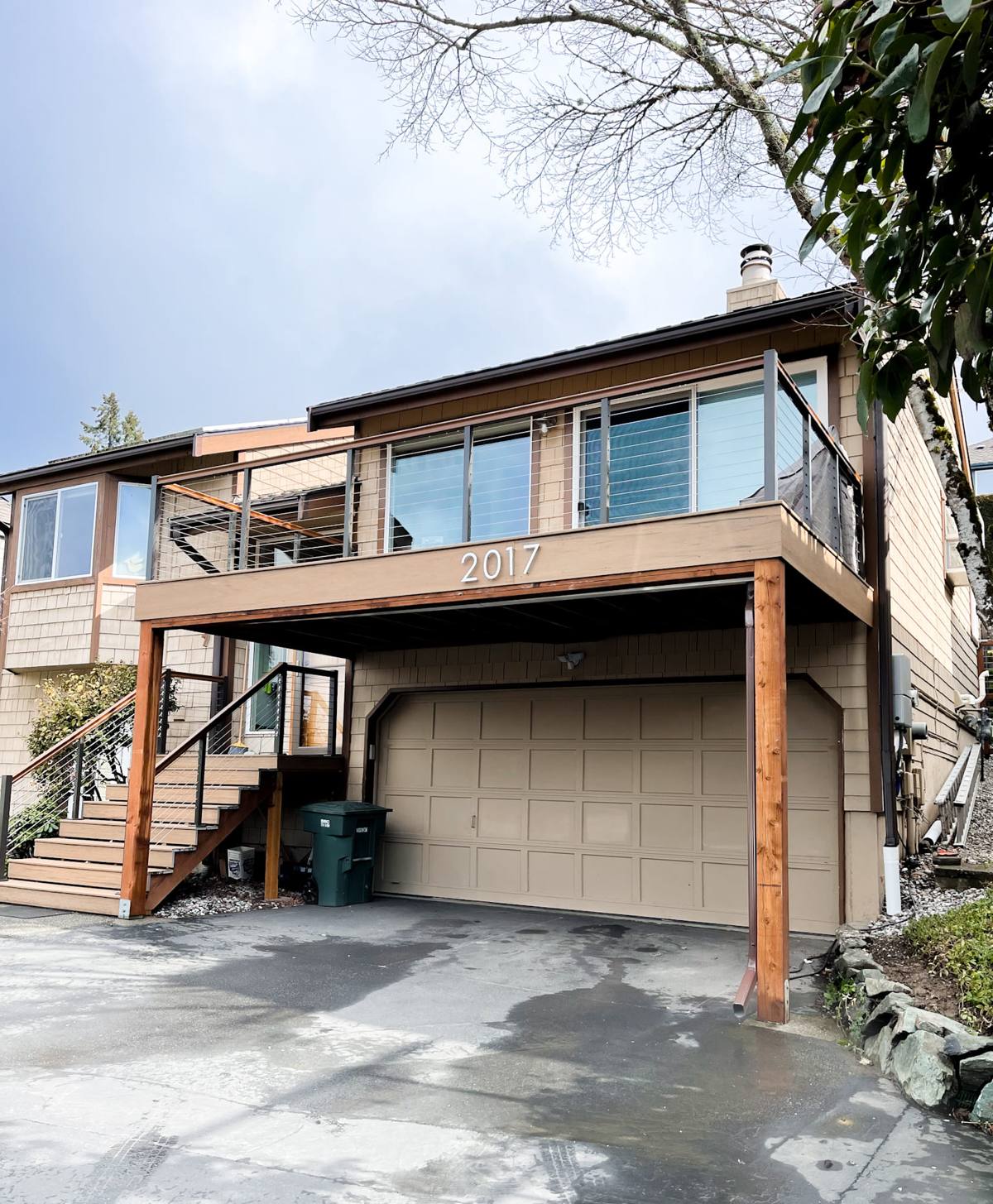
West Seattle's terrain isn't flat — plenty of homes sit on sloped lots or elevated foundations with decks built well above grade, sometimes to capture a Sound or territorial view. These decks carry extra engineering considerations:
Structural loads
Taller decks need beefier post sizing, proper cross-bracing, and footings engineered for the added height and wind exposure — wind loads on an elevated deck facing open water are higher than on a ground-level deck tucked against a house.
Access underneath for inspection
Elevated decks are harder to inspect from below, which means problems can go unnoticed longer. Part of our process includes checking framing, footings, and post connections from underneath whenever access allows.
Permitting on sloped lots
Depending on lot grade and deck height, elevated decks may require additional engineering review. We handle that conversation with the permitting office as part of the job rather than leaving you to sort it out.
Our Deck Replacement Process
- On-site assessment — we inspect the ledger, framing, posts, and footings, not just the surface boards, and tell you honestly whether you need repair or full replacement.
- Material and design conversation — we walk through decking options, railing style, and layout changes if you want them, with real cost and maintenance trade-offs.
- Permitting — we pull the required permit and handle inspections so the work is documented and code-compliant.
- Demolition and disposal — old decking, framing, and hardware removed and hauled off.
- Structural rebuild — ledger flashing, framing, footings, and posts installed to current code with corrosion-resistant hardware.
- Decking, railing, and stairs — installed per your material choice and local code requirements.
- Final walkthrough — we go over the finished deck with you, including basic care for whatever material you chose.
Permits and Code in Seattle
Most deck replacements in Seattle require a building permit, particularly when structural elements like framing, footings, or the ledger connection are being replaced — which is nearly always the case in a true replacement rather than a cosmetic refresh. Permits exist to make sure the structural work meets current safety code, especially around railings and guard spacing, which change more often than most homeowners realize. We handle the permit application and coordinate inspections as part of the job, so you're not left navigating the Seattle Department of Construction and Inspections process on your own.
Keeping a New Deck in Good Shape Through King County Winters
A well-built deck still needs some seasonal attention in this climate. This isn't a sales pitch for a maintenance plan — it's just what keeps any deck material performing as long as it should.
- Sweep leaves and debris off the surface regularly in fall — trapped organic matter holds moisture and feeds moss
- Rinse or gently scrub shaded areas where moss tends to take hold before it gets established
- Check that gutters and downspouts near the deck are directing water away, not onto the deck surface or framing below
- For wood decks, plan on resealing every 1–3 years depending on sun exposure
- Walk the deck each fall and check for soft spots, loose railings, or rust at fastener heads
- Keep planters and rugs from sitting directly on the decking long-term — they trap moisture underneath
Why Local Experience on This Job Matters
Deck framing details that work fine in a dry climate fail here. A crew that primarily builds in less exposed conditions may not think twice about ledger flashing detail, hardware corrosion resistance, or footing depth on a sloped, salt-exposed lot — and those are exactly the details that determine whether a West Seattle deck lasts 10 years or 30. We work throughout King County and see the same failure patterns repeatedly: rotted ledgers, corroded hangers, and moss-slicked shaded decks. Building to that reality from the start, rather than fixing it in five years, is the difference between a deck replacement and a deck you'll be replacing again.
If your deck is showing soft spots, rust, or just isn't holding up the way it should, we're happy to take a look. Fill out the form below for a free, no-pressure estimate — we'll tell you honestly what your deck needs, whether that's a full replacement or something less.