 King County
 Kirkland's Climate Is Harder on Siding Than It Looks
Kirkland gets described as a mild, green place to live, and it is — but "mild" is doing a lot of work in that sentence. What actually happens to a house here is a slow, steady grind: driving rain that comes in sideways off Lake Washington and the Sound during winter storms, long stretches of damp shoulder-season weather that never quite dry out, salt-tinged marine air rolling through the broader Puget Sound region, and a moss season that can run from fall through spring. None of these on their own destroys a home's exterior in a season. Together, over ten or fifteen years, they find every weak point in a siding system — every open seam, every spot where paint failed, every place water was allowed to sit instead of shed.
That's the lens we use when we talk about siding in Kirkland. It's not about picking a material that looks good on day one. It's about picking a system that still looks good, and still protects the house, after a decade of this specific climate.
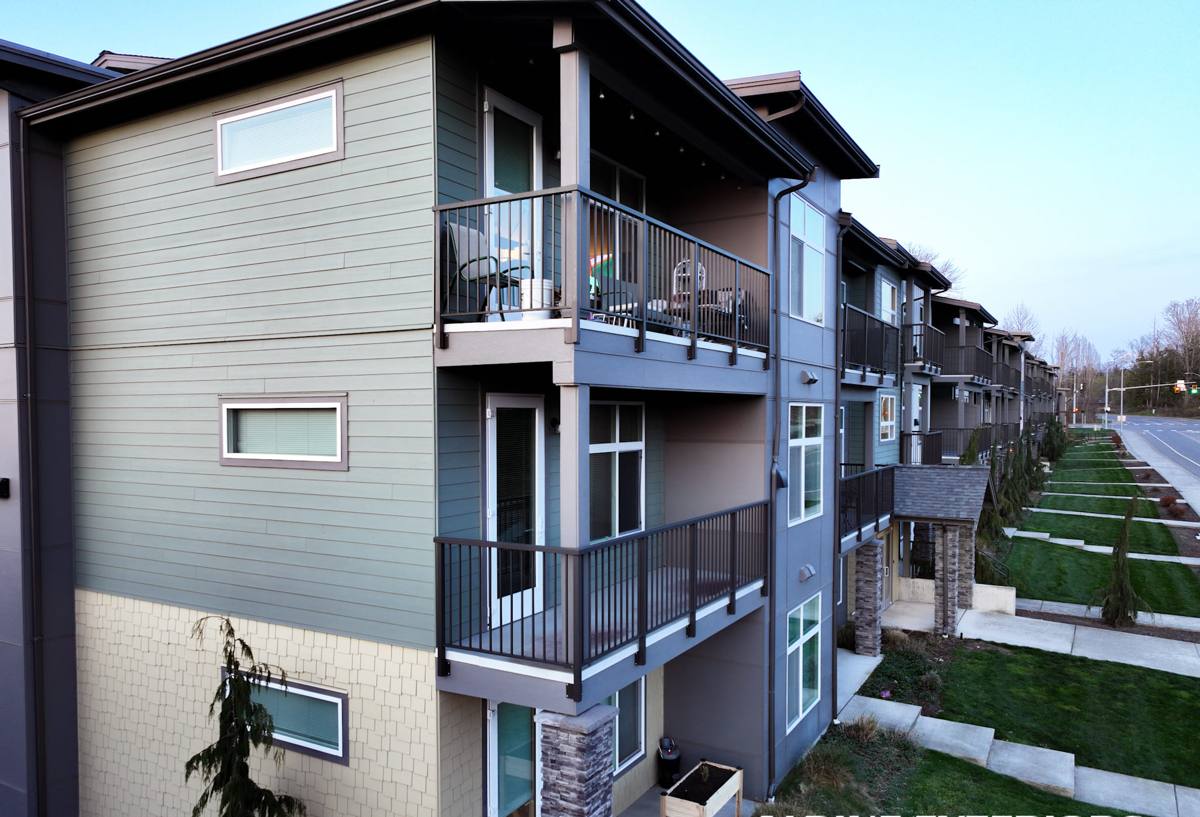
What Driving Rain, Moss, and Marine Air Actually Do to a House
Driving Rain and Wind-Driven Moisture
Most siding failures in this region aren't caused by rain falling straight down — they're caused by rain being pushed sideways and upward under laps, around trim, and into any gap that wasn't properly flashed or sealed. Over time, wind-driven rain finds its way behind siding that looks fine from the curb. If the material behind it can't handle occasional moisture contact, or if there's no drainage plane to let that moisture escape, you get trapped water, and trapped water is what causes rot, delamination, and swelling.
The Long Moss Season
Shaded north- and west-facing walls, areas under tree canopy, and anywhere airflow is limited hold moisture longer here, which is exactly what moss and algae need to establish. Moss on a roof is a maintenance issue. Moss and green staining on siding is different — it holds moisture directly against the surface for months at a time, which accelerates whatever degradation process is already underway, whether that's paint failure, wood softening, or seam deterioration.
Salt-Tinged Marine Air
King County's proximity to Puget Sound means the air carries more moisture and mineral content than an inland climate would. This doesn't corrode siding the way it would on an oceanfront property, but it does mean coatings, caulking, and fasteners are under more stress here than they would be in a dry climate, and it's part of why generic, one-size-fits-all siding products underperform in this region compared to how they perform in manufacturer marketing photos taken somewhere drier.
Why We Standardized on James Hardie for Homes Like Yours
We install James Hardie fiber cement siding exclusively. We don't install vinyl, LP SmartSide, cedar, primed spruce, or other fiber cement brands, and that's a deliberate professional standard, not a sales preference. Fiber cement, done right, is dimensionally stable — it doesn't expand and contract with moisture the way wood-based products do, which matters enormously in a climate that cycles between soaked and damp for most of the year. It's non-combustible, which matters given how dry late summers in the Pacific Northwest have trended. And James Hardie specifically engineers products by climate zone (their HZ10 line is built for the wetter, more humid parts of the country, which includes western Washington), backs the finish with a real factory-applied ColorPlus coating rather than field paint, and stands behind it with a warranty that's actually transferable if you sell the house.
We've seen what happens to other materials in this specific climate over a full ownership cycle, and it's why we made the call to only put Hardie on Kirkland homes rather than offering a menu of options at different price points.
What a Correct Installation Looks Like Here
James Hardie siding performs the way it's supposed to only when it's installed correctly, and installation quality matters more in a wet climate than a dry one, because mistakes get exposed faster. A correct job in Kirkland includes:
- A drainage plane behind the siding — a weather-resistant barrier, and in most cases a rainscreen gap, so any moisture that does get behind the cladding has somewhere to go instead of sitting against the sheathing.
- Proper flashing at every penetration — windows, doors, hose bibs, light fixtures, and roof-to-wall intersections are where water intrusion actually starts, far more often than through the field of the siding itself.
- Correct fastening per Hardie's published specs — nailing patterns, fastener type, and blind- vs. face-nailing all affect long-term performance, and getting them wrong can void the manufacturer warranty even if the product itself is right.
- Manufacturer-specified gaps and clearances — including ground clearance and roof-line clearance, both of which matter for keeping moss, splashback, and standing water away from the bottom courses.
- Factory-finished ColorPlus panels installed as a system — cut edges primed or sealed per spec so raw fiber cement isn't left exposed to the weather.
None of this is exotic. It's the difference between following the installation manual and not, and in a climate this forgiving-looking but actually demanding, that difference shows up as a callback in year three instead of a clean job for twenty years.
Choosing a Product Line and Finish for a Kirkland Home
James Hardie's lineup covers a range of looks and price points, and the right choice depends on your home's style and your maintenance appetite as much as anything else.
| Product | Best For | Local Consideration |
|---|---|---|
| HardiePlank lap siding | Traditional and craftsman-style homes, the most common look in the area | Widely used across King County neighborhoods; wide range of ColorPlus finishes |
| HardieShingle | Accent gables, dormers, or full shingle-style homes | Good for shaded, moss-prone wall sections since it sheds water in a different pattern than lap |
| HardiePanel | Modern builds, board-and-batten look | Popular on newer Kirkland construction; needs correct batten and drainage detailing |
| HardieTrim | Corners, window and door casing, fascia | Pairs with any of the above; keeps trim from becoming the weak point in the system |
On color, ColorPlus factory finishes are worth the modest upcharge over field-painted Hardie in this climate specifically. A factory finish is baked on under controlled conditions and holds up to UV and moisture cycling better than site-applied paint, and it comes with its own finish warranty separate from the product warranty.
How Our Process Works
- On-site assessment. We look at your current siding, any moisture or rot already present, wall exposure to wind-driven rain, and shaded areas prone to moss before we quote anything.
- Written scope and estimate. You get a clear breakdown of what's being removed, what's being repaired underneath if needed, and exactly which Hardie products and colors are proposed.
- Tear-off and inspection of sheathing. Old siding comes off and we check the wall assembly underneath for hidden damage before anything new goes up — this is where problems from a prior installation usually get found.
- Weather barrier and drainage plane installation. This step is the one most likely to be rushed by crews unfamiliar with the region's moisture demands. We don't rush it.
- Hardie installation to manufacturer spec. Correct fastening, flashing, and clearances throughout, not just on the visible elevations.
- Final walk-through. We go over the finished work with you directly before calling the job done.
What Affects Cost on a Kirkland Job
We won't quote a number without seeing the house, but these are the factors that actually move a Kirkland siding estimate up or down:
| Factor | Why It Matters |
|---|---|
| Existing siding removal | Tear-off, disposal, and any hidden repairs found underneath add labor beyond a straightforward re-side |
| Home size and wall complexity | Cut lines, corners, gables, and dormers all add labor time compared to simple rectangular walls |
| Product line and finish | Lap, shingle, and panel products price differently, and ColorPlus finishes cost more than primed-only boards |
| Access and height | Multi-story sections, steep lots, or limited equipment access increase labor and safety requirements |
| Moisture or rot repair | Any sheathing or framing damage found during tear-off needs to be addressed before new siding goes on |
Why a Crew That Already Works Kirkland Is Worth Choosing
A siding crew that regularly works in Kirkland and the surrounding King County area already knows which wall orientations catch the worst of the driving rain, which neighborhoods deal with heavier moss growth under tree cover, and what local permitting and inspection expectations look like. That familiarity shows up in fewer surprises mid-project — not because out-of-area crews are careless, but because a crew that installs Hardie in this specific climate week after week has already made and corrected the mistakes that a less experienced installer might make on your house instead.
It also matters for accountability. A local crew is a phone call away next year if a question comes up, not a company that did one job in the area and moved on.
Caring for James Hardie Siding After Installation
Correctly installed Hardie siding is low-maintenance, not zero-maintenance. A short annual routine keeps it performing the way it's designed to in this climate:
- Rinse siding gently once or twice a year to clear pollen, dust, and early moss or algae growth before it establishes
- Keep gutters clear so overflow doesn't run down the siding face repeatedly
- Trim back vegetation and tree limbs that keep a wall section shaded and damp
- Reseal or repaint trim and touch-up areas per Hardie's guidance if a scratch or cut edge gets exposed
- Walk the exterior after major storms and check caulking at windows, doors, and penetrations for cracking or gaps
If you're weighing a re-side in Kirkland, or dealing with siding that's already showing moss, staining, or moisture damage, we're happy to take a look and walk you through what we're seeing — no pressure, no obligation. Reach out below for a free estimate.