 King County
 Why Renton Siding Takes More Punishment Than People Expect
Renton sits low in the Green River valley with Lake Washington at its doorstep, which means moisture is a year-round fact of life, not a winter inconvenience. Homes here deal with a long, wet shoulder season, persistent humidity off the water, and a moss season that can run from fall well into spring if surfaces stay damp and shaded. Add in the drift of salt-laden marine air that moves through the Puget Sound corridor, and you have a climate that's constantly testing whatever material is on the outside of your house. Wood siding swells, checks, and rots. Vinyl chalks, warps in the heat spikes we do get, and never really stops water at the seams. Cheaper fiber cement products cut corners on the formulation that's supposed to resist all of this. None of that is theoretical — it's what shows up on inspection after inspection in this part of King County.
That's the backdrop for every siding decision a Renton homeowner makes. The material has to shed driving rain, resist moss and mildew growth, hold paint and color without fading or peeling, and do it for decades without babysitting. That's a short list of requirements, but it rules out a lot of products.
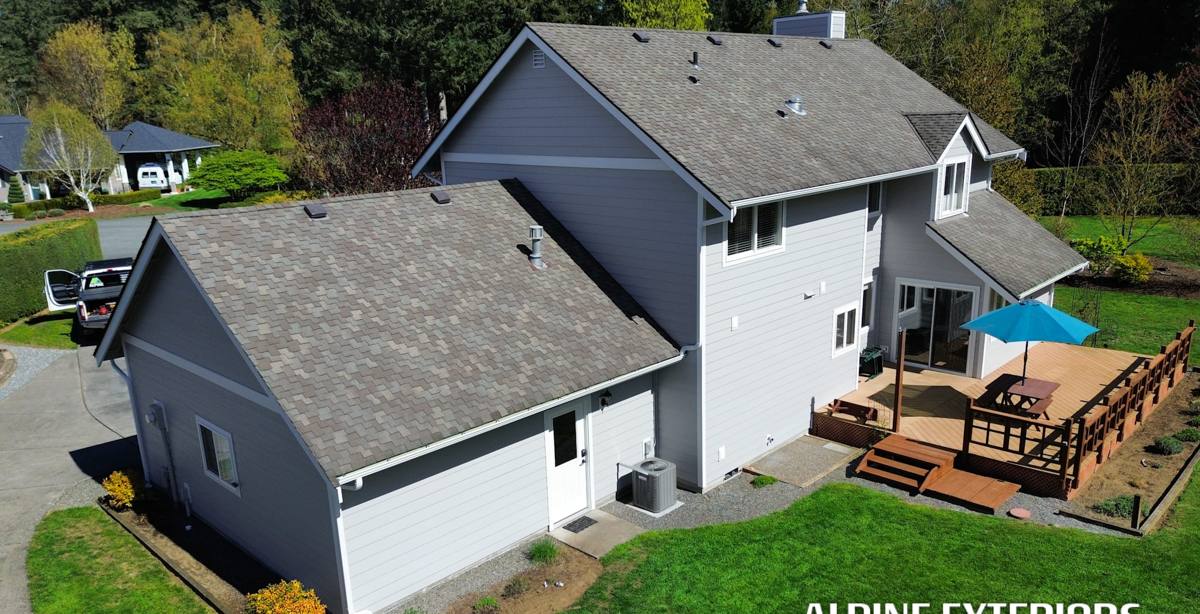
Why We Install Only James Hardie Fiber Cement
We don't install LP SmartSide, vinyl, Cemplank, Allura, primed spruce, or cedar. That's not a marketing position — it's a standard we set after seeing how those products actually perform in this specific climate over time. Engineered wood products like LP SmartSide use a resin-treated wood strand core that's genuinely better than raw wood, but it's still wood at heart, and wood-based products depend heavily on unbroken paint and caulk lines to keep moisture out of the edges and cut ends. In a climate with this much sustained dampness, that margin for error is thin. Vinyl is affordable and low-maintenance in dry climates, but it isn't dimensionally stable — it expands and contracts with temperature swings, its seams are a permanent water-entry risk, and it can't be repainted when it fades. Cedar looks beautiful but requires real maintenance discipline (staining, sealing, moss treatment) that most homeowners don't keep up with, and untreated cuts are an open door for rot.
James Hardie fiber cement is cement, sand, and cellulose fiber — non-combustible, dimensionally stable, and formulated specifically to resist moisture intrusion and pest damage. It holds a factory-applied finish far longer than field-painted alternatives, and it doesn't warp, crack, or delaminate the way wood-based products can. That's why it's the only siding system we put our name behind.
The James Hardie Product Lines That Fit This Climate
James Hardie engineers its fiber cement formulation by climate zone, and the Pacific Northwest falls into the HZ5 category — the formulation built for regions with high moisture exposure and freeze-thaw cycling, as opposed to the HZ10 formulation sold in hot, humid southern climates. That distinction matters more than most homeowners realize: it means the board itself is engineered for exactly the conditions Renton sees, not a generic national product.
- HardiePlank lap siding — the most common choice for Renton homes, available in several exposure widths and textures (smooth, cedarmill).
- HardiePanel vertical siding — used for board-and-batten looks or as an accent alongside lap siding.
- HardieShingle — a straight-edge or staggered shingle profile for homes wanting a traditional Northwest look without real cedar's maintenance burden.
- HardieTrim — fiber cement trim boards that won't rot at the edges the way wood trim does, which matters most at window and door surrounds where water collects.
Most of these come with the ColorPlus factory finish — a baked-on, multi-coat finish applied under controlled conditions, which holds color and resists fading, chipping, and moisture far better than a coat of paint applied on site after installation.
What a Correct James Hardie Installation Actually Involves
Drainage and a Rain Screen Gap
In a climate this wet, the single biggest factor in how long siding lasts isn't the board itself — it's what's behind it. A correctly installed system creates a drainage plane between the siding and the water-resistive barrier, so any moisture that gets past the surface has somewhere to go besides your sheathing. Skipping or shortcutting this step is one of the most common ways installations fail early in the Pacific Northwest, regardless of what siding material is on the outside.
Flashing and Water Management
Every window, door, deck ledger, and roofline intersection is a place water wants to get behind the siding. Correct flashing detail at these transitions — not caulk alone — is what actually keeps water out over the long run. Caulk fails; properly lapped flashing doesn't.
Fastening and Clearances
James Hardie specifies exact nailing patterns, fastener types, and minimum clearances from grade, roofing, and decking. Board installed too close to the ground or a roof deck will wick moisture no matter how good the material is. These clearances aren't optional details — they're the difference between a 30-year installation and a 10-year callback.
Joints, Caulking, and Paint Lines
Where boards butt together or meet trim, the sealant used and the gap left for expansion matters. Over-caulking traps moisture; under-caulking lets it in. This is a detail that separates a crew that's installed hundreds of Hardie jobs from one that's installed a handful.
Our Renton Installation Process
1. Inspection and Assessment
We start by looking at what's actually happening on your walls now — moisture staining, soft spots, moss buildup, failed caulk lines, and how your current siding is (or isn't) managing water. This tells us whether we're dealing with a straightforward re-side or whether there's sheathing or framing damage that needs to be addressed before new siding goes up.
2. Prep and Tear-Off
Old siding comes off, sheathing gets inspected and repaired as needed, and the water-resistive barrier and drainage plane go on correctly — this is the step that determines how the finished job performs, long before the first board is hung.
3. Installation to Manufacturer Spec
Boards, panels, or shingles go up following James Hardie's published fastening, clearance, and flashing requirements — not shortcuts, not "how we've always done it." This is also what keeps the manufacturer's warranty intact.
4. Final Inspection and Walkthrough
We check caulk lines, paint touch-ups at cut ends, trim details, and clearances before calling the job done, and we walk the property with you so you know what you're looking at and what (if anything) needs periodic attention.
Comparing Siding Options for a Renton Home
| Material | Moisture Resistance in This Climate | Maintenance | Typical Longevity |
|---|---|---|---|
| James Hardie fiber cement (HZ5) | Engineered for wet, marine-influenced climates | Low — factory finish, no sealing required | Decades when installed to spec |
| Vinyl | Poor seam performance, doesn't stop wind-driven rain well | Low, but unrepairable when faded or cracked | Variable, degrades in UV and temperature swings |
| LP SmartSide / engineered wood | Better than raw wood, still moisture-sensitive at cuts and edges | Moderate — depends on paint/caulk upkeep | Shorter if maintenance lapses |
| Cedar | Attractive but absorbs moisture without upkeep | High — staining, sealing, moss treatment | Shorter without consistent maintenance |
What Drives the Cost of a Hardie Siding Project
Every Renton home is different, so we won't quote a number without seeing your house, but these are the real factors that move the price:
| Factor | Why It Matters |
|---|---|
| Tear-off vs. new construction | Removing old siding and repairing sheathing adds labor that a bare-wall install doesn't need |
| Home size and wall complexity | More corners, dormers, and roof intersections mean more flashing and cutting |
| Product line chosen | Lap siding, panel, and shingle profiles carry different material and labor costs |
| ColorPlus vs. field-painted | Factory finish costs more up front but eliminates a repaint cycle later |
| Underlying damage | Rotted sheathing or framing found during tear-off needs repair before siding goes back on |
Maintaining Hardie Siding Through Renton's Moss Season
James Hardie siding needs far less upkeep than wood or engineered wood alternatives, but "low-maintenance" isn't "no-maintenance," especially in a climate that grows moss on nearly any shaded, damp surface.
- Rinse siding annually to clear pollen, dust, and the early stages of moss or algae growth before it takes hold
- Keep gutters clear so overflow doesn't run down the wall face and stay damp in shaded areas
- Trim back shrubs and trees that keep siding shaded and wet for long stretches
- Check and refresh caulking at trim and penetrations every few years, since sealant ages faster than the board itself
- Touch up any exposed cut ends with matching paint promptly to keep the manufactured edge protected
Why Local Renton Experience Matters
Fiber cement installation is unforgiving of guesswork. A crew that's worked plenty of King County roofs and walls already knows how this valley's moisture behaves against a house, which flashing details actually hold up through a wet Renton winter, and where moss tends to establish itself first. That local pattern recognition is the difference between a crew reading a spec sheet for the first time and one applying lessons learned from the last job three streets over. It also means faster response if something needs a look after the fact, without the delay of a contractor driving in from outside the area.
If your siding is showing moss, soft spots, failing paint, or gaps at the trim, or you're planning ahead for a replacement, we're happy to take a look and walk you through what your home actually needs. Reach out for a free, no-pressure estimate — there's a form below to get started.