 King County
 Why Renton Homes Need Siding Built for This Climate
Renton sits in one of the wetter corners of King County, wedged between Lake Washington and the Cascade foothills, where marine air off Puget Sound keeps humidity high for most of the year. That combination of near-constant moisture, long stretches of low winter sun, and mild temperatures that never quite dry things out is exactly the environment where lower-grade siding starts to fail. Wood-based products absorb water at seams and cut edges. Vinyl expands and contracts with our temperature swings and can warp or gap over time. And almost everything in this region eventually grows moss, algae, or mildew if it can't shed water and dry out between storms.
Fiber cement doesn't solve every problem on its own — installation quality matters as much as the material — but it gives a Renton home a fighting chance against driving rain, salt-laden marine air, and a moss season that can run from October through May. That's why we install James Hardie fiber cement exclusively, and why we think through moisture management on every job rather than just nailing panels to the wall.
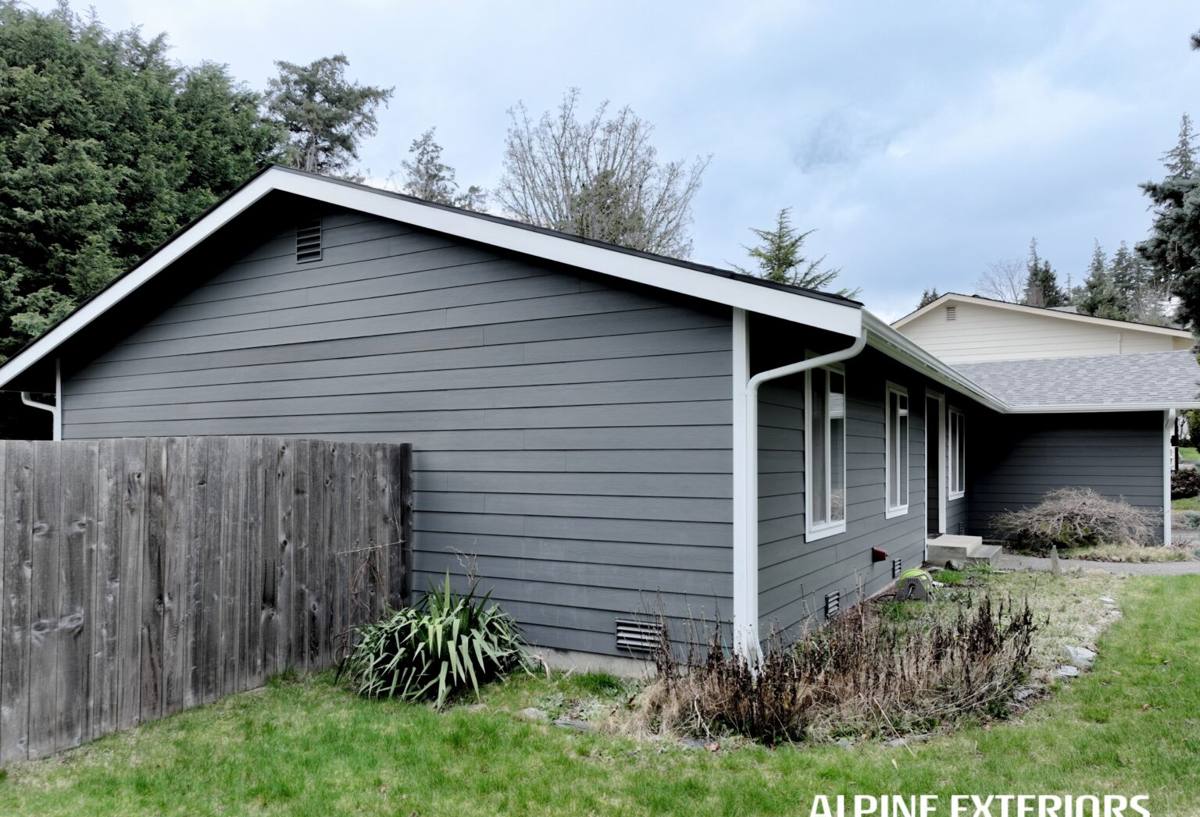
What a Correct Fiber Cement Job Requires Here
Fiber cement siding is only as good as the assembly behind it. In a climate like ours, a technically correct installation isn't optional trim work — it's the difference between siding that lasts decades and siding that traps water behind it.
Drainage and Ventilation
Any wall assembly in King County should be able to drain and dry. That means a weather-resistant barrier installed correctly, and in most cases a rainscreen gap — furring strips or a drainage mat — that lets bulk water run down and out instead of sitting against the sheathing. Skipping this step is one of the most common corners cut on siding jobs in wet climates, and it's invisible once the siding goes up.
Flashing at Every Penetration
Windows, doors, hose bibs, light fixtures, deck ledgers — every penetration through the wall is a place water wants to get in. Correct flashing, properly lapped with the weather barrier (not just caulked over), keeps driving rain from ever reaching the framing.
Fastening and Clearances
James Hardie publishes specific fastening patterns, nail spacing, and gap requirements for their products, and those specs assume the installer is following them. Fiber cement also needs proper clearance from grade, roof lines, and decks — generally a minimum of a few inches above hard surfaces and roofing — so the bottom edge of the siding isn't sitting in standing water or snowmelt.
Caulking and Paint Touch-Up
Cut ends of fiber cement board expose raw material that needs sealing. Left unsealed, they wick moisture and can eventually swell or delaminate at the cut, even though the factory-finished face is fully protected.
Our Process on a Renton Siding Project
Every home is different, but the sequence stays consistent because it's built around getting the water management right before anything cosmetic happens.
- Assessment. We look at the existing siding, wall assembly, and any signs of past moisture intrusion — soft trim, staining, or moss buildup that suggests trapped water rather than surface growth.
- Tear-off and sheathing check. Removing the old siding lets us inspect sheathing condition and address any rot or damage before it's covered up again.
- Weather barrier and drainage plane. House wrap or building paper goes on correctly lapped, followed by a rainscreen where the wall assembly calls for it.
- Flashing. Windows, doors, and penetrations get properly integrated flashing before a single piece of siding is hung.
- Installation. HardiePlank, HardiePanel, or HardieShingle goes up to Hardie's fastening and clearance specifications.
- Finish work. Cut-edge sealing, caulking, and trim details are completed and inspected before we call the job done.
James Hardie Product Lines We Install
James Hardie makes different product lines for different climate zones, and the Pacific Northwest falls into their HZ5 engineered category — designed for regions with sustained moisture and freeze-thaw cycles rather than dry heat. That's the version we install on Renton homes, not a generic national product.
- HardiePlank lap siding — the most common choice for Renton homes, available in several exposure widths and profiles.
- HardieShingle siding — a shingle-style look for homes wanting a more traditional or craftsman appearance.
- HardiePanel vertical siding — often used for accent areas, gables, or modern facades.
- HardieTrim — matching trim boards for a consistent, factory-finished look at corners and openings.
Most homeowners choose ColorPlus Technology finishes — color baked on at the factory rather than field-painted. It resists fading and chipping better than job-site paint, and it's backed by its own finish warranty separate from the product warranty on the siding itself. James Hardie backs the siding with a 30-year limited product warranty, which is one of the stronger warranties in the industry and part of why we standardized on this product.
Fiber Cement vs. Other Siding Options in a Renton Climate
| Factor | James Hardie Fiber Cement | Vinyl | Wood / LP-Style Composite |
|---|---|---|---|
| Moisture resistance | Non-combustible, engineered for wet climates (HZ5) | Doesn't absorb water, but can warp or gap over time | Can absorb moisture at seams and cut edges |
| Moss and mildew resistance | Factory finish resists growth when maintained | Surface growth common in shaded, damp areas | Prone to surface growth, especially in shade |
| Finish longevity | ColorPlus factory finish, separate finish warranty | Color molded through material, can fade or chalk | Field-applied paint or factory coating, shorter repaint cycle |
| Fire performance | Non-combustible material | Combustible, can melt or deform near heat | Combustible |
| Installation sensitivity | High — requires correct fastening, clearances, flashing | Moderate | Moderate to high depending on product |
This isn't a knock on every alternative — vinyl and engineered wood both have legitimate uses and price points. It's why, given our climate and the failure patterns we see in this region, fiber cement is the product we're willing to put our name behind.
Signs a Renton Home Needs New Siding
Because our climate hides damage well — everything looks fine under a coat of moss or algae — it helps to know what to actually look for.
- Soft or spongy spots when you press on the siding, especially near the bottom courses
- Persistent moss or dark staining that returns quickly after cleaning
- Visible warping, buckling, or gaps at seams and corners
- Peeling or bubbling paint that keeps coming back in the same spots
- Rising energy bills that suggest the wall assembly is no longer insulating or sealing properly
- Visible rot or damage once trim boards or corner boards are removed
Cost Factors Homeowners Should Know
| Factor | Why It Affects Cost |
|---|---|
| Tear-off condition | Sheathing repair adds time and material if past moisture damage is found |
| Home size and stories | More square footage and taller walls mean more material and labor, plus staging for upper floors |
| Siding profile mix | Combining lap, shingle, and panel styles adds detail work versus a single profile |
| Trim and accent work | Window and door trim, corner details, and accent bands add labor |
| Access | Tight lots, fencing, or limited driveway access can slow staging and material handling |
We don't quote broad averages here because every Renton property is different — a rambler on a flat lot and a two-story home on a slope price out very differently. A walk-through gives an honest, specific number.
Why a Crew That Already Works in Renton Matters
Siding installed correctly for a dry climate can still fail in ours if the crew doesn't build in drainage and flashing as a default, not an upsell. A crew that regularly works King County homes has already seen how moss establishes on north-facing walls, where driving rain off Puget Sound hits hardest, and which older Renton homes tend to have moisture issues hiding behind their existing siding. That local pattern recognition shortens the assessment phase and reduces surprises once tear-off starts.
It also matters for something more basic: being reachable. A siding project can raise questions weeks or months after installation — a caulking line, a paint touch-up, a question about maintenance. A contractor based in the region, working other jobs nearby, is easier to reach than one that was only in town for a single project.
Maintenance After Installation
Correctly installed James Hardie siding is low-maintenance, not no-maintenance. A little seasonal attention keeps it looking and performing the way it should through Renton's long wet season.
- Rinse the siding annually to remove pollen, dust, and early moss growth before it establishes
- Keep gutters clear so overflow doesn't run down the wall face
- Trim back landscaping so foliage isn't holding moisture against the siding
- Check caulking at trim joints and penetrations every year or two and re-seal as needed
- Address any impact damage promptly rather than letting a chip sit through a wet winter
If your Renton home's siding is showing its age, or you're planning ahead rather than reacting to a problem, we're happy to take a look and walk you through what correct James Hardie installation would involve for your specific house. Estimates are free, and there's no pressure to move forward — just a straight answer about what your home needs.