 King County
 Issaquah's Roof Climate: Rain, Tree Cover, and a Long Moss Season
Issaquah sits where the Puget Sound lowlands start climbing into the Cascade foothills, and that location shapes what a roof has to deal with here. Tree canopy is heavier than in more open parts of King County — mature Douglas fir, cedar, and bigleaf maple shade a large share of residential roofs for most of the day, especially on lots backing up to greenbelts or the base of Tiger and Squak Mountains. Shade keeps roofs cool in summer, but it also means slower drying after every rain, and in this part of Washington that adds up to a lot of standing moisture on shingles, in valleys, and along north-facing slopes.
Add in the driving rain that comes through with fall and winter storm systems — wind-blown rain that gets pushed sideways into roof-wall intersections, chimney flashing, and skylight curbs instead of just falling straight down — and you get a roof that's working harder than the same materials would on a drier, more open site. Regionally, homes closer to Puget Sound also deal with salt air accelerating corrosion on exposed metal fasteners and flashing; that factor matters less for most Issaquah properties given the distance inland, but it's still part of the broader King County climate picture and worth knowing if a home has metal roofing or older galvanized flashing.
Why Moss Is the Bigger Issue Here Than Salt
For most Issaquah homes, moss and organic growth are the more consistent threat. Moss doesn't just sit on the surface — it holds moisture against the shingle mat, works into laps and nail lines, and over a few seasons it can lift shingle edges enough to let wind-driven rain underneath. A roof with heavy moss and a roof with an active leak are often the same roof at two different stages.
Signs an Issaquah Roof Needs Repair
Most roof repairs get called in for one of three reasons: a leak, a hard hail or wind event, or a homeowner noticing the roof just looks rough. In our experience working this area, here's what usually points to a real, current problem rather than something to keep an eye on:
- Moss or algae streaking that's thick enough to see texture, not just discoloration
- Water staining on interior ceilings, especially near valleys, chimneys, or where an addition meets the original roofline
- Granules collecting in gutters or at the base of downspouts
- Curling, cupping, or cracked shingles, particularly on south- and west-facing slopes
- Flashing that's visibly rusted, lifted, or separated from the roof plane
- Soft or spongy spots when walked (a sign the deck underneath may be compromised)
- Daylight visible through the roof deck from inside an unfinished attic
Leaks at Valleys and Roof-Wall Intersections
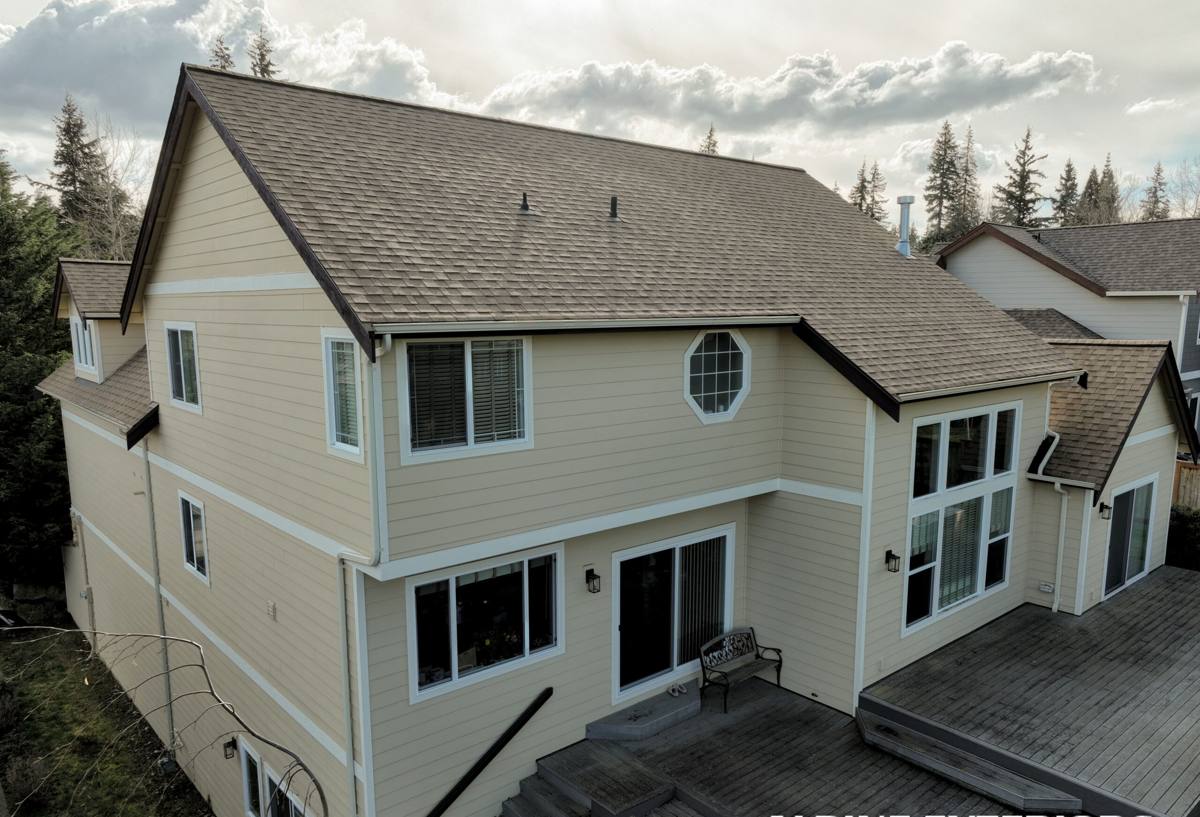
Valleys collect more water than any other part of a roof, and on a wooded lot they also collect the most debris — needles, moss fragments, small branches. That combination is why valley leaks are one of the most common repair calls we see in this area. Roof-wall intersections, like where a dormer or a second-story wall meets a lower roofline, are the other frequent trouble spot, because they rely entirely on flashing and step-flashing installation being done correctly the first time.
Granule Loss and Shingle Wear
Asphalt shingles lose granules as they age — that's normal. What's not normal is heavy granule loss on a roof that's less than fifteen years old, which usually points to poor attic ventilation baking the shingles from underneath, or a manufacturing or installation issue rather than simple age.
What a Correct Roof Repair Actually Involves
Diagnosis Before Patching
A repair is only as good as the diagnosis behind it. Sealing over a stain on the ceiling without finding where the water is actually entering the roof just hides the problem for a season or two. We trace leaks back to their actual source — which is sometimes several feet away from where the water shows up inside, since water travels along the underside of the deck and rafters before it drips.
Matching Materials and Technique
Repairs should use materials that match the existing roof in type, weight, and where possible, color — mismatched shingles are the easiest way to tell a repair was done on the cheap, and mismatched materials can also age and expand differently, which creates new stress points. If an exact color match isn't available because the roof is older, we'll say so up front rather than let a homeowner be surprised later.
Flashing, Valleys, and Penetrations
Most roof leaks trace back to flashing, not the shingle field itself. A proper repair means re-flashing valleys, chimneys, vent pipes, and skylight curbs correctly — with new step flashing and underlayment where needed — rather than just running a bead of sealant over old, failing metal. Sealant is a short-term patch, not a fix, and we'll tell you when that's all a situation calls for versus when it isn't enough.
Repair or Replace? How We Help You Decide
Not every roof problem calls for a full replacement, and not every leak can be permanently fixed with a spot repair. The honest answer depends on the roof's age, how much of it is affected, and what's happening underneath the shingles. Here's how we generally think about it:
| Factor | Repair usually makes sense | Replacement usually makes more sense |
|---|---|---|
| Roof age | Under 15-18 years (asphalt shingle) | Approaching or past manufacturer's expected lifespan |
| Extent of damage | Localized to one slope, valley, or penetration | Spread across multiple slopes or the whole roof |
| Deck condition | Solid, no rot or soft spots found | Soft decking, rot, or repeated leaks in the same area |
| Repair history | First or second repair on this roof | Multiple past repairs in different spots |
| Moss/algae extent | Light to moderate, treatable | Heavy, long-term growth that's already lifted shingles |
When a roof falls into a gray area, we'll walk you through both options honestly, including rough cost trade-offs, rather than defaulting to whichever is more profitable for us.
Our Roof Repair Process
The process is straightforward, and we keep it that way on purpose — a roof repair shouldn't require a homeowner to chase down updates or guess at what's happening.
- On-site inspection of the roof, attic (where accessible), and any interior areas showing water damage
- Diagnosis of the actual leak source or failure point, explained in plain terms
- A written repair plan and price before any work starts, including what's included and what isn't
- The repair itself — flashing, decking, shingles, or a combination, matched to the existing roof
- Cleanup of the work area, including debris from the roof and gutters if that's part of the job
- A final walkthrough so you can see the completed work and ask questions before we consider it done
Moss, Debris, and Ongoing Roof Care on a Wooded Lot
Given how much of Issaquah sits under tree cover, ongoing roof care matters more here than it does on a roof in the open. A few practices go a long way toward preventing repair calls in the first place:
- Gentle, low-pressure moss removal rather than power washing, which can strip granules and shorten shingle life
- Zinc or copper control strips near the ridge, which release trace metal ions that discourage new moss growth over time
- Keeping gutters and valleys clear of needles and leaf debris, especially after fall storms
- Trimming back overhanging branches so less debris lands on the roof and less shade sits directly on the shingles
- An annual or biannual look-over, particularly for roofs over ten years old
None of this replaces a proper repair when there's an actual leak or damaged section, but it does reduce how often that call needs to happen.
Why a Crew That Already Works Issaquah Matters
Roofing problems in this part of King County aren't generic. A crew that mainly works drier, more open areas of the county may not think to check for moss undermining a valley, or may not recognize how fast debris builds up under heavy tree cover between visits. Working Issaquah regularly means we're familiar with the roof types and pitches common in the area's neighborhoods, comfortable navigating the steeper driveways and lot access that come with foothill terrain, and up to date on King County permitting requirements for the situations that call for it.
It also means a faster, more realistic response after a storm. When wind and rain move through and generate a run of leak calls across the area, a local crew already scheduling work nearby can usually get to a roof sooner than one dispatching from farther out.
Get an Honest Look at Your Roof
If you're dealing with a leak, noticeable moss buildup, or just want a second opinion before committing to repair or replacement, we're happy to take a look. The estimate is free, there's no pressure attached to it, and you'll get a straight answer about what your roof actually needs — use the form below to get started.