 King County
 Asphalt Shingle Roofing in Shoreline: Built for This Stretch of Puget Sound
Shoreline sits directly north of Seattle in King County, with its western neighborhoods running right along Puget Sound. That location is part of what makes the city a good place to live, and part of what makes roofing here more demanding than it looks from the ground. Salt-laden air off the water, rain that arrives sideways as often as it falls straight down, and a mild, damp climate that lets moss grow for most of the year all put real, cumulative stress on a roof. An asphalt shingle roof installed correctly for that specific combination of exposures holds up for decades. One installed with generic details that would be fine in a drier inland climate tends to show problems years before it should.
King County Exterior installs and repairs asphalt shingle roofs across Shoreline and the surrounding area, and we treat those three climate factors — salt air, wind-driven rain, and a long moss season — as the starting point for every job, not an afterthought bolted on at the end.
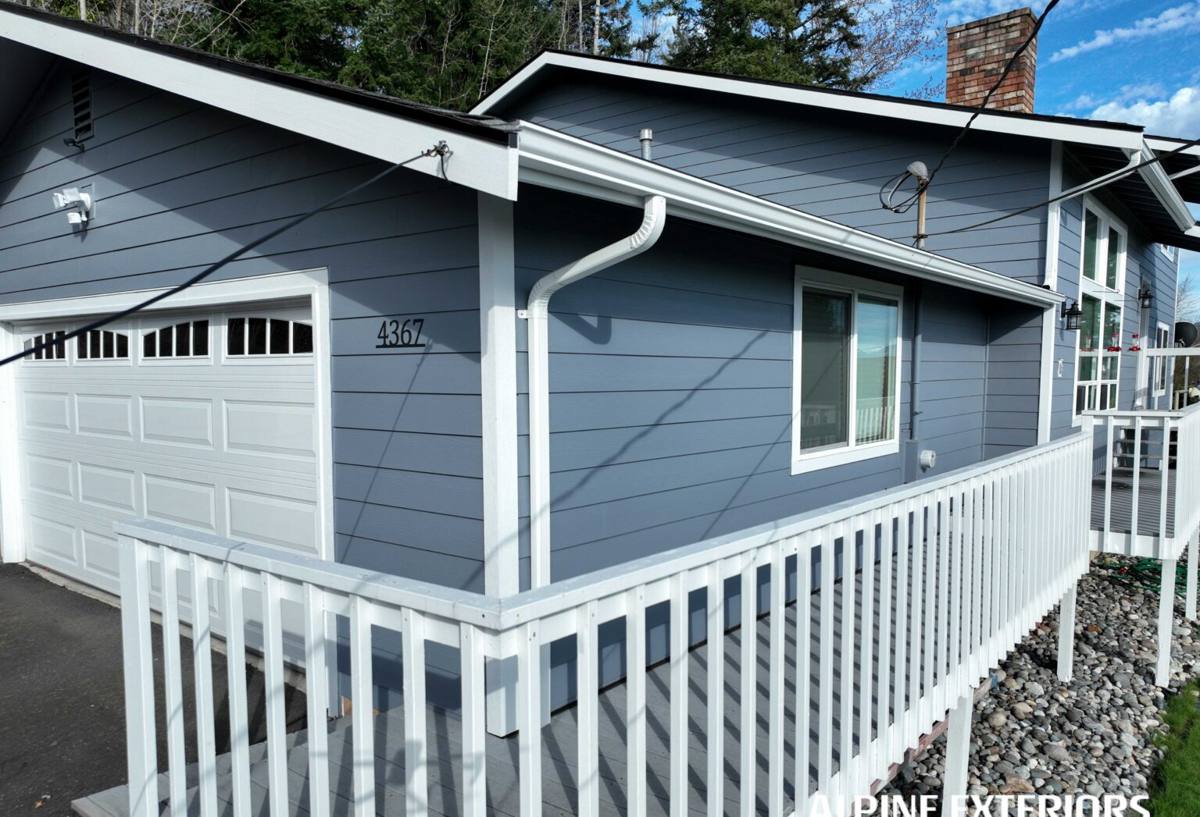
What This Climate Actually Does to a Shoreline Roof
Salt Air and Corrosion
Asphalt shingles themselves aren't especially vulnerable to salt corrosion, but almost everything around them is. Roofing nails, flashing, vent stacks, and gutter hardware are metal, and metal exposed to salt-carrying air corrodes faster than it would even a few miles further inland. On a roof near the water, corroded fasteners and pitted flashing are a common cause of leaks that have nothing to do with the shingles themselves — the shingles can look fine while the metal holding everything together quietly fails underneath.
Wind-Driven Rain
Storms off the Sound don't just drop rain straight down. They push it sideways, into roof valleys, up under shingle edges, and around any flashing detail that isn't sealed and lapped correctly. That's a heavier, more directional load on the weak points of a roof than a simple annual rainfall total suggests, and it's exactly where a roof with thin flashing or aging underlayment starts to leak first, often at a chimney, skylight, or wall transition rather than out in the open field of the roof.
A Long Moss Season
Mild temperatures and consistent moisture give moss and algae a long growing window here, longer than most of the country gets. Shaded slopes, north-facing roof planes, and anything under mature trees hold onto moisture the longest, and left unchecked, moss doesn't just look bad. It holds water against the shingle surface, works its way under shingle edges, and over several seasons can lift or loosen roofing that would otherwise still have years of life left.
Asphalt Shingle Options: What Actually Holds Up Here
Not every asphalt shingle is built the same way, and the right choice depends on your roof's exposure, your budget, and how long you plan to stay in the home. Here's how the main tiers compare for a Shoreline roof specifically:
| Shingle Type | Wind & Impact Rating | Moss/Algae Resistance | Realistic Fit for Shoreline |
|---|---|---|---|
| 3-tab (standard) | Lower wind rating, thinner single-layer profile | Varies by line; basic products often skip algae-resistant granules | Lowest upfront cost; shortest realistic service life in this exposure |
| Architectural / dimensional | Higher wind rating, layered construction | Most product lines include algae-resistant (AR) granules | The realistic standard for most Shoreline roofs |
| Premium / designer | High wind rating, heaviest profile | Algae-resistant granules standard | Best for steep, highly visible roofs; higher upfront cost |
| Impact-resistant (Class 4) | Highest impact rating available in asphalt | Algae-resistant granules standard | Worth pricing if debris impact or insurance terms are a concern |
We'll walk through which tier actually makes sense for your roof's pitch, sun exposure, and budget rather than defaulting to whatever's easiest to sell. A steep, sun-exposed roof and a low-slope roof shaded by mature trees a few blocks from Puget Sound don't call for the same answer, even on the same street.
What a Correctly Installed Asphalt Shingle Roof Actually Involves
Most shingle roof failures we get called out for aren't really a shingle problem. They're a shortcut problem, in details underneath the shingles that don't show up until years later. On every roof we install, that means:
- Full tear-off to the deck, not a layover on top of old roofing, so we can actually see what's underneath
- Deck inspection and repair of any soft, rotted, or delaminated sheathing before anything goes back down
- Synthetic underlayment across the full roof, not just felt paper
- Ice-and-water shield at eaves, valleys, and around every penetration, where wind-driven rain and moss moisture concentrate
- Drip edge on every roof edge, correctly lapped with the underlayment rather than tucked on as an afterthought
- Properly formed step and valley flashing at chimneys, skylights, and wall transitions — the single most common leak point on any roof
- Balanced intake and exhaust ventilation, sized to the attic, not just a ridge vent added without matching intake
- Corrosion-resistant fasteners and flashing, given how close much of Shoreline sits to Puget Sound's salt air
- Correct nailing pattern and nail count per shingle, placed in the manufacturer's specified nailing zone — not staples, not a rushed pattern
- Starter strip and ridge cap matched to the shingle product line, not a mismatched generic substitute
None of this is optional, and almost none of it is visible once the roof is finished — which is exactly why it matters who's doing the work and how carefully they do it.
Signs Your Shoreline Roof Needs a Look
Some roof problems announce themselves. Others sit quietly for a season or two before turning into a bigger repair. It's worth a call if you notice:
- Granules collecting in gutters or piling up at downspout outlets
- Shingle edges curling, cupping, or lifting
- Visible moss on north-facing or shaded slopes
- Dark streaking across the roof surface, which is algae, not just dirt
- Rust staining around vent pipes, flashing, or exposed fasteners
- Missing, cracked, or lifted shingles after a windstorm
- Soft-feeling spots or visible sagging along the roofline
- Water stains on ceilings or bubbling ceiling paint after a heavy rain
Any one of these is worth a professional look. Caught early, most are a repair. Left alone through another wet season, several of them turn into a full tear-off.
Repair or Replace? How We Actually Help You Decide
We don't default to recommending a full replacement, and a lot of roofing problems don't call for one. What matters is the roof's age relative to its rated life, how much of the surface is actually affected, whether the deck underneath has moisture damage, and how many repairs the roof has already had. A localized leak on an otherwise sound roof is usually a straightforward repair. A roof nearing the end of its service life with moss-related damage spread across multiple slopes, or deck rot from long-term moisture, is more honestly addressed with a replacement than another round of patchwork that won't hold. We'll show you what we actually find on your roof and explain why, rather than pushing whichever option happens to be more profitable for us.
Our Process, From Estimate to Cleanup
- Inspection. We look at the roof surface, the deck where it's accessible, attic ventilation, and every flashing detail — not just a drive-by estimate from the street.
- Honest written quote. A clear scope of work, material options with the real trade-offs explained, and a price you can actually compare against another bid.
- Material selection. We help you weigh shingle tier, color, and warranty terms against your budget and how long you plan to stay in the home.
- Install day. Tear-off, deck repair as needed, underlayment, flashing, ventilation, and shingle installation, done in the sequence that actually protects the house — not skipped steps to save a day of labor.
- Cleanup and walkthrough. A magnetic sweep for stray nails, debris hauled off, and a walkthrough so you know exactly what was done and why.
- Warranty documentation. Manufacturer and workmanship warranty paperwork handed to you directly, not left for you to track down later.
Why a Local King County Crew Matters
A crew that works roofs across King County through every season sees how salt air, wind-driven rain, and moss actually behave on real houses over years, not just how a product performs on a manufacturer's data sheet. That shows up in practical decisions on your specific roof: which slopes need extra attention because of shade or wind exposure, how much ice-and-water shield a given valley actually needs, and which flashing details are worth the extra time on install day so you're not dealing with a callback two winters later. It also means understanding the real difference between a roof a few blocks from Puget Sound and one further inland, instead of applying one generic approach to both.
Beyond the Roof
Roofing is where we spend most of our time on a project like this, but the same climate that wears on a roof wears on the rest of a home's exterior too. King County Exterior also handles siding, windows, and related exterior work, and if a roof inspection turns up moisture damage at a wall-to-roof transition, aging trim, or a gutter problem feeding water back under the roofline, we can address it as part of the same conversation instead of sending you to find a second contractor.
If your Shoreline roof needs an inspection, a repair, or you're weighing a full replacement, we're glad to take an honest look and tell you what it actually needs — no upsell script, no pressure. Reach out using the form below to schedule a free estimate.