 King County
 Capitol Hill's Siding Problem Isn't Just Age — It's Exposure
Most siding failures we see on Capitol Hill homes aren't simply a matter of an old product wearing out. They're the result of years of exposure that most homeowners never think about until paint starts peeling, boards start cupping, or a green film shows up on the north-facing wall every winter. Capitol Hill sits up on a rise above downtown Seattle, which means it catches wind-driven rain moving in off Puget Sound, along with the salt-laden air that travels inland with it during storms. That salt air accelerates corrosion on fasteners, trim, and any metal flashing that wasn't detailed correctly the first time.
Layer on top of that the mature tree canopy that gives so many Capitol Hill blocks their character. Big trees are wonderful for shade and curb appeal, but they also keep siding damp longer after every rain and create the low-light, high-moisture conditions moss and mildew love. In King County's long, wet stretch from fall through spring, that combination — salt-laden moisture plus shade — turns into a multi-month moss season that never really lets siding fully dry out. Siding installed without that reality in mind will look tired years before it should.
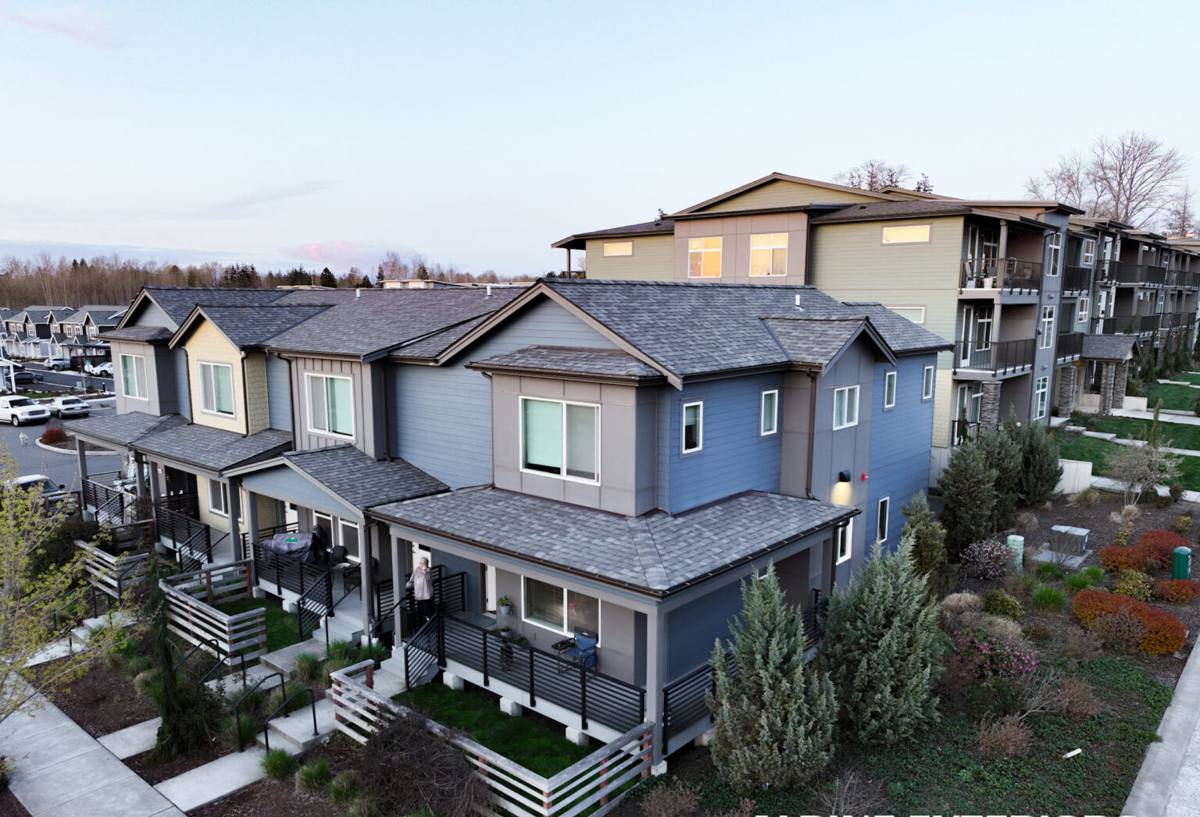
What Capitol Hill Homes Actually Need From Their Siding
Given that climate profile, the siding on a Capitol Hill home needs to do three things well: shed wind-driven rain instead of absorbing it, resist moss and mold growth on shaded elevations, and hold up to salt-influenced air without corroding fasteners or trim over time. That's a different priority list than, say, a dry-climate home, and it should shape both the product you choose and how it's installed.
- A drainage plane and rainscreen gap that lets any moisture that gets behind the siding find its way back out
- A siding material that doesn't swell, rot, or feed mold when it stays damp for days at a time
- Corrosion-resistant fasteners and flashing detail at every joint, window, and roofline
- A factory finish that doesn't rely on the homeowner repainting every few years to stay protected
- Correct clearance from grade, decks, and roof lines so water has nowhere to pool against the wall
Why We Only Install James Hardie Fiber Cement
We made a decision a long time ago to install one siding system and install it correctly, rather than offer every product on the market and hope each one gets detailed right. We install James Hardie fiber cement exclusively. We don't install vinyl, LP SmartSide, Cemplank, Allura, primed spruce, or cedar, and we're upfront with clients about why.
Fiber cement is non-combustible, which matters more every year as wildfire smoke and ember exposure become a regular part of Pacific Northwest summers even in urban neighborhoods like Capitol Hill. It doesn't absorb water the way engineered wood products can, so it isn't the same kind of food source for the mold and moss that our tree-covered, rain-heavy climate produces. And Hardie's ColorPlus factory finish is baked on under controlled conditions, which holds color and resists fading and moisture intrusion far better than a field-applied paint job — something that matters a lot in a climate where a fresh paint job barely gets its full dry-cure window before the next rain arrives.
Hardie also engineers different formulations for different climates. The HZ5 product line is built for regions that see real freeze-thaw cycling and sustained damp conditions — which describes King County's wet season well — rather than a one-size-fits-all formula. That climate-specific engineering, combined with a strong transferable warranty, is a big part of why we standardized on it instead of carrying a catalog of alternatives.
How James Hardie Compares to the Alternatives
| Factor | James Hardie Fiber Cement | Vinyl | LP SmartSide / Cedar |
|---|---|---|---|
| Moisture behavior in wet climates | Doesn't swell or rot; engineered for damp regions | Doesn't rot, but can warp and gap, letting water behind it | Wood-based cores can absorb moisture and swell at cut edges |
| Moss and mildew resistance | Non-organic material resists growth on its own surface | Resists growth but seams trap grime and moss buildup | Organic content is a food source for mold and moss |
| Fire resistance | Non-combustible | Melts and can contribute to fire spread | Combustible |
| Finish longevity | Factory-baked ColorPlus finish, long fade resistance | Color is molded through vinyl but fades and chalks over time | Relies on field-applied paint/stain that needs recoating |
| Maintenance over 15-20 years | Occasional caulk/paint touch-up only | Low, but cracks and fades; hard to patch invisibly | Regular repainting/restaining and rot inspection |
None of these alternatives are junk products — vinyl is inexpensive and low-maintenance in mild climates, and cedar has genuine curb appeal. But in a climate that combines driving rain, salt air, and a long moss season, we've seen where each of them tends to fall short over time, and that's the trade-off we're not willing to install and stand behind.
What a Correct Siding Installation Actually Involves
Siding is only as good as the thirty minutes of work nobody sees once it's on the wall. A rushed crew can install the right product the wrong way and produce the same moisture problems as a cheaper material. Here's what we treat as non-negotiable on every job:
- Tear-off and inspection. We remove the old siding and check the sheathing underneath for rot, soft spots, or existing moisture damage before anything new goes up.
- Weather-resistive barrier. A properly lapped and taped house wrap goes on to manage bulk water before it ever reaches the sheathing.
- Rainscreen gap. A drainage gap behind the siding lets any moisture that does get in dry out and drain, instead of sitting against the wall.
- Flashing at every penetration. Windows, doors, roof lines, and any wall penetration get proper flashing detail — this is where most siding failures actually start.
- Correct fastening. Hardie panels and lap siding are fastened per manufacturer spec, at the right pattern and depth, with corrosion-resistant fasteners.
- Trim and joint sealing. Butt joints, corners, and trim are sealed and caulked to shed water rather than collect it.
- Final inspection and cleanup. We walk the job before we call it done, checking clearances from grade, decks, and roof lines.
Signs Your Capitol Hill Home Needs Siding Attention
- Green or black staining on shaded or tree-covered walls that returns even after cleaning
- Peeling or bubbling paint, especially on north- or west-facing elevations
- Soft, spongy siding or trim when pressed near the bottom of walls or below windows
- Visible gaps, warping, or cupping in existing boards or panels
- Rusting or discolored fasteners and metal trim
- Rising energy bills that suggest air and moisture are moving through the wall assembly
Cost Factors for Capitol Hill Siding Projects
| Factor | Why It Affects Cost |
|---|---|
| Tear-off vs. install over existing siding | Removing old siding adds labor but allows sheathing inspection and repair |
| Home height and access | Multi-story homes and tight urban lots common on Capitol Hill can require added staging |
| Trim and architectural detail | Older, character-rich homes often have more corners, trim, and window detail to work around |
| Sheathing or framing repair | Moisture damage found during tear-off needs to be repaired before new siding goes on |
| Product line and profile | Lap siding, panel systems, and shingle profiles carry different material and labor costs |
Why Local Experience on Capitol Hill Matters
A crew that already works Capitol Hill regularly understands things a crew coming from outside King County has to learn on your dime — how the neighborhood's tree cover and hill exposure change moisture patterns block to block, how tight urban lots affect staging and material delivery, and what Seattle's permitting process expects for a residential siding replacement. Some pockets of Capitol Hill also fall under added design-review guidelines given the neighborhood's mix of historic and higher-density construction, so it helps to work with a crew that knows to check on that before work begins rather than after.
Beyond logistics, local experience means we've already seen how a given product and installation detail perform on Capitol Hill's specific mix of salt air, rain, and shade over multiple wet seasons — not just on paper, but on the walls of homes like yours.
If your Capitol Hill home's siding is showing its age, or you're planning ahead of a repaint you'd rather not repeat in five years, we're happy to take a look and talk through what your home actually needs. Reach out for a free, no-pressure estimate using the form below.