 King County
 Why Siding in Rainier Valley Wears Differently
Every siding material eventually needs a repair somewhere on the house, but the way that damage shows up in Rainier Valley has a distinct pattern. This is a King County neighborhood shaped by a long, wet fall-through-spring stretch, moisture-heavy air moving in off the Sound, and a tree canopy that keeps whole wall sections in shade for most of the day. That combination doesn't just mean rain — it means slow-drying siding, which is the single biggest reason repairable problems turn into structural ones if they sit too long.
Add in the hillside terrain that runs through parts of the valley, where water sheets down slopes and pools against foundations and lower wall sections, and you get a neighborhood where north-facing and grade-level siding ages faster than the rest of the house. A repair plan that ignores these local patterns and just patches whatever is visible from the street tends to fail again within a couple of seasons.
The Moss Factor
King County's moss season isn't a cosmetic issue — it's a moisture issue wearing a green coat. Moss holds water against the siding surface far longer than bare material would, which matters most at butt joints, corner boards, and anywhere caulking has started to separate. On wood-based products, that sustained moisture is what starts rot. On any material, moss buildup is a signal worth checking, not just pressure-washing away.
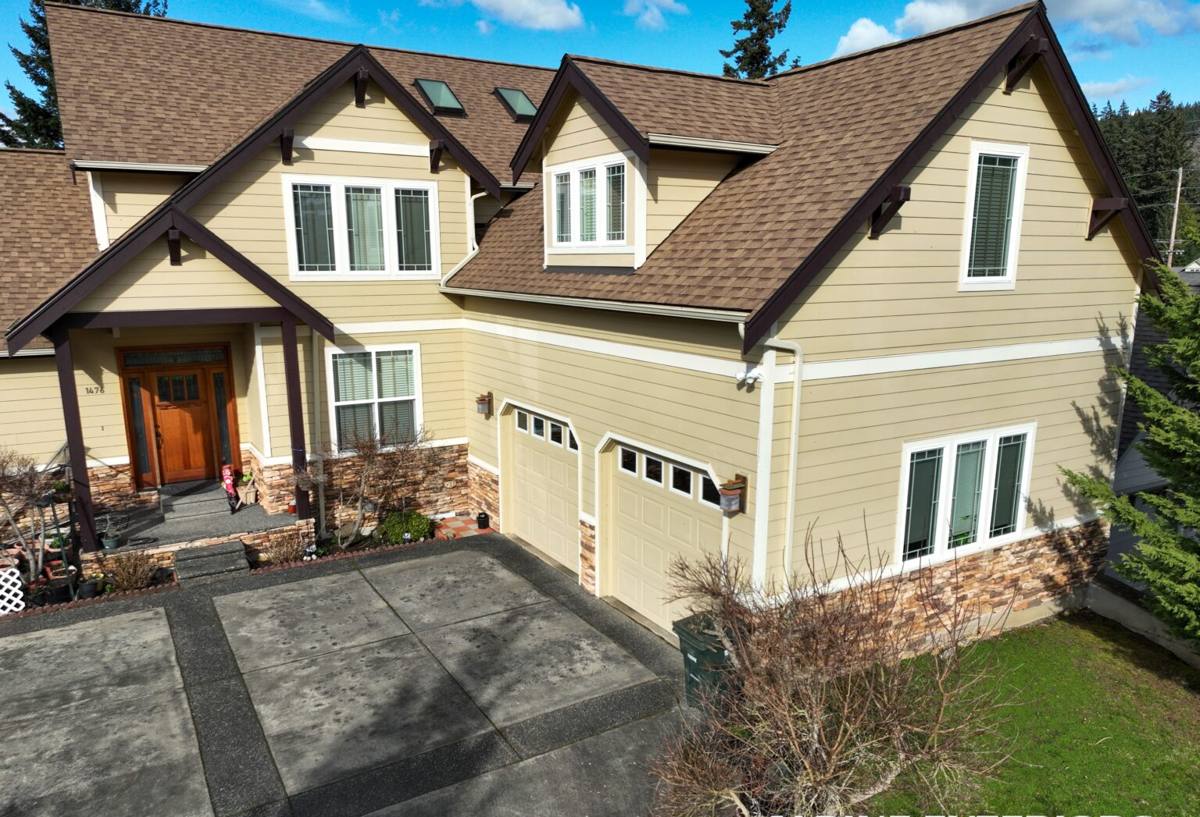
Signs You're Looking at a Repair Job, Not a Full Replacement
Most homeowners call us because something looks wrong, not because they've diagnosed the cause. Here's what we're actually checking for on a Rainier Valley service call:
- Soft or spongy spots when you press on the siding, especially near the bottom courses or under windows
- Visible gaps at seams, corners, or trim where caulking has shrunk or pulled away
- Bubbling, peeling, or discoloration that keeps returning in the same spot after cleaning
- Persistent moss or algae growth concentrated in one area rather than spread evenly across the wall
- Panels that have come loose, warped, or visibly separated from the wall line
- Staining on interior walls or trim that lines up with an exterior problem area
- Damage clustered near downspouts, gutter overflow points, or grade-level splashback
If the damage is contained to a section — a corner, a wall plane, an area around a fixture penetration — repair is usually the right call. When we find the same failure pattern repeated across multiple elevations, that's a different conversation, and we'll tell you honestly if repair is just delaying a bigger job.
What a Correct Siding Repair Actually Involves
A repair that only replaces what's visibly damaged and stops there is a repair that's likely to fail again. The part that actually determines whether a repair holds is the part you don't see once the job is done.
Finding the Real Extent of the Damage
Before any siding comes off, we check how far moisture has traveled behind the surface — damaged siding is often a symptom, and the sheathing or framing underneath can be affected well beyond the visible boundary. Cutting back only to the point where damage stops, with a margin for what's hidden, is standard practice; cutting back only to where damage is easy to see is how repairs get redone twice.
Flashing and Water Path, Not Just the Panel
Most siding failures trace back to a flashing detail, not the siding itself — a window head flashing that was never installed, a kick-out flashing missing where a roofline meets a wall, or house wrap that wasn't lapped correctly. Replacing the panel without correcting the water path behind it just resets the clock on the same failure.
Matching Material and Finish
A patch that doesn't match the existing siding's profile, exposure, or finish stands out and can also perform differently at the seams. This is one of the reasons material choice matters even at repair scale, not just on a full replacement.
Repair vs. Replacement: How We Make the Call
Homeowners in Rainier Valley often ask us to just be straight about which category their project falls into. Here's the honest breakdown of what tips a project one way or the other.
| Factor | Points Toward Repair | Points Toward Full Replacement |
|---|---|---|
| Extent of damage | Isolated to one or two wall sections | Recurring across multiple elevations |
| Age of existing siding | Installed within the product's expected service life | At or past the end of its realistic lifespan |
| Underlying sheathing | Sound once damaged siding is removed | Soft, delaminated, or water-stained broadly |
| Original installation quality | Flashing and water-management details were done correctly | Systemic flashing or house-wrap errors found |
| Material match availability | Existing profile and finish can be matched cleanly | Discontinued or mismatched material would show |
We'll walk you through which column your house lands in before we ever write a quote — not after.
Why We Only Repair and Install James Hardie Fiber Cement
Our company made a standing decision to work exclusively with James Hardie fiber cement siding, and it shapes how we handle repairs, too. We don't install LP SmartSide, vinyl, Cemplank, Allura, primed spruce, or cedar — not because those products can't function on a house, but because after years of doing this work in King County's climate, we don't think they hold up to our standard for this region without ongoing maintenance burdens we're not willing to put on a homeowner's plate.
Vinyl expands and contracts more with temperature swings and can bow or crack over time, which shows up worse on a wall that's already seen a repair. Untreated wood-based and engineered-wood products need consistent paint and caulk maintenance to keep moisture out — skip a cycle in a wet climate like ours and that's exactly the failure pattern we described above. James Hardie's fiber cement is non-combustible, dimensionally stable in wet-dry cycling, and its ColorPlus factory finish holds color without the repaint schedule other materials demand. That stability is exactly what makes a repair patch blend in and stay sound rather than becoming the next callback.
Hardie's HZ5 product line in particular was engineered for regions with prolonged moisture exposure — which describes most of King County for a good chunk of the year. It also carries a strong transferable warranty, which matters if you sell the house before the repaired section is old news.
Our Process for Rainier Valley Siding Repairs
- On-site inspection: We look at the damage, the surrounding siding, and check for moisture behind the surface — not just what's visible.
- Honest scope and quote: You get a clear explanation of what needs to be replaced, what's driving the damage, and a written price before anything starts.
- Removal with a margin: Damaged material and enough surrounding area to confirm sound sheathing gets removed — no guessing.
- Fixing the actual cause: Flashing, house wrap, and any water-path issues get corrected, not just covered back over.
- Matched Hardie repair: New fiber cement siding is fitted, fastened, and finished to match the existing wall as closely as the original material allows.
- Site cleanup and walkthrough: We walk the repair with you before we consider the job done.
Why Hiring a Crew That Already Works This Neighborhood Matters
Rainier Valley's mix of older bungalows, mid-century homes, and newer infill construction means no two repair calls look quite the same — an installer who's worked the neighborhood knows which eras tend to have which flashing shortcuts, and which wall orientations take the worst of the weather here. That's not something you get from a crew driving in from outside King County for a single job.
Local familiarity also means faster turnaround. We're not scheduling a special trip across the county for a small repair — we're already working this part of Seattle regularly, which keeps response times reasonable and keeps us accountable if something needs a follow-up visit.
Keeping a Repair From Becoming a Repeat Call
Once a repair is done, a few habits go a long way toward making it the last one for that section of wall:
- Keep gutters clear so overflow doesn't run directly down the siding face
- Trim back vegetation and tree limbs that keep a wall section shaded and slow to dry
- Rinse moss and algae buildup before it's thick enough to hold moisture against the surface
- Check caulking at trim and seams once a year, especially before the wet season sets in
- Watch grade-level areas after heavy rain for standing water against the foundation line
None of this requires special equipment — it's mostly about not letting small things sit through an entire King County winter.
Get a Straight Answer on Your Siding
If you're seeing soft spots, moss buildup, or damage on a section of your Rainier Valley home, it's worth having someone look at it before the next wet season sets in. We'll give you a free, no-pressure estimate and an honest read on whether you're looking at a repair or something bigger — no upsell, just what the wall actually needs.