 King County
 Why Seattle Siding Wears Out Faster Than Homeowners Expect
Seattle sits in a spot where three things gang up on exterior walls at once: moisture that rarely lets up for more than a few days at a time, a long moss season that runs from fall through spring, and enough proximity to Puget Sound that homes closer to the water pick up salt-laden air on top of everything else. None of these on their own is unusual for the Pacific Northwest. Together, over years, they explain why siding that looks fine from the curb can be failing underneath in ways a homeowner never sees until a soft spot shows up under a hand or a paint blister won't go away.
Siding repair in a climate like this isn't just patching a hole. It's understanding which failure you're actually looking at — surface weathering, trapped moisture, a flashing detail that was never right, or a material that was never suited to this much sustained dampness in the first place — and fixing the right thing instead of the visible symptom.
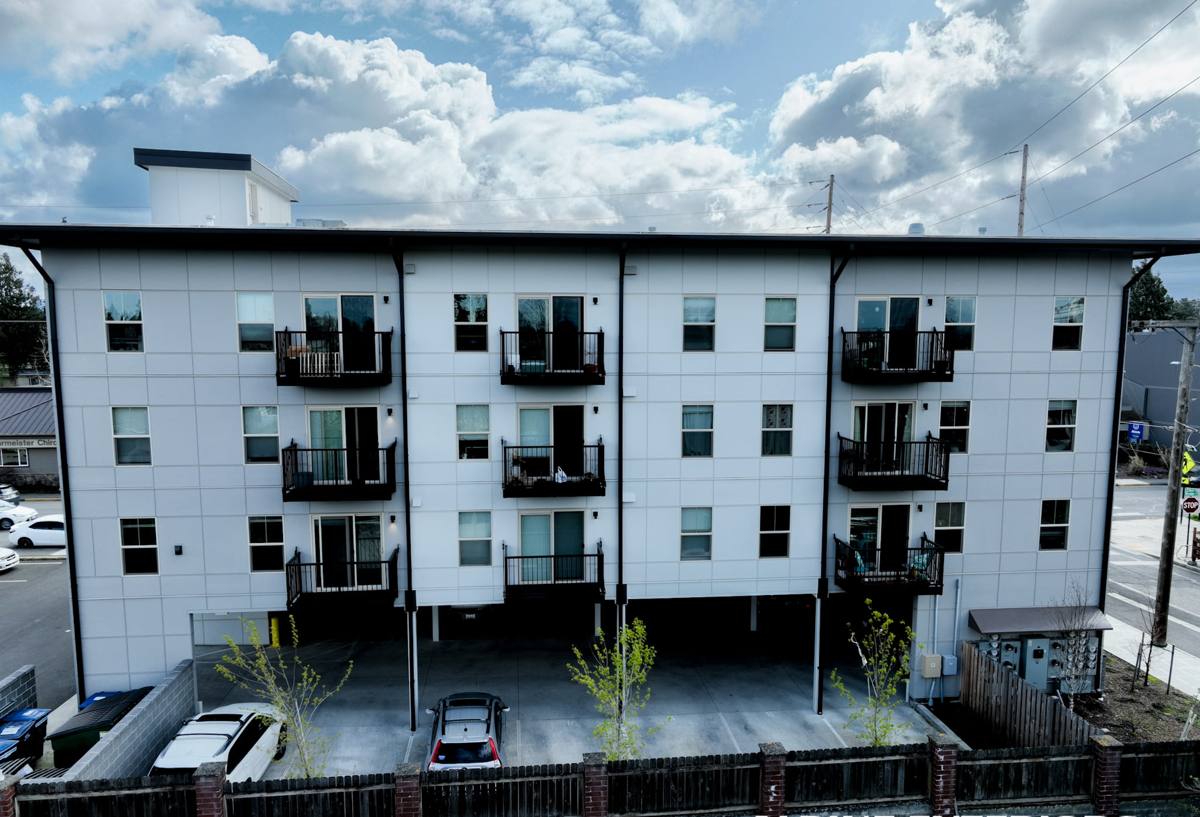
What King County's Climate Actually Does to Siding
Driving Rain
Seattle doesn't get the heaviest rainfall totals in the country, but it gets a lot of low-intensity, wind-driven rain that hits siding at an angle for hours or days at a stretch. That kind of exposure finds every gap in a lap joint, every under-caulked seam, and every spot where flashing was skipped or installed short. Water doesn't need a big opening — it needs time, and King County weather gives it plenty.
Moss and Sustained Dampness
Shaded elevations, tree cover, and north-facing walls in this area can stay damp for weeks at a time in the wet months. That's exactly the environment moss and algae need to take hold on siding surfaces, especially at butt joints, under trim, and anywhere water sheds slowly. Moss itself isn't just cosmetic — it holds moisture against the siding surface far longer than open air would, which accelerates rot in wood-based products and can degrade paint and caulk on any material.
Salt Air
Homes closer to Puget Sound and the Sound-adjacent lowlands deal with a mild but constant load of salt-bearing air. It's not the same intensity as an oceanfront property, but over enough years it contributes to fastener corrosion, accelerates finish breakdown, and adds one more reason that fasteners, flashing, and finish quality matter more here than they would inland.
Temperature Swings
Seattle doesn't get brutal winters, but it does get repeated freeze-thaw cycling in the colder months, plus the seasonal expansion and contraction that comes with damp winters and drier summers. Siding and the caulk joints holding it together move with those swings. Rigid, correctly fastened materials tolerate that movement far better than products that were never engineered for a marine climate.
Signs a Seattle Home Needs Siding Repair
Some damage announces itself. Most of it doesn't, at least not right away. Here's what we tell homeowners to watch for between inspections:
- Soft or spongy spots when you press on siding, especially near the bottom courses and around window and door trim
- Paint that's peeling, bubbling, or won't hold no matter how many coats go on in one spot
- Visible gaps at seams, corners, or where siding meets trim, flashing, or the foundation
- Persistent moss or dark streaking that keeps coming back after cleaning
- Warping, buckling, or panels that have pulled away from the wall
- Rust staining below fasteners or flashing
- Interior clues — a musty smell, a damp spot on an interior wall, or peeling interior paint on an exterior-facing wall
- Higher heating bills with no other explanation, which can point to moisture-saturated wall assemblies losing insulation value
Any one of these can be minor. Several at once, or any of them paired with visible rot, usually means the damage has already moved past the surface.
What a Correct Siding Repair Actually Involves
A repair that just covers the visible damage is a repair that fails again in a season or two. Done right, siding repair in this climate follows a sequence, not a shortcut.
1. Diagnose Before Touching Anything
We start by figuring out how water is getting in and how far it's traveled — not just where it shows up. That means checking behind the damaged section, looking at the flashing and house wrap condition, and probing surrounding material to see if rot has spread past what's visible.
2. Remove Only What's Compromised
Sound siding gets left alone. Compromised siding, sheathing, or framing gets removed back to solid material — not just to the edge of the obvious stain.
3. Fix the Water Path, Not Just the Panel
If a flashing detail failed, that gets corrected before new siding goes back on. Replacing siding over a flashing problem that caused the damage in the first place just buys a few more years before the same repair is needed again.
4. Match Material and Method
Whatever the existing siding is — cedar, engineered wood, vinyl, or fiber cement — a proper patch uses a compatible material, fastening pattern, and joint detail so the repair doesn't stand out or create a new weak point where old and new meet.
5. Seal, Caulk, and Finish Correctly
Seams and joints get sealed with the right products for this climate's moisture load, and any exposed wood or cut edges get sealed on all six sides before installation, not just painted after the fact.
Repair or Replace: How We Help You Decide
Not every damaged section needs a full re-side, and not every repair is worth doing. The right call depends on how much of the wall is affected, what's underneath, and how old the existing siding already is.
| Factor | Leans Toward Repair | Leans Toward Replacement |
|---|---|---|
| Extent of damage | Isolated to one or two areas | Recurring across multiple elevations |
| Underlying structure | Sheathing and framing are sound | Rot has reached framing or is widespread |
| Age of existing siding | Still well within expected service life | Already near or past it, repair just delays the inevitable |
| Cause of damage | One-off event — impact, isolated flashing failure | Systemic issue — original material or install wasn't suited to this climate |
| Material match | Discontinued product not a concern for a small patch | Discontinued or mismatched product makes a clean patch impossible |
We'll always tell you honestly when a repair makes sense on its own merits, and when you'd be spending real money to patch something that's going to need replacing again soon regardless.
How Our Repair Process Works
Inspection and Estimate
We walk the exterior, check the areas you've flagged, and look at spots homeowners typically don't think to check — behind downspouts, under decks and overhangs, and at ground-contact areas. You get a straight answer on scope before any work starts.
Scope of Work
You'll know exactly what's being removed, what's being repaired versus replaced, and what the finished result should look like — including whether a color or texture match is realistic given the age of your existing siding.
The Repair Itself
Work is sequenced to minimize how long your wall assembly is open to weather, which matters in a climate where an unplanned rain delay is always a possibility. Flashing and moisture barrier details get corrected as part of the job, not treated as optional.
Final Check
We walk the finished repair with you, confirm the seal and finish are complete, and flag anything nearby that's worth keeping an eye on going forward.
When Repair Isn't the Long-Term Answer
Some homes in Seattle are still carrying siding materials that were never well suited to this much sustained moisture — cedar that's gone past its practical maintenance window, engineered wood products that have absorbed water at the edges, or vinyl that's cracked and chalked from years of damp-cold cycling. On those homes, we'll patch what makes sense, but we're honest that repeated repair has a ceiling.
When a home reaches that point, our recommendation is James Hardie fiber cement siding — the only product we install as a full system. It's non-combustible, holds its factory ColorPlus finish far longer than field-painted materials, and its HZ product lines are engineered specifically for climates with sustained moisture exposure like this one. It carries a strong transferable warranty and, installed to spec, is built to handle the driving rain and damp cycling that wear down softer materials years sooner. We're not going to tell you every repair needs to end in a full re-side — most don't — but when a home has genuinely reached the end of what repair can responsibly fix, Hardie is what we put back on it.
Why Hiring a Crew That Already Works Seattle Matters
Siding repair looks straightforward until the wrong call gets made — patching over hidden rot, sealing a joint with the wrong product for this much rainfall, or matching a material that was never rated for this climate to begin with. A crew that works King County homes regularly has already seen how local exposure, tree cover, and moss patterns show up on real walls, and knows which failures are one-offs versus which ones are climate-driven and likely to recur elsewhere on the same house.
That familiarity also shows up in scheduling and sequencing. Work gets planned around realistic weather windows instead of assuming a dry stretch that Seattle doesn't reliably deliver, and repairs are sequenced so an open wall isn't left exposed longer than necessary.
Keeping a Repair From Needing a Repeat
A correct repair should hold. A few habits from the homeowner side help it hold longer:
- Keep gutters clear so water sheds off the roofline instead of running down the wall face
- Trim back vegetation and tree cover that keeps a wall shaded and damp longer than the rest of the house
- Rinse moss and algae buildup before it establishes rather than after it's taken hold
- Check caulking at trim, corners, and penetrations once a year, since sealant is a maintenance item, not a permanent fix
- Address small signs — a soft spot, a new stain — before the next wet season, not after
None of this replaces a professional inspection, but it buys time between them and keeps small issues from becoming structural ones.
Ready for an Honest Look at Your Siding
If you're seeing soft spots, recurring moss, peeling paint, or just want a second opinion before spending money on a repair, we're glad to take a look. We'll give you a straight read on what's actually happening, what it will take to fix it correctly, and whether repair or replacement makes more sense for your home. Reach out for a free, no-pressure estimate — the request form below gets you started.